
Galaxy A13 Vs Motorola Moto E13

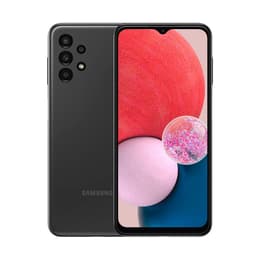
Galaxy A13
Galaxy A13
Starting at

Refurbished price:£73.00

Versus £249.00 new

See options
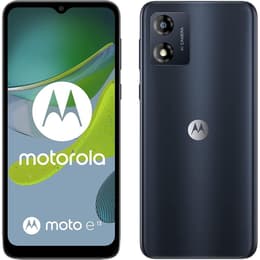
Motorola Moto E13
Motorola Moto E13
Starting at

Refurbished price:£74.00

Versus £83.99 new

See options

Ratings

The Samsung Galaxy A13, released in March 2022, and the Motorola Moto E13, launched in January 2023, are both smartphones designed for everyday use. While both devices aim to provide essential smartphone functionalities, they differ in display clarity, camera versatility, and their approach to software. The Galaxy A13 runs on Samsung's One UI over Android, while the Moto E13 utilizes Android Go Edition, optimized for its hardware.

Scores

Durability

When considering the practical lifespan of these devices, several factors come into play, including their release timelines, software support, and physical construction.

  • Release Timeline: The Samsung Galaxy A13 was released in March 2022, making it an older model compared to the Motorola Moto E13, which launched in January 2023. This difference in release date can influence the duration of future software support.
  • Software Longevity: The Galaxy A13 launched with Android 12 and has received updates up to Android 14, with security updates expected until late 2025. The Moto E13 launched with Android 13 Go Edition, which is a lighter version of Android designed for devices with less powerful hardware. Users prioritizing the latest full Android features and longer major OS updates might find the Galaxy A13's update path more extensive, though newer Samsung A-series models now offer longer support.
  • Physical Durability: The Samsung Galaxy A13 features Corning Gorilla Glass 5 protection for its display, offering a degree of resistance against scratches and drops. The Motorola Moto E13 includes an IP52 rating, indicating resistance to dust and splashes. Both phones utilize plastic for their frames and backs.

Year of Release

2022

2023

Compatible with latest Update

No

No

OS

Android

Android

Foldable

No

No

Performance

The performance of both smartphones is tailored for essential daily tasks, with differences emerging in handling more demanding applications and multitasking.

  • Processor Capabilities: The Samsung Galaxy A13 is powered by an octa-core processor, which handles routine tasks like browsing and social media use. The Motorola Moto E13 also features an octa-core processor, designed to manage everyday operations efficiently.
  • System Responsiveness: For the Galaxy A13, users have reported that while it performs adequately for basic functions, it can experience occasional sluggishness and stuttering with heavier apps or extensive multitasking. The Moto E13, running Android Go Edition, is optimized for smoother operation on its hardware, though some users note slight delays when loading apps or navigating the interface, particularly with lower RAM variants.
  • Battery Behavior: Both devices are equipped with a 5000 mAh battery, generally providing sufficient power for a full day of moderate use. The Galaxy A13 supports 15W wired charging, while the Moto E13 supports 10W charging.

Memory (GB)

4 GB

2 GB

Screen quality

The visual experience on these smartphones varies, primarily due to differences in display technology and resolution.

  • Display Technology and Resolution: The Samsung Galaxy A13 features a 6.6-inch PLS TFT LCD display with a Full HD+ resolution of 1080x2408 pixels, resulting in a pixel density of approximately 400 ppi. This offers clear and sharp visuals for typical viewing. The Motorola Moto E13 has a 6.5-inch IPS LCD display with an HD+ resolution of 720x1600 pixels, providing a pixel density of around 270 ppi.
  • Brightness and Clarity: The Galaxy A13's display can reach up to 483 cd/m² in tests, offering good visibility indoors and acceptable performance outdoors. The Moto E13's screen brightness is generally sufficient for indoor use, though it may require maximum brightness for comfortable viewing in direct sunlight.
  • Refresh Rate and Smoothness: Both devices feature a standard 60Hz refresh rate, which provides a consistent viewing experience for most content. This means scrolling and animations will appear smooth for general use, but not as fluid as higher refresh rate displays.

Resolution

1080 x 2408

720 x 1600

Screen type

PLS LCD

IPS LCD

Audiovisual

The camera systems on the Galaxy A13 and Moto E13 offer different capabilities for capturing photos and videos.

  • Rear Camera System: The Samsung Galaxy A13 is equipped with a quad-camera setup on the rear, including a 50-megapixel main sensor, a 5-megapixel ultrawide lens, a 2-megapixel macro lens, and a 2-megapixel depth sensor. This provides versatility for different types of shots. The Motorola Moto E13 features a single 13-megapixel rear camera.
  • Photography Performance: The Galaxy A13's 50-megapixel main camera can capture detailed and colorful images in good lighting conditions. Its ultrawide lens offers a broader perspective, though with less detail. The Moto E13's 13-megapixel camera delivers decent photos in daylight, but its performance can be inconsistent, sometimes overexposing highlights or struggling with shadows. Neither phone excels in low-light photography.
  • Front Camera and Video: The Galaxy A13 has an 8-megapixel front-facing camera, suitable for selfies and video calls. It records video at 1080p at 30 frames per second. The Moto E13 features a 5-megapixel front camera and also records video at 1080p at 30 frames per second.

Main camera

50 megapixels

13 megapixels

Front camera

8 megapixels

5 megapixels

Miscellaneous

Beyond core features, several practical elements differentiate the user experience of these two smartphones.

  • Connectivity and Ports: Both the Galaxy A13 (4G version) and the Moto E13 support 4G LTE networks, along with Wi-Fi and Bluetooth connectivity. Both devices also retain a 3.5mm headphone jack, a feature appreciated by users with wired audio accessories. For charging and data transfer, both utilize a USB-C port.
  • Sensors and Security: The Samsung Galaxy A13 includes a side-mounted fingerprint sensor for secure unlocking, along with an accelerometer, ambient light sensor, and compass. The Motorola Moto E13 offers face recognition for unlocking and includes an accelerometer and proximity sensor.
  • Design and Handling: The Galaxy A13 measures 165.1 x 76.4 x 8.8 mm and weighs 195 grams. The Moto E13 is slightly lighter and marginally thinner at 164.19 x 74.95 x 8.47 mm and 179.5 grams. Both phones feature a plastic build, contributing to their lighter feel.

Weight

195 g

181 g

Screen size (in)

6.6

6.5

Mobile network

4G

4G

SIM card

Dual Physical SIM

Dual Physical SIM

Carrier compatibility

Unlocked

Unlocked

Users frequently praise the Samsung Galaxy A13 for its large, high-resolution display and its versatile quad-camera system, which offers good results in well-lit conditions. Its battery life is also consistently highlighted as a strong point, often lasting a full day or more with moderate usage. However, common criticisms revolve around its performance, with many users reporting sluggishness and occasional lag, particularly after several months of use or when running multiple applications. The lack of 5G connectivity in the standard A13 model is also a point of consideration for some.

The Motorola Moto E13 is generally well-regarded for its clean Android Go Edition software experience and its robust battery life, providing reliable power for daily tasks. Its design and inclusion of a USB-C port and dual-band Wi-Fi are also seen as positive attributes for its category. On the other hand, its camera performance is often cited as a weak point, with inconsistent results and slow operation. The lower resolution display is another frequent observation, which may impact the viewing experience for some users.

Users prioritizing a sharper display and a more comprehensive camera setup for varied photography scenarios may find the Samsung Galaxy A13 to be a more suitable option. Conversely, those who value a streamlined software experience, slightly lighter build, and consistent battery endurance for essential communication and light usage might lean towards the Motorola Moto E13. Both devices represent solid choices for individuals seeking functional smartphones without advanced features. For those considering these models, exploring quality-assured refurbished options can provide an eco-friendly alternative.

See all articles

Our recent comparisons