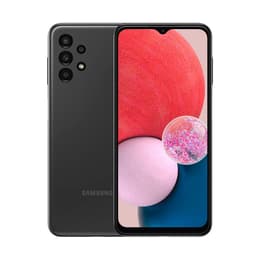


Galaxy A13 Vs Google Pixel 8 Pro

Galaxy A13
Galaxy A13
Starting at

Refurbished price:£73.00

Versus £249.00 new

See options
Google Pixel 8 Pro
Google Pixel 8 Pro
Starting at

Refurbished price:£253.00

Versus £960.91 new

See options

Ratings

The Samsung Galaxy A13, released in March 2022, and the Google Pixel 8 Pro, launched in October 2023, represent distinct segments within the smartphone market. While both operate on the Android platform, the Galaxy A13 is positioned as an accessible device for everyday essentials, whereas the Pixel 8 Pro offers a premium experience with advanced features, particularly in camera technology and software longevity.

Scores

Durability

The expected lifespan and durability of these two devices vary significantly, largely due to their different market positions and manufacturer commitments.

  • Release Timeline and Software Support: The Galaxy A13, released in March 2022, typically receives two major Android OS upgrades and four years of security updates. In contrast, the Pixel 8 Pro, launched in October 2023, boasts an industry-leading commitment of seven years of OS and security updates, ensuring a much longer period of software relevance and functionality.
  • Physical Durability: The Galaxy A13 features a build primarily composed of a glass front (Gorilla Glass 5 on some variants) and a plastic back and frame, offering a degree of resilience for daily use. The Pixel 8 Pro, however, utilizes more robust materials, including Gorilla Glass Victus 2 on both the front and back, an aluminum frame, and an IP68 rating for dust and water resistance, contributing to enhanced long-term physical durability.
  • Repairability: While specific repairability scores for the Galaxy A13 are not widely publicized, its construction generally aligns with budget-friendly devices, which can sometimes be less straightforward to repair. The Pixel 8 Pro has demonstrated a relatively good repairability score for a flagship device, with Google also committing to providing spare parts for seven years, which can extend its practical lifespan.

Year of Release

2022

2023

Compatible with latest Update

No

Yes

Foldable

No

No

Performance

Performance is a key differentiator between these two smartphones, impacting everything from daily responsiveness to handling demanding applications.

  • Processing Power and Responsiveness: The Galaxy A13 is equipped with an entry-level processor, suitable for fundamental tasks such as web browsing, social media, and basic communication. Users may experience slower app loading times and occasional stutters when multitasking or running more intensive applications. The Pixel 8 Pro, featuring a current-generation flagship processor, delivers exceptional speed and fluidity across all tasks, including seamless multitasking, rapid app launches, and intensive gaming, without noticeable slowdowns.
  • Storage and Multitasking: The Galaxy A13 offers various storage configurations (32GB, 64GB, 128GB) and supports expandable storage via a microSD card up to 1TB. It typically comes with 3GB to 6GB of RAM, which can limit the number of applications that can run smoothly in the background. The Pixel 8 Pro, on the other hand, provides ample internal storage options (128GB, 256GB, 512GB, 1TB) and features 12GB of RAM, offering substantial capacity for extensive multitasking and ensuring a consistently responsive user experience.
  • Battery Performance: Both devices house large batteries; the Galaxy A13 has a 5000mAh capacity, often lasting more than a full day of typical use, with 15W wired charging. The Pixel 8 Pro comes with a 5050mAh battery, designed to last a full day for most users, and supports faster 30W wired charging as well as wireless charging.

Memory (GB)

4 GB

12 GB

Screen quality

The visual experience offered by these two devices differs considerably due to their display technologies and capabilities.

  • Display Technology and Clarity: The Galaxy A13 features a 6.6-inch PLS LCD panel with a 1080x2408 Full HD+ resolution, providing adequate visuals for general use with clear text and images. The Google Pixel 8 Pro utilizes a 6.7-inch LTPO OLED display, known for its ability to produce deep blacks, vibrant colors, and excellent contrast, with a higher resolution of 2992x1344 pixels.
  • Brightness and Refresh Rate: The Galaxy A13's display is suitably bright for indoor viewing, though it operates at a standard 60Hz refresh rate, which is common for its category. The Pixel 8 Pro's display offers significantly higher peak brightness, improving visibility in bright outdoor conditions, and features an adaptive refresh rate that can dynamically adjust from 1Hz to 120Hz, resulting in smoother scrolling and a more fluid visual experience.
  • Viewing Experience: While both screens offer a large viewing area, the Pixel 8 Pro's OLED technology and higher resolution provide a more immersive and detailed viewing experience, particularly for media consumption and content creation, with richer colors and deeper contrast compared to the Galaxy A13's LCD panel.

Resolution

1080 x 2408

1344 x 2992

Screen type

PLS LCD

LTPO OLED

Audiovisual

The camera systems on the Galaxy A13 and Pixel 8 Pro cater to different user expectations, with the Pixel offering a more advanced and versatile photography experience.

  • Rear Camera Systems: The Galaxy A13 features a quad-camera setup, including a 50MP main sensor, a 5MP ultrawide, a 2MP macro, and a 2MP depth sensor. The Pixel 8 Pro boasts a triple-camera system with a 50MP main sensor, a 48MP ultrawide lens, and a 48MP telephoto lens capable of 5x optical zoom, providing greater flexibility and detail across various focal lengths.
  • Photography Performance: In well-lit conditions, the Galaxy A13's main camera can capture decent images, but its ultrawide and other auxiliary lenses offer more limited quality, and it lacks a dedicated night mode. The Pixel 8 Pro excels in photography across diverse lighting conditions, delivering excellent dynamic range, accurate colors, and superior low-light performance thanks to features like Night Sight. Its computational photography capabilities enhance overall image quality significantly.
  • Video and Audio Capabilities: The Galaxy A13 records video at up to 1080p resolution at 30 frames per second and does not support 4K recording or advanced stabilization. The Pixel 8 Pro offers advanced video recording, including 4K resolution at higher frame rates, enhanced stabilization, and professional-grade video features. It also provides superior microphone quality for clearer audio capture during recordings and calls.

Main camera

50 megapixels

50 megapixels

Front camera

8 megapixels

10.5 megapixels

Miscellaneous

Beyond core performance and display, several practical elements distinguish these two devices in terms of connectivity, design, and additional features.

  • Connectivity and Ports: The Galaxy A13 supports 4G LTE (with some regional variants offering 5G), Wi-Fi 5, and Bluetooth 5.0, and includes a 3.5mm headphone jack and a USB-C 2.0 port. The Pixel 8 Pro offers more advanced connectivity with 5G, Wi-Fi 7, and Bluetooth 5.3, featuring a USB-C 3.2 port but omitting the traditional headphone jack.
  • Sensors and Security: For security, the Galaxy A13 typically includes a side-mounted fingerprint sensor. The Pixel 8 Pro integrates an under-display fingerprint sensor, face recognition for unlocking, and a unique temperature sensor, adding to its suite of functionalities.
  • Design and Build: The Galaxy A13 has dimensions of 165.1 x 76.4 x 8.8 mm and weighs 195g, featuring a practical plastic construction. The Pixel 8 Pro measures 162.6 x 76.5 x 8.8 mm and weighs 213g, presenting a more premium feel with its glass and aluminum build.

Weight

195 g

213 g

Screen size (in)

6.6

6.7

Mobile network

4G

5G

SIM card

Dual Physical SIM

Physical SIM + eSIM

Carrier compatibility

Unlocked

Unlocked

The Samsung Galaxy A13 and Google Pixel 8 Pro cater to different user needs and priorities. The Galaxy A13 is often praised for its robust battery life, expandable storage, and the inclusion of a 3.5mm headphone jack, making it a practical choice for users seeking essential smartphone functions without advanced features. Common criticisms often point to its performance limitations and basic display quality.

Conversely, the Google Pixel 8 Pro receives acclaim for its exceptional camera capabilities, long-term software support, powerful performance, and vibrant, high-refresh-rate display. User feedback frequently highlights its advanced AI features and overall premium experience. While its battery life is generally good, some users note it may not be class-leading compared to certain competitors.

Users prioritizing extended software updates, cutting-edge camera technology, and a fluid, high-performance experience for demanding applications will find the Pixel 8 Pro well-suited to their needs. Those who value long battery life, physical connectivity options like a headphone jack, and expandable storage for basic daily tasks may prefer the Galaxy A13. Both devices offer a gateway to the Android ecosystem, and for those considering a more sustainable choice, quality-assured refurbished options for both models are available, providing an eco-friendly alternative to purchasing new.


See all articles

Our recent comparisons