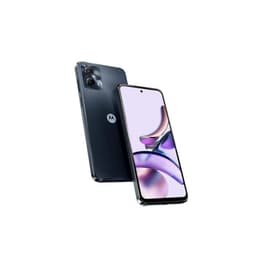
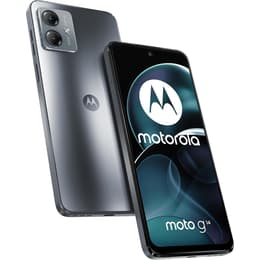

Motorola Moto G13 Vs Motorola Moto G14

Motorola Moto G13
Motorola Moto G13
Starting at

Refurbished price:£99.00

Versus £166.76 new

See options
Motorola Moto G14
Motorola Moto G14
See options

Ratings

The Motorola Moto G13, released in January 2023, and the Motorola Moto G14, launched in August 2023, are both smartphones designed for everyday use. While they share a similar design philosophy and operate on the Android platform, key differences lie in their display technology, processing capabilities, and software update commitments. These distinctions can influence user experience, particularly concerning visual clarity and long-term software support.

Scores

Durability

When considering the practical lifespan of these devices, several factors come into play, including their release timelines, software support, and physical durability.

  • Release Timeline and Software Support: The Moto G13, launched in January 2023, typically receives one major Android OS update (to Android 14) and security updates until January 2026. The Moto G14, released in August 2023, is guaranteed to receive an upgrade to Android 14 and benefits from three years of security updates, potentially extending its usable software life slightly longer than its predecessor.
  • Repairability and Build: Both models feature a plastic body construction and are rated IP52 for dust and splash resistance, offering a basic level of protection against everyday elements. Their design and material choices are typical for their category, focusing on functional durability rather than premium finishes.
  • Expected Practical Lifespan: Given Motorola's update policies for this series, both devices are expected to remain functional for general tasks for several years. The Moto G14's slightly longer security update commitment provides a marginal advantage for users prioritizing extended security.

Year of Release

2023

2023

Compatible with latest Update

No

Yes

OS

Android

Android

Foldable

No

No

Performance

The performance of a smartphone is crucial for daily tasks, from navigating apps to handling multimedia. The Moto G13 and Moto G14 offer different internal components that translate to varying real-world experiences.

  • Processor Capabilities: The Moto G13 is equipped with a MediaTek Helio G85 processor, while the Moto G14 features a Unisoc T616 chipset. In practical terms, both processors are designed for efficient handling of common applications and light multitasking. The Moto G14's processor may offer a slight edge in overall system responsiveness and benchmark scores, particularly in multi-core tasks, making it marginally smoother for general use.
  • Storage and Responsiveness: Both devices typically come with 4GB of RAM, which is sufficient for basic app usage and switching between a few applications. The Moto G13 offers 64GB or 128GB storage options, expandable via microSD up to 512GB, while the Moto G14 generally provides 128GB or 256GB internal storage, expandable up to 1TB. The Moto G14's larger base storage and higher expansion limit offer more flexibility for users with extensive media libraries or numerous applications.
  • Battery Behavior: Both the Moto G13 and Moto G14 house a 5000mAh battery, providing ample power for a full day of moderate to heavy use. The Moto G14 supports faster 20W charging, compared to the Moto G13's 10W charging, meaning the G14 can replenish its battery more quickly.

Memory (GB)

4 GB

4 GB

Screen quality

The display is a primary interface for any smartphone, influencing everything from reading text to watching videos. The Moto G13 and Moto G14 present a notable difference in screen specifications.

  • Display Technology and Resolution: Both phones feature a 6.5-inch IPS LCD panel. However, the Moto G13 has an HD+ resolution (1600x720 pixels), resulting in a pixel density of approximately 270 ppi. The Moto G14 upgrades to a Full HD+ resolution (2400x1080 pixels), offering a sharper image with around 405 ppi. This higher resolution on the G14 provides clearer text and more detailed visuals, particularly noticeable when viewing high-definition content.
  • Refresh Rate and Brightness: The Moto G13 features a 90Hz refresh rate, which contributes to smoother scrolling and a more fluid visual experience during navigation. In contrast, the Moto G14 maintains a standard 60Hz refresh rate. Both displays offer acceptable brightness levels for indoor use, with the Moto G13 typically reaching around 400 nits. Outdoor visibility is adequate but not exceptional on either device.
  • Viewing Experience: Users prioritizing a sharper, more detailed image for media consumption will find the Moto G14's Full HD+ display more appealing. Those who value smoother interactions and scrolling in daily use might prefer the Moto G13's 90Hz refresh rate, despite its lower resolution.

Resolution

720 x 1600

1080 x 2400

Screen type

IPS LCD

IPS LCD

Audiovisual

For many users, the camera system is a key consideration. Both Motorola devices offer capable cameras for their segment, with some distinctions in their setup and performance.

  • Main Camera Capabilities: Both the Moto G13 and Moto G14 feature a 50MP main camera sensor, capable of capturing detailed images in good lighting conditions. The G13 includes a triple-camera array with a 50MP main, 2MP macro, and 2MP depth sensor. The G14 opts for a dual-camera setup, combining its 50MP main sensor with a 2MP macro lens.
  • Low-Light and Video Performance: In challenging low-light conditions, both cameras perform adequately for their class, though detail and dynamic range can be limited. The Moto G14's camera system is noted for its 50-megapixel quad-pixel technology, which can enhance light capture. Both phones support 1080p video recording at 30 frames per second.
  • Audio and Media Consumption: Both devices offer stereo speakers, with the Moto G14 specifically featuring Dolby Atmos support, which can enhance the audio experience for media consumption. Microphone quality for calls and recordings is generally clear on both, suitable for everyday communication.

Main camera

50 megapixels

50 megapixels

Front camera

8 megapixels

8 megapixels

Miscellaneous

Beyond core features, several practical elements contribute to the overall user experience and daily convenience of a smartphone.

  • Connectivity and Ports: Both the Moto G13 and Moto G14 support 4G LTE networks, Wi-Fi 5 (802.11 a/b/g/n/ac), and include a 3.5mm headphone jack. They both utilize a USB-C port for charging and data transfer. A notable difference is the inclusion of NFC on the Moto G13, which is generally absent on the Moto G14, impacting contactless payment and quick pairing capabilities.
  • Sensors and Security: Both models feature a side-mounted fingerprint sensor for secure unlocking, along with face recognition. Standard sensors like accelerometers and proximity sensors are present on both.
  • Design and Handling: The Moto G13 weighs approximately 183.5g, while the Moto G14 is slightly lighter at 177g. Both have similar dimensions, offering a comfortable grip and handling. The Moto G14 is available in a vegan leather option, providing a distinct tactile feel compared to the Moto G13's plastic finish.

Weight

183 g

177 g

Screen size (in)

6.5

6.5

Mobile network

4G

4G

SIM card

Dual Physical SIM

Dual Physical SIM

Carrier compatibility

Unlocked

Unlocked

User feedback for both the Moto G13 and Moto G14 highlights their strengths as functional, everyday smartphones. For the Moto G13, common praise points include its impressive battery life and the smooth scrolling offered by its 90Hz display. Users also appreciate its clean Android software experience and the inclusion of NFC for contactless interactions. However, some criticisms point to its HD+ display resolution being less sharp than competitors and camera performance being acceptable primarily in good lighting conditions.

The Moto G14 is frequently lauded for its sharper Full HD+ display, which significantly enhances the viewing experience for multimedia content. Its stereo speakers with Dolby Atmos are also a recurring positive, providing a more immersive audio experience. On the other hand, some users have noted that its 60Hz refresh rate can feel less fluid compared to higher refresh rate screens, and there have been isolated reports of performance issues after major software updates.

Users prioritizing a sharper visual experience for streaming and browsing may prefer the Moto G14. Its faster charging and larger expandable storage also cater to those who consume a lot of media or need more space. Conversely, users who value smoother navigation and the convenience of NFC for daily transactions might find the Moto G13 to be a better fit. Both devices offer a robust battery life suitable for extended use. For those looking for an eco-friendly alternative, both the Moto G13 and Moto G14 are available as quality-assured refurbished options, providing a sustainable choice without compromising on functionality.

See all articles

Our recent comparisons