

Google Pixel 9 Pro XL Vs Oppo Find X5

Google Pixel 9 Pro XL
Starting at

Refurbished price:£384.00

Versus £1,093.99 new

See options
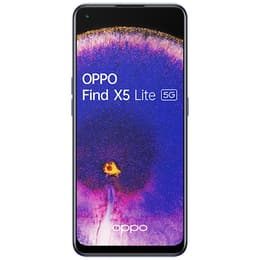
Oppo Find X5
Oppo Find X5
Starting at

Refurbished price:£296.00

Versus £816.65 new

See options

Ratings

The Google Pixel 9 Pro XL, released in August 2024, and the Oppo Find X5, launched in February 2022, represent distinct approaches to the premium smartphone experience. While both devices operate on the Android platform, the Pixel 9 Pro XL emphasizes advanced computational photography and extended software longevity, whereas the Find X5 focuses on a balanced blend of camera capabilities and rapid charging technology. These differences cater to varying user priorities in the Android ecosystem.

Scores

Durability

When considering the long-term usability of a smartphone, software support and physical resilience are key factors. The Pixel 9 Pro XL and the Oppo Find X5 offer different propositions in these areas.

  • Software Longevity: The Google Pixel 9 Pro XL stands out with an extensive commitment to software updates, promising seven years of Android OS upgrades, extending its support well into the future. In contrast, the Oppo Find X5, released earlier, is expected to receive three major Android OS updates and four years of security patches, likely concluding its major OS updates around Android 15.
  • Physical Durability: The Pixel 9 Pro XL features an IP68 rating for dust and water resistance, providing robust protection against environmental elements. Its display is safeguarded by Gorilla Glass Victus 2. The Oppo Find X5, while well-built and sturdy, does not carry an official IP68 rating for the standard model, though its display is protected by Corning Gorilla Glass Victus.
  • Practical Lifespan: Users prioritizing the absolute latest software features and security updates for the longest possible duration will find the Pixel 9 Pro XL more aligned with their needs. For those who typically upgrade their device within a few years and value a solid build, the Oppo Find X5 remains a capable option.

Year of Release

2024

2022

Compatible with latest Update

Yes

Yes

OS

Android

Android

Foldable

No

No

Performance

The performance of a smartphone is crucial for daily tasks, from navigating applications to engaging in demanding activities like gaming. Both devices deliver capable performance, though they utilize different underlying hardware architectures.

  • System Responsiveness: The Google Pixel 9 Pro XL is powered by Google's Tensor G4 processor, designed to handle demanding applications and multitasking smoothly, with a focus on efficient operation. The Oppo Find X5, featuring a previous-generation flagship processor, also provides a fluid user experience, managing intensive apps and games without noticeable lag or stuttering.
  • Battery Behavior: The Pixel 9 Pro XL is equipped with a 5060mAh battery, demonstrating exceptional longevity in tests, often lasting nearly 19 hours in continuous video playback and frequently extending to a second day for many users. The Oppo Find X5 includes a 4800mAh battery, generally providing a full day of use and sometimes stretching into a second day for lighter usage. However, some users report that heavy use can lead to more frequent charging.
  • Charging and Storage: The Oppo Find X5 offers rapid 80W wired charging, capable of fully recharging the device in approximately 40 minutes, alongside 30W wireless charging and 10W reverse wireless charging. The Pixel 9 Pro XL also supports fast charging, though specific speeds are not detailed in the same manner. Both devices offer various internal storage configurations, with the Pixel 9 Pro XL available in 128GB, 256GB, and 512GB options, and the Oppo Find X5 in 128GB and 256GB, neither supporting expandable storage.

Memory (GB)

16 GB

8 GB

Screen quality

The display is a primary interface for any smartphone, and both the Pixel 9 Pro XL and the Oppo Find X5 offer vibrant viewing experiences with distinct characteristics.

  • Display Technology and Clarity: Both devices feature OLED displays, known for deep blacks and rich colors. The Google Pixel 9 Pro XL boasts a 6.8-inch Super Actua LTPO OLED panel with a resolution of 2992 x 1344 pixels, offering a sharp and detailed visual experience. The Oppo Find X5 has a 6.55-inch AMOLED display with a 1080x2400 (FHD+) resolution, providing clear and vibrant visuals for everyday use.
  • Brightness and Refresh Rate: The Pixel 9 Pro XL's display can reach a peak brightness of up to 3000 nits, ensuring excellent visibility even in bright outdoor conditions, and features an adaptive refresh rate that can scale from 1Hz to 120Hz for smooth scrolling and power efficiency. The Oppo Find X5 offers a peak brightness of up to 1000 nits and a 120Hz refresh rate, which provides a smooth visual experience, though it is not an LTPO panel and thus only scales down to 60Hz.
  • Viewing Experience: Users who prioritize a larger, brighter display with higher resolution and more adaptive refresh rate technology will find the Pixel 9 Pro XL's screen to be a more advanced option. The Oppo Find X5 still delivers a high-quality viewing experience suitable for media consumption and general use, with its vibrant colors and smooth refresh rate.

Resolution

1344 x 2992

1080 x 2400

Screen type

LTPO OLED

AMOLED

Audiovisual

Camera capabilities are a significant consideration for many smartphone users, and both the Pixel 9 Pro XL and the Oppo Find X5 offer advanced photographic tools, each with their own strengths.

  • Rear Camera Systems: The Google Pixel 9 Pro XL features a versatile triple-camera setup, including a 50MP primary sensor, a 48MP ultra-wide camera with autofocus for macro shots, and a 48MP telephoto lens offering 5x optical zoom and up to 30x digital zoom. The Oppo Find X5 also has a triple rear camera system, comprising a 50MP wide lens, a 50MP ultra-wide lens, and a 13MP telephoto lens with 2x optical zoom.
  • Photography and Video Features: The Pixel 9 Pro XL is known for its computational photography, offering features like Night Sight, Astrophotography, Portrait Mode, and Super Res Zoom for both photos and video. It also includes Video Boost for AI-enhanced video up to 8K resolution and Pro Controls for manual adjustments. The Oppo Find X5, with Hasselblad Color Calibration, delivers vibrant and detailed photos, performing well in low-light conditions and offering 4K video recording. However, its optical zoom is more limited, and some users have noted occasional inconsistencies in camera performance or AI over-brightening faces.
  • Front Camera and Audio: The Pixel 9 Pro XL is equipped with a 42MP front-facing camera capable of 4K 60fps video recording. The Oppo Find X5 has a 32MP front camera. Both devices offer good speaker output for media consumption, and the Pixel series is generally well-regarded for microphone quality in calls and recordings.

Main camera

50 megapixels

50 megapixels

Front camera

42 megapixels

32 megapixels

Miscellaneous

Beyond the core features, several practical elements contribute to the overall user experience of a smartphone. The Pixel 9 Pro XL and Oppo Find X5 present different combinations of these aspects.

  • Connectivity and Ports: Both devices support 5G connectivity and modern Wi-Fi standards, including Wi-Fi 6, ensuring fast and reliable wireless communication. They also feature Bluetooth for connecting accessories. For physical connections, both utilize a USB-C port. The Oppo Find X5, like many contemporary smartphones, does not include a traditional headphone jack.
  • Biometric Security and Sensors: The Google Pixel 9 Pro XL incorporates an under-display ultrasonic fingerprint sensor for secure unlocking, alongside other sensors like an accelerometer, gyroscope, proximity sensor, compass, and barometer. The Oppo Find X5 also uses an optical under-display fingerprint sensor and includes a similar array of environmental sensors.
  • Design and Handling: The Pixel 9 Pro XL has dimensions of 162.8 x 76.6 x 8.5mm and weighs 221g, offering a substantial feel in hand. The Oppo Find X5 is slightly more compact and lighter at 160.3 x 72.6 x 8.7mm and 196g, which some users may find more comfortable for one-handed use. Both devices feature premium build materials, with the Pixel 9 Pro XL utilizing glass and aluminum, and the Find X5 featuring a glass back.

Weight

221 g

196 g

Screen size (in)

6.8

6.55

Mobile network

5G

5G

SIM card

Physical SIM + eSIM

Physical SIM + eSIM

Carrier compatibility

Unlocked

Unlocked

Connector

USB-C

USB-C

User feedback for the Google Pixel 9 Pro XL often highlights its exceptional battery life, with many reporting it as a device that can comfortably last through a full day and often into a second. Its advanced camera system, particularly its computational photography features and extended optical zoom, receives praise for producing high-quality images and versatile video capabilities. Criticisms are less common but sometimes touch upon its physical size and weight for those preferring a more compact device. The Oppo Find X5 is frequently lauded for its vibrant OLED display, fast charging speeds, and generally good camera performance, especially in everyday scenarios and low light. However, some users have expressed concerns about its battery life under heavy usage, the limitations of its 2x optical zoom, and occasional inconsistencies in camera processing, such as AI over-brightening faces.

Users prioritizing long-term software support, cutting-edge computational photography, and extended battery endurance may find the Google Pixel 9 Pro XL better suited to their needs. Its larger display and robust durability features also cater to those seeking a premium, resilient device. Conversely, individuals who value rapid charging, a slightly more compact design, and a strong all-around camera system for general use might lean towards the Oppo Find X5. Both devices offer a quality Android experience, and choosing between them often comes down to these specific priorities. For those considering either model, exploring quality-assured refurbished options can provide an eco-friendly alternative.


See all articles

Our recent comparisons