iPhone 12 Pro Max Vs iPhone 13 mini

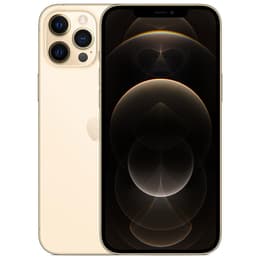
iPhone 12 Pro Max
iPhone 12 Pro Max
Starting at

Refurbished price:£235.00

Versus £1,079.00 new

See options
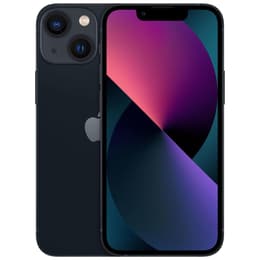
iPhone 13 mini
iPhone 13 mini
Starting at

Refurbished price:£184.00

Versus £649.00 new

See options

Ratings

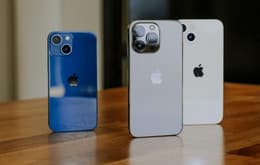
The iPhone 12 Pro Max, released in November 2020, and the iPhone 13 Mini, launched in September 2021, represent distinct approaches within Apple's smartphone lineup. While both operate on the iOS platform, they cater to different user preferences, primarily distinguished by their physical size, battery capacity, and camera system focus. The 12 Pro Max offers a large display and advanced camera features, whereas the 13 Mini prioritizes a compact form factor with updated internal components.

Scores

Durability

When considering the long-term usability of these devices, their release timelines and Apple's software support policies are key factors. Both models are designed for extended software support, but their differing launch dates impact their remaining update cycles.

  • Software Longevity: The iPhone 12 Pro Max, released in November 2020, is expected to receive major iOS updates for approximately 5-6 years from its launch, with current support extending to iOS 26.3.1. The iPhone 13 Mini, launched in September 2021, will likely receive full software updates until 2026 or 2027, followed by security updates thereafter. This means the 13 Mini will generally have a slightly longer period of active software support.
  • Repairability: The iPhone 12 Pro Max received a repairability score of 6 out of 10 from iFixit, noting that while many parts are replaceable, proprietary screws and water sealing can complicate repairs. The iPhone 13 Mini initially scored lower due to issues with Face ID after screen replacements, but an iOS update improved its score to 6 out of 10, aligning it with other recent iPhones. Both devices utilize Ceramic Shield on the front for improved drop performance.
  • Practical Lifespan: Users on forums report that the iPhone 12 Pro Max can still perform well after nearly five years, though some note a slowdown with lower battery health. The iPhone 13 Mini, being a year newer, benefits from a more recent processor and is expected to maintain smooth performance for a comparable or slightly longer duration, especially with its improved battery life over its predecessor.

Year of Release

2020

2021

Compatible with latest Update

Yes

Yes

OS

iOS

iOS

Foldable

No

No

Performance

The performance of a smartphone is crucial for daily tasks, from app usage to demanding games. Both the iPhone 12 Pro Max and iPhone 13 Mini offer robust performance, but they differ in their underlying hardware generation and how that translates to user experience.

  • Processing Capabilities: The iPhone 12 Pro Max features a powerful processor that delivers excellent performance for a wide range of applications, from everyday browsing to intensive gaming and video editing. The iPhone 13 Mini, being a newer model, incorporates a subsequent generation processor, which provides a noticeable improvement in speed and efficiency, making it one of the fastest smartphones available at its release. This translates to smoother app loading and more responsive multitasking.
  • Battery Behavior: The iPhone 12 Pro Max is known for its exceptional battery life, often lasting more than 48 hours between charges with moderate use, and over 15 hours in video rundown tests. This is a significant advantage for heavy users. The iPhone 13 Mini, despite its smaller size, offers improved battery life compared to its direct predecessor, the 12 Mini, and can comfortably last a full day for many users, though heavy usage might require more frequent charging.
  • Storage and Multitasking: Both devices offer various storage options, starting from 128GB, which is generally sufficient for most users. The 12 Pro Max comes with 6GB of RAM, while the 13 Mini has 4GB of RAM. While both handle multitasking smoothly, the larger RAM in the 12 Pro Max can provide a slight edge in keeping more applications active in the background without needing to reload.

Memory

6 GB

4 GB

Screen quality

The display is a primary interface for any smartphone, and both the iPhone 12 Pro Max and iPhone 13 Mini offer high-quality viewing experiences, albeit in different sizes and with subtle generational enhancements.

  • Display Technology and Clarity: Both models feature Super Retina XDR OLED displays, known for deep blacks, vibrant colors, and excellent contrast ratios. The 12 Pro Max has a 6.7-inch display with a resolution of 2778x1284 pixels at 458 ppi, offering a vast and immersive viewing area. The 13 Mini, with its 5.4-inch display and a resolution of 2340x1080 pixels at 476 ppi, provides a very sharp image in a compact form factor.
  • Brightness and Outdoor Visibility: Both displays offer high brightness levels, with the 12 Pro Max reaching up to 800 nits typical brightness and 1200 nits for HDR content. The 13 Mini improves upon this, offering 800 nits typical brightness and also peaking at 1200 nits for HDR, ensuring good visibility even in bright outdoor conditions.
  • Screen Size and Viewing Experience: The 12 Pro Max's large screen is ideal for media consumption, gaming, and productivity tasks where screen real estate is beneficial. The 13 Mini's smaller screen is preferred by users who prioritize one-handed use and easy pocketability, offering a full iPhone experience in a condensed size.

Resolution

1284 x 2778

1080 x 2340

Screen type

Super Retina XDR OLED

Super Retina XDR OLED

Audiovisual

Both the iPhone 12 Pro Max and iPhone 13 Mini are capable photography tools, but they feature different camera systems and capabilities that cater to varying photographic needs.

  • Rear Camera Systems: The iPhone 12 Pro Max boasts a triple-lens rear camera system, including wide, ultra-wide, and telephoto lenses, along with a LiDAR sensor for improved low-light focusing and depth sensing. Its main wide camera features a larger sensor for better light capture and sensor-shift optical image stabilization, leading to improved low-light performance and cleaner photos. The iPhone 13 Mini features a dual-camera system with wide and ultra-wide lenses, with an upgraded wide camera sensor that also enhances low-light performance.
  • Photography Performance: The 12 Pro Max excels in daylight photography with realistic colors and good detail, and its telephoto lens provides a longer optical zoom for portraits. Its low-light performance is strong, utilizing long exposures and image stacking. The 13 Mini also captures clear photos with true-to-life colors in good lighting. Its low-light performance is notably improved over its predecessor, making it capable of excellent night shots.
  • Video Recording and Features: Both devices support 4K video recording at up to 60 frames per second. The 12 Pro Max supports Dolby Vision HDR recording, offering enhanced color and dynamic range in videos. The 13 Mini introduces Cinematic mode, which allows for shallow depth of field effects in videos.

Main camera

12 megapixels

12 megapixels

Front camera

12 megapixels

12 megapixels

Miscellaneous

Beyond core performance and display, several practical elements contribute to the overall user experience and differentiate these two iPhone models.

  • Connectivity and Ports: Both the iPhone 12 Pro Max and iPhone 13 Mini support 5G networks for faster cellular speeds, along with Wi-Fi 6 and Bluetooth 5.0. Both utilize the Lightning connector for charging and data transfer, and support MagSafe for magnetic wireless charging and accessories.
  • Sensors and Security: Both devices feature Face ID for secure facial recognition. The 12 Pro Max includes a LiDAR scanner, which aids in augmented reality applications and improves autofocus in low-light conditions. The 13 Mini does not have a LiDAR scanner.
  • Physical Characteristics: The iPhone 12 Pro Max is a large and substantial device, weighing 228 grams and measuring 160.8 x 78.1 x 7.4 mm. This size contributes to its large screen and extended battery life but can make one-handed use challenging for some. The iPhone 13 Mini is significantly smaller and lighter, weighing 141 grams and measuring 131.5 x 64.2 x 7.65 mm. Its compact size makes it easy to handle and pocket. Both phones feature a durable Ceramic Shield front cover and are rated for IP68 water and dust resistance.

Weight

226 g

140 g

Width

7,81 cm

6,42 cm

Height

16,08 cm

13,15 cm

Depth

0,74 cm

0,75 cm

Screen size (in)

6.7

5.4

Network

5G

5G

SIM card

Physical SIM + eSIM

Physical SIM + eSIM

Carrier compatibility

Unlocked

Unlocked

Connector

Lightning

Lightning

The iPhone 12 Pro Max and iPhone 13 Mini offer distinct experiences, each with its own set of advantages, as reflected in user feedback and specifications. The 12 Pro Max is frequently praised for its expansive display, which provides an immersive viewing experience for media and productivity, and its class-leading battery life, often lasting two days for many users. Its advanced camera system, particularly the larger sensor and telephoto lens, is also a common highlight for those prioritizing photography. However, its considerable size and weight can be a criticism for users who prefer a more compact device.

Conversely, the iPhone 13 Mini is lauded for its compact form factor, making it comfortable for one-handed use and easy to carry. Users appreciate that it delivers a full iPhone experience without compromising on performance or camera quality, despite its smaller size. Its improved battery life over its predecessor is also a frequent positive point. A common criticism, however, is that its small screen size might not be ideal for extensive media consumption or gaming.

Users prioritizing a large display, extended battery life, and a more versatile camera system with a telephoto lens may find the iPhone 12 Pro Max better suited to their needs. Those who value a highly portable device that is easy to handle with one hand, while still offering strong performance and an excellent camera for everyday use, may lean towards the iPhone 13 Mini. Both models represent solid choices, and opting for a quality-assured refurbished option can be a sustainable way to acquire either device.

See all articles

Our recent comparisons