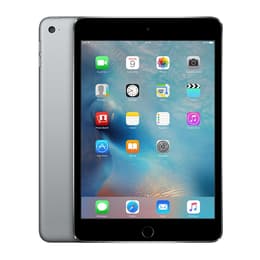
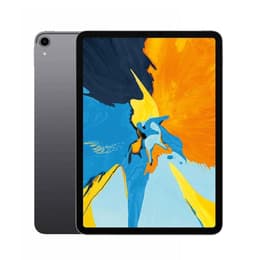

iPad mini 3 (2015, A8 series) Vs iPad Pro (2018, A12 series)

iPad mini 3 (2015, A8 series)
Starting at

Refurbished price:£50.00

Versus £449.00 new

See options
iPad Pro (2018, A12 series)
Starting at

Refurbished price:£225.99

Versus £769.00 new

See options

Ratings

The iPad Mini 4, released in September 2015, and the iPad Pro 2018, launched in October of that year, represent distinct eras in Apple's tablet evolution. While the Mini 4 offers a compact form factor, the iPad Pro 2018 introduced a significant redesign and substantial performance upgrades, including a more advanced display and a shift in connectivity. Both devices operate on Apple's iPadOS, providing access to a vast ecosystem of applications, but their capabilities and target users differ considerably.

Scores

Durability

The longevity of a tablet is often determined by its build quality and ongoing software support. These two iPads, separated by three years, show notable differences in their expected practical lifespans.

  • Software Support: The iPad Mini 4 originally shipped with iOS 9 and has received updates up to iPadOS 15.8.7, released in March 2026, indicating a long period of software relevance. The iPad Pro 2018, starting with iOS 12, currently supports iPadOS 17, and is expected to receive updates for a longer duration due to its newer release and more powerful internal components.
  • Physical Durability: Both devices feature aluminum bodies, offering a robust feel. The iPad Pro 2018 introduced a more modern, squared-off design, which some users found to be aesthetically pleasing, while the Mini 4 retained a more classic iPad design. Repairability scores for both models are generally moderate, with components like the battery being replaceable by skilled technicians.
  • Expected Lifespan: Users seeking the longest possible software support and access to the latest features will find the iPad Pro 2018 to be a more future-proof option. The iPad Mini 4, while still functional for basic tasks, is nearing the end of its major software update cycle.

Year of Release

2015

2018

Compatible with latest Update

No

Yes

OS

iPadOS

iPadOS

Maximum Operating System supported

iPadOS 15

iPadOS 18

Performance

Performance is a key differentiator between these two tablets, reflecting the advancements in mobile processing technology over three years.

  • Processing Power: The iPad Mini 4 is equipped with an A8 chip, which handles everyday tasks like web browsing, email, and light gaming smoothly. The iPad Pro 2018, featuring the A12X Bionic chip, offers significantly greater processing power, enabling seamless multitasking, demanding applications, and graphically intensive games with ease.
  • Multitasking and Responsiveness: With 2GB of RAM, the iPad Mini 4 can manage several apps concurrently, though switching between more intensive applications might show some delay. The iPad Pro 2018 typically comes with 4GB of RAM (with some 1TB models featuring 6GB), providing a more fluid and responsive experience for heavy multitasking and professional workflows.
  • Storage Options: The iPad Mini 4 was available with storage capacities up to 128GB. The iPad Pro 2018 offers a wider range of storage, from 64GB up to 1TB, catering to users with extensive storage needs for large files, applications, and media.

Memory (GB)

2 GB

4 GB

Processor

Apple A8

Apple A12X Bionic

Screen quality

The display experience varies significantly between the compact iPad Mini 4 and the larger, more advanced iPad Pro 2018.

  • Display Technology and Resolution: The iPad Mini 4 features a 7.9-inch IPS LCD Retina display with a resolution of 2048x1536 pixels, resulting in a pixel density of 326 pixels per inch. The iPad Pro 2018 introduced the Liquid Retina IPS LCD display, available in 11-inch (2388x1668 pixels) and 12.9-inch (2732x2048 pixels) sizes, both at 264 pixels per inch.
  • Brightness and Color Accuracy: The Mini 4's display offers good color accuracy with 101% sRGB coverage and a brightness of around 400 nits, along with an anti-reflective coating. The iPad Pro 2018's Liquid Retina display boasts wider color support (P3), True Tone technology for adaptive white balance, and higher typical brightness, making it more suitable for professional creative work and outdoor viewing.
  • Refresh Rate and Smoothness: A key advantage of the iPad Pro 2018 is its ProMotion technology, which allows for an adaptive refresh rate up to 120Hz, providing noticeably smoother scrolling and more responsive interactions compared to the standard 60Hz refresh rate of the iPad Mini 4.

Resolution

2048 x 1536

2388 x 1668

True Tone

No

Yes

Pro-Motion

No

Yes

Screen type

Retina display

Liquid Retina display

Pixel density

326ppp

264ppp

Brightness

400 nits brightness

600 nits brightness

Sound quality

Speakers

Stereo speakers

Four speaker audio

Audiovisual

While tablets are not typically primary photography devices, their camera capabilities have evolved to support various uses, from video calls to document scanning.

  • Rear Camera System: The iPad Mini 4 includes an 8-megapixel rear camera capable of recording 1080p HD video. The iPad Pro 2018 features a more advanced 12-megapixel rear camera with a wider f/1.8 aperture, supporting 4K video recording, which offers greater detail and improved low-light performance.
  • Front Camera and Video Calls: For video conferencing and selfies, the Mini 4 has a 1.2-megapixel FaceTime HD camera that records 720p video. The iPad Pro 2018 significantly upgrades this to a 7-megapixel TrueDepth front camera, enabling 1080p HD video recording, Portrait Mode selfies, and the advanced Face ID facial recognition system.
  • Audio Experience: The iPad Mini 4 provides stereo speakers. The iPad Pro 2018 enhances the audio experience with a quad-speaker setup, delivering richer and more immersive sound, which is beneficial for media consumption and video calls.

Miscellaneous

Beyond core specifications, several practical features contribute to the overall user experience and device utility.

  • Connectivity and Ports: The iPad Mini 4 uses Wi-Fi 802.11ac and Bluetooth 4.2, and charges via a Lightning port, retaining a 3.5mm headphone jack. The iPad Pro 2018 upgrades to Bluetooth 5.0 and notably replaces the Lightning port with a versatile USB-C port, allowing for broader accessory compatibility and external display output, though it removes the 3.5mm headphone jack.
  • Biometric Security: The iPad Mini 4 relies on Touch ID, Apple's fingerprint recognition technology integrated into the home button. The iPad Pro 2018 introduces Face ID, enabling secure unlocking and authentication through facial recognition, which works in both portrait and landscape orientations.
  • Design and Handling: The iPad Mini 4 is a compact and lightweight device, measuring 6.1mm thick and weighing around 299-304 grams. The iPad Pro 2018 features a more modern, edge-to-edge display design with thinner bezels, and is also remarkably thin at 5.9mm, with the 11-inch model weighing around 468 grams.

Weight

299 g

468 g

Width

13.42 cm

17.85 cm

Height

20.32 cm

24.76 cm

Depth

0.61 cm

0.59 cm

Screen size (in)

7.9

11

Network

Wi-Fi

Wi-Fi

Carrier compatibility

Without SIM Port

Without SIM Port

Wi-Fi technology

Wi-Fi 6 802.11a/b/g/n/ac

Wi-Fi 6 802.11a/b/g/n/ac

Bluetooth Version

Bluetooth 4.2

Bluetooth 5.0

Face ID

No

Yes

Touch ID

Yes

No

Connector

Lightning connector

USB Type-C

User feedback for the iPad Mini 4 often highlights its excellent portability and sharp display for its size, making it a convenient device for reading, light browsing, and casual media consumption. Some users noted that while its performance was adequate for its time, it could feel less snappy with newer, more demanding applications. Battery life was generally considered good for its compact form factor, often lasting a full day of moderate use.

The iPad Pro 2018, on the other hand, received widespread praise for its powerful performance, stunning Liquid Retina display with ProMotion, and the versatility offered by the USB-C port and Face ID. Users appreciated its capability to handle professional-grade tasks and its modern, immersive design. Common criticisms included the removal of the headphone jack and, for some, the initial limitations of iPadOS in fully utilizing the tablet's immense processing power, particularly concerning external storage management. Some users also expressed a preference for Touch ID over Face ID in certain usage scenarios.

Users prioritizing a highly portable and lightweight tablet for everyday tasks like reading, web browsing, and basic media consumption may find the iPad Mini 4 suitable. Its smaller screen is ideal for one-handed use and easy transport. Conversely, individuals who require a powerful device for creative work, demanding applications, extensive multitasking, or a larger, more immersive display will likely prefer the iPad Pro 2018. Its advanced processor, high refresh rate screen, and modern connectivity make it a strong choice for professionals, students, and power users. Both models, when considering a quality-assured refurbished option, offer a sustainable choice for different user needs.

See all articles

Our recent comparisons