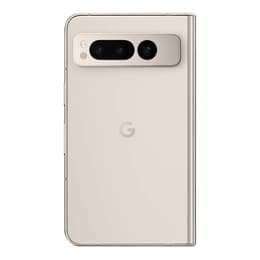
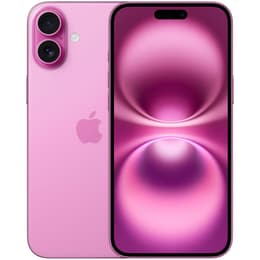

Google Pixel Fold Vs iPhone 16 Plus

Google Pixel Fold
Google Pixel Fold
Starting at

Refurbished price:£371.00

Versus £1,499.00 new

See options
iPhone 16 Plus
iPhone 16 Plus
Starting at

Refurbished price:£503.46

Versus £799.00 new

See options

Ratings

The Google Pixel Fold, released in June 2023, represents Google's entry into the foldable smartphone market, offering a unique form factor that transforms from a traditional smartphone into a small tablet. In contrast, the iPhone 16 Plus, launched in September 2024, is Apple's latest large-screen traditional smartphone, building upon its established design and ecosystem. The primary distinction lies in their fundamental design: one offers a versatile folding display running Android, while the other provides a consistent, expansive display experience within the iOS ecosystem.

Scores

Durability

When considering the long-term usability of these devices, their release timelines and software support policies are key factors.

  • Release Timeline: The Google Pixel Fold, introduced in mid-2023, is a first-generation foldable device from Google. The iPhone 16 Plus, released in late 2024, benefits from Apple's established annual release cycle for its traditional smartphone line.
  • Software Longevity: The Pixel Fold is expected to receive three years of major Android OS updates and at least five years of security updates from its release. The iPhone 16 Plus, running on iOS, typically receives five or more years of major OS updates, offering an extended period of software support.
  • Physical Durability: The Pixel Fold features an IPX8 water resistance rating, but its inner foldable screen, like other foldables, uses a plastic top layer that is more susceptible to scratches than traditional smartphone glass. While its hinge is noted for being sturdy, some early durability tests raised concerns about the device's overall structural integrity under extreme stress. The iPhone 16 Plus incorporates Ceramic Shield protection on its front display and boasts an IP68 rating for dust and water resistance, contributing to its robust build.

Year of Release

2023

2024

Compatible with latest Update

Yes

Yes

Foldable

Yes

No

Performance

The performance of a smartphone significantly impacts daily user experience, from app responsiveness to handling demanding tasks.

  • Processing Power: The Google Pixel Fold is powered by the Google Tensor G2 processor, which handles everyday applications and multitasking smoothly. It excels in AI-driven tasks and computational photography. The iPhone 16 Plus features Apple's A18 chip, designed for enhanced efficiency and speed. This processor is optimized for faster app loading, fluid multitasking, and improved graphics performance, particularly noticeable in demanding games and graphically intensive applications.
  • Multitasking Capabilities: The Pixel Fold's large inner display is well-suited for running two apps side-by-side, enhancing productivity for specific use cases like Google Maps or split-screen browsing. However, some users note that app optimization for the foldable form factor can vary. The iPhone 16 Plus, with its powerful A18 chip and 8GB of RAM, offers seamless multitasking across various applications within the iOS environment.
  • Battery Behavior: The Pixel Fold is equipped with a 4821mAh battery, providing average battery life that can drain more quickly during intensive activities such as gaming or GPS navigation. The iPhone 16 Plus, with its 4674 mAh battery, is noted for excellent battery endurance, offering up to 27 hours of video playback.

Memory (GB)

12 GB

8 GB

Screen quality

The display is a central feature for both devices, offering distinct viewing experiences tailored to their form factors.

  • Display Technology and Size: The Google Pixel Fold features two OLED displays: a 7.6-inch inner foldable screen with a 2208x1840 pixel resolution and a 5.8-inch outer cover screen with a 2092x1080 pixel resolution. The outer screen's wider aspect ratio makes it comfortable for single-handed use, resembling a traditional smartphone. The iPhone 16 Plus sports a single 6.7-inch Super Retina XDR OLED display with a resolution of 2796x1290 pixels, providing a large and immersive viewing area.
  • Brightness and Clarity: Both devices offer vibrant OLED panels with strong color reproduction. The Pixel Fold's outer screen reaches a peak brightness of 1550 nits, while its inner screen peaks at 1450 nits, ensuring good visibility in various lighting conditions. The iPhone 16 Plus's display achieves a typical maximum brightness of 1000 nits, with peak HDR brightness reaching 1600 nits, and can boost to 2000 nits outdoors, making it highly visible even in bright sunlight.
  • Refresh Rate and Smoothness: Both the inner and outer displays of the Pixel Fold feature a 120Hz refresh rate, contributing to smooth scrolling and responsive interactions. The iPhone 16 Plus, however, maintains a 60Hz refresh rate, which, while adequate for most tasks, may not offer the same level of visual fluidity as higher refresh rate displays, particularly noticeable in fast-paced content or scrolling.

Resolution

1840 x 2208

1290 x 2796

Screen type

Foldable OLED

Super Retina XDR OLED

Audiovisual

Both smartphones offer advanced camera systems, though their strengths and features cater to different photographic preferences.

  • Rear Camera System: The Google Pixel Fold is equipped with a triple rear camera setup: a 48MP main sensor, a 10.8MP ultrawide lens, and a 10.8MP telephoto lens capable of 5x optical zoom and up to 20x Super Res Zoom. It leverages Google's computational photography for natural colors and strong low-light performance. The iPhone 16 Plus features an advanced dual-camera system, including a 48MP Fusion Main camera that uses sensor-shift optical image stabilization and can achieve a 2x telephoto effect through cropping, alongside a 12MP Ultra Wide camera with a 120° field of view.
  • Front-Facing Cameras: The Pixel Fold includes a 9.5MP camera on its outer display and an 8MP camera on its inner folding screen, allowing for versatile selfie and video call options. The iPhone 16 Plus has a 12MP front camera with autofocus.
  • Video and Special Features: The Pixel Fold supports video recording up to 4K at 60 frames per second. The iPhone 16 Plus introduces spatial video recording, enabling 3D content capture, and its ultrawide lens supports macro photography. It also features a new Camera Control button for easier access to settings during capture.

Main camera

48 megapixels

48 megapixels

Front camera

8 megapixels

12 megapixels

Miscellaneous

Beyond core features, several practical elements contribute to the overall user experience and device handling.

  • Connectivity and Ports: The Google Pixel Fold supports 5G, Wi-Fi 6E, Bluetooth 5.2, and includes a USB-C 3.0 port. It offers dual SIM capabilities with one nano-SIM and one eSIM. The iPhone 16 Plus also supports 5G, Bluetooth 5.3, and features a USB-C port, though with USB 2.0 speeds for data transfer. It primarily uses dual eSIM in the US, with nano-SIM and eSIM options elsewhere.
  • Physical Design and Handling: When folded, the Pixel Fold measures 139.7 x 79.5 x 12.1 mm and weighs 283 grams, feeling substantial in hand. When unfolded, it becomes a thin tablet-like device. The iPhone 16 Plus measures 160.9 x 77.8 x 7.8 mm and weighs 199 grams, offering a large but relatively slim and lighter traditional smartphone form factor.
  • Security and User Interface: The Pixel Fold integrates a fingerprint scanner into its power button for secure unlocking. The iPhone 16 Plus relies on Face ID for biometric authentication and introduces an Action Button, customizable for quick access to various functions, and a dedicated Camera Control button.

Weight

283 g

199 g

Screen size (in)

7.6

6.7

Mobile network

5G

5G

SIM card

Physical SIM + eSIM

Physical SIM + eSIM

Carrier compatibility

Unlocked

Unlocked

Connector

USB-C

USB-C (USB 2)

The Google Pixel Fold and iPhone 16 Plus cater to different user preferences, each excelling in distinct areas. Users often praise the Pixel Fold for its innovative foldable design, which provides the utility of a large tablet screen in a pocketable format, and for Google's strong computational photography capabilities. However, some common criticisms include its weight, the visible crease on the inner display, and occasional app optimization issues for the foldable screen. Its battery life is generally considered average, especially under heavy use.

The iPhone 16 Plus is frequently lauded for its consistent, powerful performance, excellent camera system with strong video capabilities, and the reliability of the iOS ecosystem. Its extended software support and robust build quality are also significant advantages. A frequent point of discussion, however, is the continued use of a 60Hz refresh rate display, which some users find less fluid compared to devices with higher refresh rates.

Users prioritizing a versatile device that can switch between a traditional smartphone and a larger tablet-like experience, coupled with Google's AI-driven features and Android flexibility, may find the Pixel Fold well-suited to their needs. Conversely, those who value a consistently high-performing, large-screen smartphone with a long-term software commitment, a strong camera for photos and video, and the established Apple ecosystem, will likely lean towards the iPhone 16 Plus. Both devices offer compelling features, and for those seeking an eco-friendly alternative, quality-assured refurbished options are available for both models.

See all articles

Our recent comparisons