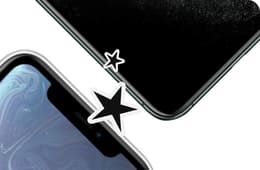


Compare models

Google Pixel 9 Vs iPhone 17 Pro

  • 1-year minimum warranty
  • Free delivery on all items
  • Free 30-day returns
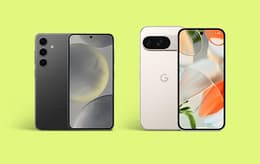
Google Pixel 9
Starting at

Refurbished price:£316.00

Versus £892.46 new

See options
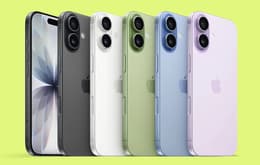
iPhone 17 Pro
Starting at

Refurbished price:£813.00

Versus £1,099.00 new

See options

Differences at a glance

The Google Pixel 9 (2024) and the iPhone 17 Pro (2025) represent current generations of smartphone design from two major software ecosystems. While both devices serve as premium daily companions, they run on entirely different operating systems—Android and iOS—and cater to distinct user preferences in hardware and software design. The primary differences lie in their approach to modular software features, camera engineering, and ecosystem integration, making each device suited to very different daily workflows.

Available Models

Colour

Storage

Scores

Durability

When examining longevity, both manufacturers provide long-term update frameworks to ensure software security and stability across several years of ownership.

  • Software support timelines: Both devices receive multi-year operating system and security updates from their respective manufacturers, ensuring long-term compatibility with modern applications.
  • Repairability and build durability: The Google Pixel 9 and iPhone 17 Pro feature robust external construction with high-strength glass and metal frames, supported by authorized repair channels and structured replacement parts availability.
  • Expected practical lifespan: With robust internal hardware and extended software backing, both models maintain reliable performance through standard multi-year upgrade cycles, especially when choosing a quality-assured refurbished option as a sustainable choice.

Year of Release

2024

2025

Compatible with latest Update

Yes

Yes

OS

Android

iOS

Foldable

No

No

Performance

Daily performance relies on efficient internal processors and optimized memory management to handle heavy multitasking and casual applications smoothly.

  • App responsiveness and multitasking: Both devices launch demanding applications instantly and maintain smooth background process management thanks to high-capacity memory configurations and efficient processor architectures.
  • Battery behavior and charging: Each smartphone provides enough capacity for a full day of standard usage, though heavy media consumption or gaming will require an intermediate charge depending on individual usage habits.
  • Storage capacity choices: Multiple storage tiers are available on both models to accommodate large media libraries, offline documents, and extensive photo collections without running into space limitations.

Screen quality

Display technologies on both handsets emphasize clarity, color depth, and outdoor visibility under bright lighting conditions.

  • Panel technology and visual clarity: Both models utilize advanced OLED displays that deliver deep black levels, high contrast ratios, and sharp resolutions suitable for reading and video playback.
  • Brightness and outdoor legibility: Peak brightness levels on the Google Pixel 9 and iPhone 17 Pro allow screen content to remain visible even under direct sunlight.
  • Refresh rate smoothness: High refresh rate panels ensure that scrolling through web pages and navigating user interfaces remains fluid and responsive across everyday tasks.

Resolution

1080 x 2424

2622x1206

Screen type

OLED

Super Retina XDR

Audiovisual

Multimedia capabilities vary across optical configurations, sensor sizes, and built-in audio-visual processing tools.

  • Camera hardware configurations: The Google Pixel 9 utilizes a dual rear camera system emphasizing computational photography, while the iPhone 17 Pro features a triple lens array including a dedicated telephoto option for extended optical zoom.
  • Video recording and stabilization: Both devices capture high-resolution video with advanced stabilization features, though audio capture quality and cinematic software modes differ between platforms.
  • Speaker output and media consumption: Built-in stereo speakers on both handsets deliver clear audio output for hands-free calls, casual video viewing, and media streaming.

Main camera

50 megapixels

48 megapixels

Front camera

10.5 megapixels

18 megapixels

Miscellaneous

Physical dimensions and connectivity standards define how comfortably each device fits into everyday travel and professional routines.

  • Connectivity standards: Both devices support modern 5G networks, fast Wi-Fi protocols, and Bluetooth connectivity for reliable peripheral pairing.
  • Physical dimensions and weight: The Google Pixel 9 and iPhone 17 Pro differ slightly in footprint and weight, influencing how they feel during one-handed operation or extended pocket carry.
  • Biometric security sensors: Each smartphone offers secure authentication methods, utilizing facial recognition or under-display fingerprint sensors for rapid unlocking.

Weight

198 g

206 g

Screen size (in)

6.3

6.3

Mobile network

5G

5G

SIM card

Physical SIM + eSIM

Physical SIM + eSIM

Carrier compatibility

Unlocked

Unlocked

Connector

USB-C

USB-C

What the community thinks

Real-world user feedback highlights distinct strengths for each device. Owners of the Google Pixel 9 frequently praise its clean software interface, intuitive everyday features, and advanced photo processing tools. At the same time, users often note that certain customization options require third-party tools compared to other ecosystems. On the other side, users of the iPhone 17 Pro frequently highlight its robust build quality, reliable video recording capabilities, and smooth integration with existing device ecosystems. Common discussions point out that navigating data transfers outside of the manufacturer ecosystem can sometimes require extra steps.

Users who prioritize deep customization, clean software design, and automated photo editing features may prefer the Google Pixel 9. Meanwhile, users focusing on comprehensive video production tools, telephoto zoom versatility, and tight ecosystem synchronization will likely lean toward the iPhone 17 Pro. Evaluating these core operational differences ensures a balanced decision tailored to individual workflow requirements, with sustainable acquisition choices remaining widely accessible through quality-assured refurbished channels.