
Google Pixel 9 Vs iPhone 14 Plus

Google Pixel 9
Google Pixel 9
Starting at

Refurbished price:£330.00

Versus £892.46 new

See options
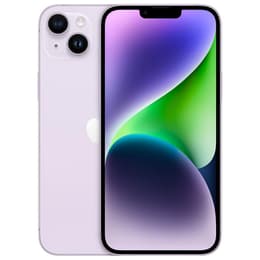
iPhone 14 Plus
iPhone 14 Plus
Starting at

Refurbished price:£242.00

Versus £699.00 new

See options

Ratings

The Google Pixel 9, released in 2024, and the iPhone 14 Plus, launched in 2022, represent distinct approaches to the large-screen smartphone experience. While both devices offer robust performance and capable camera systems, they differ significantly in their operating system philosophies and display technologies. The Pixel 9 runs on Google's Android platform, emphasizing artificial intelligence integration, whereas the iPhone 14 Plus operates on Apple's iOS, known for its streamlined ecosystem.

Scores

Durability

When considering the long-term usability of these devices, their respective release timelines and software support policies are key factors.

  • Release Timeline: The Google Pixel 9 entered the market in August 2024, making it a newer device compared to the iPhone 14 Plus, which was released in October 2022. This two-year difference impacts the duration of future software support.
  • Software Longevity: Google has committed to providing seven years of operating system updates, security patches, and Pixel Drop updates for the Pixel 9, extending its software support until Android 22. The iPhone 14 Plus, having launched with iOS 16, has already received iOS 17 and iOS 18, and typically receives major iOS updates for approximately five to six years from its release. This suggests the Pixel 9 will receive software support for a longer period.
  • Durability Features: Both devices incorporate robust build materials. The iPhone 14 Plus features a Ceramic Shield front and an IP68 rating for water and dust resistance, allowing submersion up to 6 meters for 30 minutes. The Pixel 9 also boasts a durable, splashproof design with Corning Gorilla Glass Victus 2 for screen protection.

Year of Release

2024

2022

Compatible with latest Update

Yes

Yes

OS

Android

iOS

Foldable

No

No

Performance

Both smartphones deliver smooth and responsive performance for daily tasks, though they achieve this through different hardware and software optimizations.

  • Core Processing: The Google Pixel 9 is powered by Google's Tensor G4 processor, which is designed to handle advanced artificial intelligence tasks efficiently and is paired with 12GB of RAM. The iPhone 14 Plus utilizes Apple's A15 Bionic chip, featuring a 6-core CPU and a 5-core GPU, providing strong performance for demanding applications and graphics-intensive content.
  • Multitasking and Responsiveness: Users of the Pixel 9 can expect fluid app loading and seamless transitions between multiple applications, benefiting from its current-generation processor and ample RAM. The iPhone 14 Plus also offers a highly responsive user experience, with applications launching quickly and maintaining stability during multitasking.
  • Storage Options: The Pixel 9 is available with 128GB or 256GB of internal storage. The iPhone 14 Plus offers more varied storage capacities, including 128GB, 256GB, and 512GB, providing more choice for users with extensive storage needs.
  • Battery Behavior: Both devices are recognized for their impressive battery endurance. The Pixel 9, with its 4700 mAh battery, is reported to last over 24 hours with typical use, and up to 100 hours with Extreme Battery Saver. The iPhone 14 Plus, equipped with a 4325 mAh battery, was noted for offering some of the best battery life in an iPhone at its release, often lasting two full days for moderate users and providing extended video playback.

Memory (GB)

12 GB

6 GB

Screen quality

The visual experience on both devices is vibrant and clear, though they employ different display technologies and specifications.

  • Display Technology and Size: The Google Pixel 9 features a 6.3-inch Actua OLED display, while the iPhone 14 Plus comes with a larger 6.7-inch Super Retina XDR OLED display. Both utilize OLED technology, known for deep blacks and high contrast.
  • Resolution and Clarity: The Pixel 9 offers a resolution of 2424 x 1080 pixels at 422 pixels per inch (ppi). The iPhone 14 Plus provides a resolution of 2778 x 1284 pixels at 458 ppi, resulting in sharp and detailed visuals.
  • Brightness and Refresh Rate: The Pixel 9's display supports a dynamic refresh rate from 60Hz to 120Hz, contributing to smoother scrolling and more fluid animations. It also boasts a high peak brightness of up to 2700 nits, making it highly visible in bright outdoor conditions. The iPhone 14 Plus has a standard 60Hz refresh rate and a peak brightness of 1200 nits for HDR content, with 800 nits typical maximum brightness.
  • Additional Features: The Pixel 9 includes Adaptive Touch technology, which enhances screen responsiveness even with wet fingers or gloves. Both displays support HDR for a richer viewing experience with compatible content.

Resolution

1080 x 2424

1284 x 2778

Screen type

OLED

Super Retina XDR OLED

Audiovisual

Both smartphones offer advanced camera systems designed to capture high-quality photos and videos, each with its own strengths and computational photography features.

  • Rear Camera Systems: The Google Pixel 9 features a dual-camera setup with a 50MP main sensor (f/1.68) and a 48MP ultrawide sensor (f/1.7) that also supports macro focus. The iPhone 14 Plus also has a dual-camera system, consisting of a 12MP main sensor (f/1.5) with sensor-shift optical image stabilization and a 12MP ultrawide sensor (f/2.4) with a 120-degree field of view.
  • Photography Performance: The Pixel 9 leverages its advanced AI for features like Super Res Zoom up to 8x, Night Sight for low-light conditions, Astrophotography, and Portrait Mode. It also introduces unique AI-driven editing tools such as 'Add Me' and 'Reimagine'. The iPhone 14 Plus utilizes its Photonic Engine for improved low-light performance and detail, along with Deep Fusion, Smart HDR 4, and Portrait mode with Focus and Depth Control.
  • Video Capabilities: The Pixel 9 supports 4K video recording at various frame rates, along with 10-bit HDR video, Cinematic blur, and a suite of stabilization features. The iPhone 14 Plus records 4K Dolby Vision HDR video and includes Cinematic mode for depth-of-field effects and Action mode for enhanced video stabilization during movement.
  • Front-Facing Cameras: For selfies and video calls, the Pixel 9 is equipped with a 10.5MP ultrawide front camera with autofocus. The iPhone 14 Plus features a 12MP TrueDepth front camera with autofocus and Photonic Engine enhancements for better low-light selfies.

Main camera

50 megapixels

12 megapixels

Front camera

10.5 megapixels

12 megapixels

Miscellaneous

Beyond core performance and display, several other features contribute to the overall user experience and practical utility of these devices.

  • Connectivity: Both the Google Pixel 9 and iPhone 14 Plus support 5G cellular networks for fast data speeds. The Pixel 9 includes Wi-Fi 7 and Bluetooth 5.3, while the iPhone 14 Plus features Wi-Fi 6 and Bluetooth 5.3, along with an Ultra Wideband chip for spatial awareness.
  • Ports and Biometrics: The Pixel 9 is expected to feature a USB-C port, aligning with modern Android devices. The iPhone 14 Plus uses Apple's proprietary Lightning port. For security, the Pixel 9 incorporates an ultrasonic fingerprint scanner, offering a convenient and secure unlocking method. The iPhone 14 Plus relies on Face ID for facial recognition.
  • Design and Handling: The Pixel 9 has dimensions of 152.8 x 72.0 x 8.5 mm and weighs 198 grams. The iPhone 14 Plus is slightly larger and heavier at 160.8 x 78.1 x 7.8 mm and 203 grams. Both devices feature premium build materials, with the iPhone 14 Plus utilizing a Ceramic Shield front and aluminum frame, and the Pixel 9 featuring Corning Gorilla Glass Victus 2.
  • Unique Features: The iPhone 14 Plus includes advanced safety features like Crash Detection and Emergency SOS via satellite, which can be crucial in emergency situations. The Pixel 9 emphasizes deep integration of Google's AI capabilities throughout its software experience.

Weight

198 g

203 g

Screen size (in)

6.3

6.7

Mobile network

5G

5G

SIM card

Physical SIM + eSIM

Physical SIM + eSIM

Carrier compatibility

Unlocked

Unlocked

Connector

USB-C

Lightning

The Google Pixel 9 and iPhone 14 Plus cater to users with differing priorities, reflecting their respective ecosystems and design philosophies. User feedback for the iPhone 14 Plus often praises its exceptional battery life, large and vibrant display, and the reliability of the iOS ecosystem. Some common criticisms include its standard 60Hz refresh rate and the continued use of the Lightning port. For the Pixel 9, users frequently highlight its advanced AI features, impressive camera capabilities with extensive computational photography, and Google's commitment to long-term software support. Early reviews also commend its significantly improved battery life compared to previous Pixel generations.

Users prioritizing a longer software support window and cutting-edge AI integration, particularly for photography and daily tasks, may find the Google Pixel 9 well-suited to their needs. Its 120Hz display and higher peak brightness also offer a more fluid and visually striking experience. Conversely, users who value a larger display, a highly stable and familiar operating system, and established safety features like Crash Detection may lean toward the iPhone 14 Plus. Both devices offer excellent battery endurance, making them reliable companions for extended use. For those seeking an eco-friendly and quality-assured alternative, considering a refurbished version of either model can be a smart choice.

See all articles

Our recent comparisons