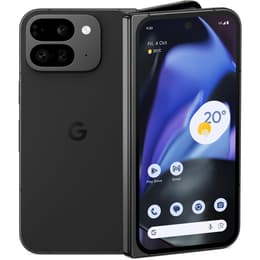


Google Pixel 9 Pro Fold Vs iPhone 15 Plus

Google Pixel 9 Pro Fold
Starting at

Refurbished price:£538.00

Versus £1,739.49 new

See options
iPhone 15 Plus
iPhone 15 Plus
Starting at

Refurbished price:£344.00

Versus £799.00 new

See options

Ratings

The Google Pixel 9 Pro Fold, released in September 2024, and the iPhone 15 Plus, launched in September 2023, represent distinct approaches to modern smartphone design and functionality. While the Pixel 9 Pro Fold offers a versatile foldable form factor running on Android, the iPhone 15 Plus provides a traditional large-screen experience powered by iOS. These devices cater to different user preferences, primarily differing in their display configurations and operating system ecosystems.

Scores

Durability

When considering the long-term usability of these devices, both offer robust software support and durable designs, though their form factors present different considerations.

  • Release Timeline: The iPhone 15 Plus was released in September 2023, preceding the Google Pixel 9 Pro Fold, which launched in September 2024. This means the iPhone 15 Plus has been available for a longer period.
  • Software Longevity: The Google Pixel 9 Pro Fold is expected to receive seven years of operating system, security, and Pixel Feature Drop updates, offering extended software support. The iPhone 15 Plus, running iOS, typically receives major iOS updates for approximately five to six years from its release, ensuring a substantial period of current software.
  • Physical Durability: The iPhone 15 Plus features a Ceramic Shield front and a color-infused glass back, along with an aluminum frame, providing a solid build. It carries an IP68 rating for water and dust resistance, allowing submersion up to 6 meters for 30 minutes. The Pixel 9 Pro Fold features a glass front (Gorilla Glass Victus 2) when folded, a plastic front when unfolded, a glass back (Gorilla Glass Victus 2), and an aluminum frame. It also boasts an IPX8 water resistance rating, indicating protection against submersion.

Year of Release

2024

2023

Compatible with latest Update

Yes

Yes

OS

Android

iOS

Foldable

Yes

No

Performance

The performance of both devices is tailored to their respective operating systems, offering smooth experiences for daily tasks and demanding applications.

  • Processor Capabilities: The Google Pixel 9 Pro Fold is equipped with the Google Tensor G4 processor, designed to handle demanding applications and multitasking efficiently, with a focus on AI-driven features. The iPhone 15 Plus utilizes the A16 Bionic chip, which provides responsive performance for a wide range of applications, from everyday use to graphically intensive games.
  • Multitasking and Responsiveness: With 16GB of RAM, the Pixel 9 Pro Fold is well-suited for extensive multitasking, allowing users to switch between numerous applications and utilize its large internal display for productivity. The iPhone 15 Plus comes with 6GB of RAM, which, combined with iOS optimization, ensures a fluid user experience and efficient app management.
  • Battery Behavior: The Pixel 9 Pro Fold houses a 4650 mAh battery, with user reports indicating it can easily last a full day of heavy use, sometimes extending to two days with moderate usage. The iPhone 15 Plus features a 4383 mAh battery, and it is widely praised for its exceptional battery life, often outperforming even some Pro Max models in continuous usage tests, providing over 13-14 hours of screen-on time.

Memory (GB)

16 GB

6 GB

Screen quality

The display experience is a primary differentiator, with the Pixel 9 Pro Fold offering a unique dual-screen foldable design compared to the iPhone 15 Plus's expansive single display.

  • Display Technology and Size: The Google Pixel 9 Pro Fold features two OLED displays: an 8-inch internal foldable display with a resolution of 2076 x 2152 pixels and a 6.3-inch external cover display with a resolution of 1080 x 2424 pixels. The iPhone 15 Plus sports a single 6.7-inch Super Retina XDR OLED display with a resolution of 2796 x 1290 pixels.
  • Clarity and Brightness: Both devices offer vibrant and clear visuals. The Pixel 9 Pro Fold's internal display has a pixel density of 373 PPI, while its cover display is 422 PPI. Both screens can reach a peak brightness of up to 2700 nits, providing good visibility in various lighting conditions. The iPhone 15 Plus has a pixel density of 460 PPI and can achieve a peak outdoor brightness of up to 2000 nits, ensuring sharp images and good readability outdoors.
  • Refresh Rate and Smoothness: The Pixel 9 Pro Fold's internal display offers an adaptive refresh rate ranging from 1Hz to 120Hz, contributing to smooth scrolling and responsive interactions. The cover display has a refresh rate of 60-120Hz. The iPhone 15 Plus features a standard 60Hz refresh rate, which provides a consistent visual experience for most users, though it does not offer the smoother scrolling of higher refresh rate displays.

Resolution

2076 x 2152

1290 x 2796

Audiovisual

Both smartphones offer capable camera systems, but they approach photography with different hardware and software philosophies.

  • Rear Camera Systems: The Google Pixel 9 Pro Fold is equipped with a triple-lens rear camera system: a 48MP wide-angle main sensor with optical image stabilization (OIS), a 10.5MP ultrawide lens with a 127-degree field of view and macro focus capabilities, and a 10.8MP telephoto lens offering 5x optical zoom and up to 20x Super Res Zoom with OIS. The iPhone 15 Plus features a dual-camera system, including a 48MP main camera with sensor-shift OIS that can also provide 2x optical quality telephoto shots through sensor cropping, and a 12MP ultrawide camera.
  • Photography Performance: The Pixel 9 Pro Fold leverages Google's advanced computational photography for detailed images, good low-light performance, and features like Night Sight Video and Audio Magic Eraser. User feedback suggests good photo quality, though some comparisons note that the camera hardware might not match the latest non-foldable Pixel Pro models. The iPhone 15 Plus delivers consistent and reliable image quality across various conditions, with strong performance in everyday photography and video recording. Users often praise its ability to capture usable images consistently.
  • Video Recording and Front Cameras: Both devices support 4K video recording at up to 60 frames per second. The Pixel 9 Pro Fold includes 10-bit HDR video and Cinematic Pan stabilization. It has two 10MP front-facing cameras, one on the cover screen and one on the inner display. The iPhone 15 Plus offers 4K Dolby Vision video recording and features a 12MP TrueDepth front camera.

Front camera

10 megapixels

12 megapixels

Miscellaneous

Beyond core features, several practical elements contribute to the overall user experience and differentiate these two devices.

  • Connectivity and Ports: The Google Pixel 9 Pro Fold supports 5G, Wi-Fi 7, and Bluetooth 5.3, offering advanced wireless capabilities. It includes a USB-C 3.2 port for charging and data transfer. The iPhone 15 Plus also supports 5G and features Wi-Fi 6 (802.11ax) and Bluetooth v5.3. It has transitioned to a USB-C port for charging and data.
  • Biometrics and Sensors: The Pixel 9 Pro Fold incorporates a side-mounted fingerprint sensor, along with Ultra Wideband (UWB) support and Satellite SOS service. The iPhone 15 Plus relies on Face ID for secure authentication and includes a range of sensors such as an accelerometer, ambient light sensor, barometer, gyroscope, and proximity sensor.
  • Design and Handling: The Pixel 9 Pro Fold has dimensions of 155.2 x 77.1 x 10.5 mm when folded and 155.2 x 150.2 x 5.1 mm when unfolded, weighing 257g. Its redesigned form factor is noted for being thinner and lighter than its predecessor, making the outer screen more usable. The iPhone 15 Plus measures 160.9 x 77.8 x 7.8 mm and weighs 201g, offering a large, traditional smartphone form factor that is comfortable to hold for many users.

Weight

257 g

201 g

Screen size (in)

8.0

6.7

Mobile network

5G

5G

SIM card

Physical SIM + eSIM

Physical SIM + eSIM

Carrier compatibility

Unlocked

Unlocked

Connector

USB-C

USB-C

The Google Pixel 9 Pro Fold and the iPhone 15 Plus cater to distinct user needs, each excelling in different areas based on their design philosophies. User sentiment for the Pixel 9 Pro Fold often highlights its impressive battery life, the utility of its larger outer screen, and the integrated Google AI features. However, some users have noted concerns regarding software optimization for multitasking on the inner display and the visibility of the screen crease.

Conversely, the iPhone 15 Plus is frequently praised for its exceptional battery life, often surpassing even more premium models, and its consistent, reliable camera performance. A common point of discussion among users is its 60Hz refresh rate, which some find less fluid compared to devices with higher refresh rates.

Users prioritizing a versatile, tablet-like experience for productivity and media consumption, coupled with Google's AI ecosystem and extended software support, may find the Pixel 9 Pro Fold well-suited to their needs. Those who value a large, traditional smartphone display, industry-leading battery endurance, and the consistent performance of the iOS ecosystem will likely lean towards the iPhone 15 Plus. Both devices offer a quality-assured refurbished option, providing an eco-friendly alternative for consumers seeking to make informed and sustainable choices.


See all articles

Our recent comparisons