
Google Pixel 8a Vs Motorola Moto G14

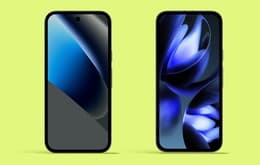
Google Pixel 8a
Google Pixel 8a
Starting at

Refurbished price:£216.00

Versus £467.97 new

See options
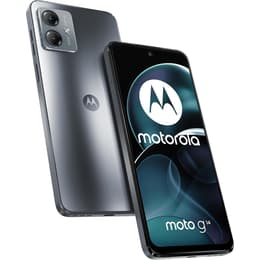
Motorola Moto G14
Motorola Moto G14
Starting at

Refurbished price:£91.24

Versus £139.99 new

See options

Ratings

The Google Pixel 8a, released in May 2024, and the Motorola Moto G14, launched in August 2023, are both Android smartphones designed for different user priorities. While the Pixel 8a emphasizes advanced software features and camera capabilities, the Moto G14 focuses on core smartphone functionality with a larger display. Both devices run on the Android operating system, but they differ significantly in their update policies and overall hardware approach.

Scores

Durability

When considering the longevity of these devices, their release timelines and software support are key factors.

  • Release and Software Support: The Google Pixel 8a, launched in May 2024, benefits from an extensive software commitment, promising seven years of OS updates, security patches, and new feature drops from its release date, effectively extending support until at least 2031. In contrast, the Motorola Moto G14, released in August 2023, typically receives one major Android OS upgrade and approximately three years of security updates.
  • Physical Durability: The Pixel 8a features an IP67 rating, indicating strong resistance to dust and the ability to withstand submersion in up to one meter of water for 30 minutes. Its display is protected by Corning Gorilla Glass 3. The Moto G14 offers a 'water-repellent design' with an IP52 rating, providing protection against dust and light splashes, and uses Panda Glass for screen protection.
  • Expected Practical Lifespan: Users prioritizing long-term software support and robust water and dust resistance will find the Pixel 8a designed for extended practical use. The Moto G14, while offering basic protection, has a shorter expected software longevity.

Year of Release

2024

2023

Compatible with latest Update

Yes

Yes

OS

Android

Android

Foldable

No

No

Performance

The performance of a smartphone is crucial for daily tasks, and these two models offer different experiences.

  • Processor Capabilities: The Google Pixel 8a is equipped with a processor designed for efficient handling of demanding applications, multitasking, and advanced AI features, contributing to a responsive user experience. However, some users have reported instances of the device warming up and performance throttling under heavy loads, particularly during extended video recording or after certain software updates. The Motorola Moto G14 features a processor that capably handles everyday tasks such as web browsing, social media, and light applications.
  • Memory and Storage: The Pixel 8a comes with 8GB of RAM and offers storage options of 128GB or 256GB, utilizing UFS 3.1 storage for faster data access. The Moto G14 is available with 4GB or 8GB of RAM and 128GB or 256GB of storage, using UFS 2.2, and also supports expandable storage via a microSD card.
  • Battery Behavior: The Pixel 8a includes a 4492 mAh battery, generally providing sufficient power for a full day of moderate use, though heavy users might find themselves needing to recharge before the day ends. The Moto G14 has a larger 5000 mAh battery, which, combined with its display technology and processor, often allows for extended usage, potentially lasting more than a day for lighter users.

Memory (GB)

8 GB

4 GB

Screen quality

The visual experience is a significant differentiator between the Pixel 8a and the Moto G14, primarily due to their display technologies.

  • Display Technology and Clarity: The Google Pixel 8a features a 6.1-inch OLED display with a 2400x1080 (FHD+) resolution, resulting in sharp images and vibrant colors with deep blacks. The Motorola Moto G14 sports a 6.5-inch IPS LCD display, also with a 1080x2400 (FHD+) resolution, offering clear visuals and good color reproduction, though typically not matching the contrast of an OLED panel.
  • Brightness and Refresh Rate: The Pixel 8a's display can reach a peak brightness of 2000 nits (1400 nits sustained), making it highly visible even in bright outdoor conditions. It also boasts an adaptive refresh rate of up to 120Hz, contributing to smoother scrolling and more fluid animations. The Moto G14 has a standard 60Hz refresh rate, which is suitable for everyday use but does not offer the same level of visual fluidity, and its brightness levels are generally lower than the Pixel 8a.
  • Viewing Experience: Users prioritizing a more compact device with a high-contrast, brighter, and smoother display will find the Pixel 8a appealing. Those who prefer a larger screen for media consumption and are content with a standard refresh rate will appreciate the Moto G14.

Resolution

1080 x 2400

1080 x 2400

Screen type

OLED

IPS LCD

Audiovisual

Both smartphones offer camera systems capable of capturing everyday moments, but with different strengths and features.

  • Rear Camera System: The Google Pixel 8a is equipped with a dual-camera setup featuring a 64MP main sensor with optical image stabilization (OIS) and a 13MP ultrawide lens with a 120-degree field of view. The Motorola Moto G14 also has a dual rear camera, consisting of a 50MP main sensor and a 2MP macro lens.
  • Photography Performance: The Pixel 8a leverages advanced computational photography, including features like Night Sight for improved low-light performance, Super Res Zoom, Magic Editor, and Real Tone for accurate skin tones. It generally produces detailed images with good color accuracy in various lighting conditions. The Moto G14 performs well in optimal lighting, delivering generally acceptable photos, but its low-light performance and detail retention are less pronounced compared to the Pixel 8a.
  • Video and Audio: The Pixel 8a supports 4K video recording across all its lenses, and includes features like Audio Magic Eraser. The Moto G14 records video at 1080p at 30 frames per second. For audio, the Moto G14 features stereo speakers with Dolby Atmos, enhancing the media consumption experience.

Main camera

64 megapixels

50 megapixels

Front camera

13 megapixels

8 megapixels

Miscellaneous

Beyond the core features, several practical elements contribute to the overall user experience of these devices.

  • Connectivity and Ports: The Google Pixel 8a supports 5G connectivity, offering faster mobile data speeds. It features a USB-C port for charging and data transfer but lacks a 3.5mm headphone jack. The Motorola Moto G14 is limited to 4G connectivity but includes a 3.5mm headphone jack, alongside its USB-C port.
  • Biometrics and Sensors: The Pixel 8a incorporates an in-display fingerprint sensor and face unlock for secure access, though some users have reported the in-display fingerprint sensor can be inconsistent. The Moto G14 features a side-mounted fingerprint sensor and face recognition.
  • Design and Handling: The Pixel 8a measures 152.1 x 72.7 x 8.9mm and weighs 188g, with a design that includes more rounded corners compared to previous models. The Moto G14 is slightly larger at 161.5 x 73.8 x 8mm and lighter at 177g, and is available with a plastic or vegan leather back.

Weight

188 g

177 g

Screen size (in)

6.1

6.5

Mobile network

5G

4G

SIM card

Physical SIM + eSIM

Dual Physical SIM

Carrier compatibility

Unlocked

Unlocked

User sentiment for the Google Pixel 8a often highlights its strong camera performance, particularly its computational photography features, and the promise of extended software support. Many appreciate its responsive performance for everyday use and the vibrant OLED display. However, some users have expressed concerns regarding battery life under heavy usage and occasional reports of the device warming up or experiencing performance throttling. The in-display fingerprint sensor has also received mixed feedback regarding its reliability.

For the Motorola Moto G14, common praise points include its generally reliable battery life for moderate use and the inclusion of a 3.5mm headphone jack. Users find its performance adequate for basic smartphone functions and appreciate its larger screen size. Criticisms often revolve around its more limited software update policy, the 60Hz refresh rate of its display, and its camera performance in challenging lighting conditions.

Users prioritizing a device with a long software lifespan, advanced camera capabilities, and a high-quality, smooth display may find the Google Pixel 8a better suited to their needs. Conversely, individuals who value a larger screen, a headphone jack, and potentially longer battery life for lighter usage, and are content with more modest software support, might lean towards the Motorola Moto G14. Both devices offer a solid Android experience, and choosing between them depends on which features align best with individual usage patterns. For those considering a more sustainable choice, both models are available as quality-assured refurbished options.


See all articles

Our recent comparisons