

Galaxy Z Fold5 Vs Google Pixel 9 Pro

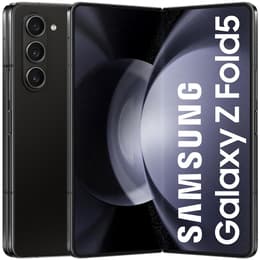
Galaxy Z Fold5
Galaxy Z Fold5
Starting at

Refurbished price:£416.88

Versus £1,627.21 new

See options
Google Pixel 9 Pro
Google Pixel 9 Pro
Starting at

Refurbished price:£395.25

Versus £917.17 new

See options

Ratings

The Samsung Galaxy Z Fold5, released in August 2023, and the Google Pixel 9 Pro, launched in September 2024, represent distinct approaches to high-end smartphone design and functionality. While the Galaxy Z Fold5 offers a unique foldable form factor that transforms from a traditional smartphone into a larger tablet-like display, the Google Pixel 9 Pro provides a more conventional, yet refined, smartphone experience with a strong emphasis on artificial intelligence and camera capabilities. Both devices operate on the Android platform, but they offer different software experiences tailored by their respective manufacturers.

Scores

Durability

When considering the long-term usability of these devices, their release timelines and manufacturer support policies are key factors.

  • Software Longevity: The Google Pixel 9 Pro stands out with an impressive commitment to software support, offering seven years of operating system updates, security updates, and feature drops from its September 2024 release. This extended support aims to ensure the device remains current and secure for a considerable period. The Galaxy Z Fold5, released in August 2023, typically receives 4-5 years of Android OS updates and 5 years of security updates from Samsung, providing a solid but shorter support window compared to the Pixel.
  • Physical Durability: The Galaxy Z Fold5 features an Armor Aluminum frame and Gorilla Glass Victus 2 on its cover screen, along with a redesigned Flex Hinge that allows it to fold without a gap. It boasts an IPX8 water resistance rating, though it lacks official dust resistance. Samsung's internal testing indicates the hinge can withstand 200,000 folds, suggesting a practical lifespan of over five years for typical use. The Pixel 9 Pro is protected by Gorilla Glass Victus 2 on both its front and back, encased in a frame made from 100% recycled aluminum, and carries an IP68 rating for dust and water resistance. Durability tests show its screen resists scratches well and the device passes bend tests, indicating robust construction for a traditional smartphone.
  • Repairability: Both devices are designed with modern repair considerations, though the complex foldable mechanism of the Z Fold5 can present unique challenges. The Pixel 9 Pro, with its more traditional design, generally offers a more straightforward repair process.

Year of Release

2023

2024

Compatible with latest Update

Yes

Yes

OS

Android

Android

Foldable

Yes

No

Performance

The performance of a smartphone is crucial for daily tasks, from app usage to demanding multimedia. Both devices offer robust capabilities, but with different underlying architectures.

  • Processing Power: The Galaxy Z Fold5 is equipped with a processor optimized for its ecosystem, paired with 12GB of RAM. This configuration allows for smooth multitasking, rapid app loading, and efficient handling of graphically intensive games and productivity applications across its dual screens. The Google Pixel 9 Pro features Google's custom-designed processor, complemented by 16GB of RAM. This setup is engineered for responsive performance, particularly excelling in AI-driven tasks and advanced computational photography, while also managing demanding applications and multitasking effectively.
  • Storage and Responsiveness: Both devices offer ample storage options, ranging from 256GB up to 1TB, ensuring sufficient space for applications, media, and documents. The Galaxy Z Fold5 utilizes UFS 4.0 storage, contributing to faster data access and overall system responsiveness. Users of both phones generally report a fluid experience for everyday operations, though some Pixel 9 Pro users have noted occasional micro-stutters during intensive multitasking.
  • Battery Behavior: The Galaxy Z Fold5 houses a 4400mAh battery, providing over 11 hours of video streaming in tests, and supports 25W wired and 15W wireless charging. The Pixel 9 Pro comes with a 4700mAh battery, demonstrating impressive endurance with over 17 hours of video streaming in tests. It supports 27W wired charging and 21W wireless charging with a compatible Pixel Stand. User experiences vary, with many Pixel 9 Pro users reporting excellent all-day battery life, while some find it average depending on usage patterns.

Memory (GB)

12 GB

16 GB

Screen quality

The visual experience is a primary differentiator, especially given the Galaxy Z Fold5's unique form factor.

  • Display Technology and Size: The Galaxy Z Fold5 features a 7.6-inch foldable Dynamic AMOLED 2X main display and a 6.2-inch Dynamic AMOLED 2X cover display. Both offer vibrant colors and deep blacks. The Pixel 9 Pro sports a 6.3-inch QHD+ LTPO OLED display, providing a high-quality visual experience in a more traditional smartphone size.
  • Resolution and Brightness: The Z Fold5's main screen has a resolution of 2176 x 1812 pixels, while its cover screen is 2316 x 904 pixels. Both displays can reach a peak brightness of 1750 nits, ensuring good visibility even in bright outdoor conditions. The Pixel 9 Pro's display offers a resolution of 2856 x 1280 pixels and can achieve up to 2000 nits for HDR content and an impressive 3000 nits peak brightness, making it exceptionally bright for outdoor use.
  • Refresh Rate and Smoothness: Both devices feature a 120Hz adaptive refresh rate on their main displays, contributing to smooth scrolling and fluid animations. The Pixel 9 Pro's LTPO technology allows for more dynamic adjustment of the refresh rate, potentially aiding in power efficiency. Users generally praise both displays for their clarity, vibrancy, and smooth operation.

Resolution

1812 x 2176

1280 x 2856

Screen type

Foldable Dynamic AMOLED 2X

LTPO OLED

Audiovisual

Both smartphones offer advanced camera systems, but with different strengths and computational photography philosophies.

  • Rear Camera Systems: The Galaxy Z Fold5 is equipped with a versatile triple-camera setup: a 50MP main sensor with optical image stabilization (OIS), a 12MP ultrawide lens, and a 10MP telephoto lens with 3x optical zoom and OIS. The Pixel 9 Pro also features a triple-camera system, including a 50MP main sensor with OIS, a 48MP ultrawide lens with macro focus and OIS, and a 48MP telephoto lens offering 5x optical zoom and OIS, along with 30x Super Res Zoom.
  • Photography Performance: The Z Fold5 delivers good color reproduction and detail in well-lit conditions, with its main camera performing strongly. Its ultrawide is competent, and the telephoto offers useful optical zoom. Low-light performance can be good, though some users note occasional graininess. The Pixel 9 Pro is highly regarded for its exceptional photos with natural colors, crisp details, and strong low-light capabilities across all its lenses. Google's computational photography, including features like Magic Editor and Add Me, enhances the overall imaging experience. Some Pixel users have reported occasional lens lag when switching between cameras or slight over-processing in some zoomed shots.
  • Video and Front Cameras: The Z Fold5 records video up to 8K at 24fps and 4K at 60fps. It has a 10MP camera on the cover screen and a 4MP under-display camera on the main screen, primarily for video calls. The Pixel 9 Pro supports 4K video recording at 60fps for both its rear and front cameras, with features like Video Boost for enhanced quality. Its front-facing camera is a 42MP sensor with autofocus, delivering detailed selfies, though it often outputs 10.5MP images through pixel binning.

Main camera

50 megapixels

50 megapixels

Front camera

4 megapixels

42 megapixels

Miscellaneous

Beyond core performance and display, several practical elements contribute to the overall user experience.

  • Connectivity and Ports: Both devices support 5G connectivity, modern Wi-Fi standards (Wi-Fi 6E for Z Fold5, unspecified for Pixel 9 Pro but typically current generation), and Bluetooth 5.3. The Pixel 9 Pro additionally features Satellite SOS for emergency communication in areas without cellular service. Both utilize a USB-C port for charging and data transfer.
  • Biometric Security and Sensors: The Galaxy Z Fold5 incorporates a side-mounted fingerprint sensor, while the Pixel 9 Pro uses an in-display ultrasonic fingerprint sensor. Both offer face recognition for unlocking. Standard sensors like accelerometers, gyroscopes, proximity sensors, compasses, and barometers are present in both models. The Z Fold5 also supports Samsung DeX for a desktop-like experience and Ultra Wideband (UWB) for precise location tracking.
  • Design and Handling: The Galaxy Z Fold5 weighs 253g and measures 13.4mm thick when folded, offering a compact smartphone experience that unfolds into a larger, thinner tablet-like device (6.1mm thick). Its unique form factor provides a larger canvas for productivity and media consumption. The Pixel 9 Pro, at 199g and 8.5mm thick, is a more traditional, lighter, and slimmer smartphone, designed for comfortable one-handed use. Its flat-edged design and recycled aluminum frame contribute to a premium feel.

Weight

253 g

199 g

Screen size (in)

Not included

6.3

Mobile network

5G

5G

SIM card

Dual Physical SIM + eSIM

Physical SIM + eSIM

Carrier compatibility

Unlocked

Unlocked

The Samsung Galaxy Z Fold5 and Google Pixel 9 Pro cater to different user preferences, each excelling in its own domain. User feedback for the Galaxy Z Fold5 often praises its innovative foldable design, which enhances productivity and media consumption by offering a larger screen on demand. Its robust build, including the improved Flex Hinge, is frequently highlighted as a significant advantage. However, some users note that its camera system, while capable, may not always match the absolute best in traditional flagships, and the lack of dust resistance is a common point of concern.

The Google Pixel 9 Pro receives acclaim for its exceptional camera performance, particularly its computational photography and AI features that enhance image quality and offer unique functionalities. Users frequently commend its long software support, bright and vibrant display, and generally strong battery life. Criticisms sometimes revolve around occasional software quirks or micro-stutters under heavy load, and some users express mixed opinions on its battery performance depending on their usage patterns.

Users prioritizing a versatile device that seamlessly transitions between a compact smartphone and a larger tablet for multitasking and immersive viewing experiences may find the Galaxy Z Fold5 well-suited to their needs. Conversely, those who value a top-tier camera system, extended software longevity, and a refined, AI-enhanced traditional smartphone experience will likely lean towards the Google Pixel 9 Pro. Both devices offer compelling features, and for those seeking quality-assured refurbished options, both models are available as a sustainable choice.


See all articles

Our recent comparisons