
Compare models

Galaxy Z Flip7 Vs iPhone 14 Plus

  • 1-year minimum warranty
  • Free delivery on all items
  • Free 30-day returns
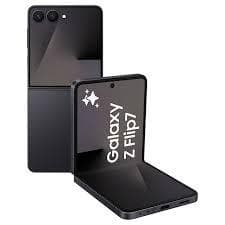
Galaxy Z Flip7
Starting at

Refurbished price:£494.00

Versus £1,156.31 new

See options
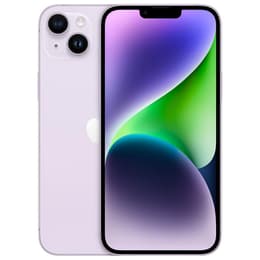
iPhone 14 Plus
Starting at

Refurbished price:£249.00

Versus £699.00 new

See options

Differences at a glance

The Samsung Galaxy Z Flip7 (2025) and Apple iPhone 14 Plus (2022) represent two distinct approaches to large-screen mobile devices, contrasting a folding clamshell design with a traditional slab smartphone format. While they cater to different physical preferences, both devices offer spacious primary viewing areas and modern operating system experiences driven by Android and iOS respectively. Understanding their practical differences helps users choose the configuration that best fits their daily routine.

Available Models

Colour

Storage (GB)

Scores

Durability

When evaluating structural longevity and software support, both devices handle multi-year ownership differently based on their release timelines and physical designs.

  • Software longevity: The Galaxy Z Flip7 benefits from an extended Android update schedule matching its newer launch year, while the iPhone 14 Plus maintains Apple's standard multi-year iOS support window.
  • Physical durability: The iPhone 14 Plus features a rigid glass-and-aluminum slab construction, whereas the Galaxy Z Flip7 utilizes a flexible inner screen mechanism paired with an outer cover display for quick interactions.
  • Expected lifespan: Both models provide reliable daily service over several years, though users handling traditional slab formats may experience fewer mechanical wear considerations over time.

Year of Release

2025

2022

Performance

Daily responsiveness and multitasking capabilities vary across these models due to differences in system architecture, memory configuration, and software optimization.

  • System responsiveness: Both devices load everyday applications, switch between active tasks, and handle media streaming smoothly without noticeable stutter.
  • Multitasking and storage: The Galaxy Z Flip7 provides ample memory headroom for demanding background tasks, and both handsets offer multiple storage tiers starting at baseline capacities suitable for photos and apps.
  • Battery behavior: The iPhone 14 Plus delivers extended screen-on time for media consumption, whereas the Galaxy Z Flip7 balances power distribution between its compact cover screen and the main foldable display.

Screen quality

Display technology creates a major divergence in how users interact with content, combining contrasting form factors with high-clarity visual panels.

  • Display technology: The iPhone 14 Plus uses a traditional rigid OLED panel with fixed dimensions, while the Galaxy Z Flip7 features a foldable OLED screen that collapses vertically into a compact square.
  • Outdoor visibility: Both screens reach high peak brightness levels, ensuring clear legibility and contrast under bright sunlight.
  • Refresh rate: The Galaxy Z Flip7 incorporates a higher refresh rate for smoother scrolling animations, while the iPhone 14 Plus relies on a standard refresh rate.

Audiovisual

Imaging hardware and media output capabilities provide versatile tools for everyday photography, video recording, and audio playback.

  • Camera systems: Both devices employ dual rear camera configurations featuring wide and ultra-wide lenses, capturing detailed landscape and portrait shots in varied lighting conditions.
  • Video and audio: Each model supports high-resolution video recording with stabilization features, complemented by stereo speakers that deliver clear sound for calls and media playback.
  • Unique framing: The Galaxy Z Flip7 allows unique angles for hands-free framing by resting the folded half on flat surfaces, whereas the iPhone 14 Plus relies on standard handheld or tripod stabilization.

Miscellaneous

Practical daily usability is shaped by connectivity standards, physical dimensions, security sensors, and overall handling comfort.

  • Connectivity and ports: Both handsets support rapid 5G cellular networks, modern Wi-Fi standards, and Bluetooth, utilizing manufacturer-specific charging ports.
  • Security and sensors: The iPhone 14 Plus relies on facial recognition, while the Galaxy Z Flip7 integrates a side-mounted fingerprint sensor alongside facial scanning options.
  • Handling and weight: The iPhone 14 Plus presents a wide, lightweight slab profile, whereas the Galaxy Z Flip7 folds down into a pocket-friendly square footprint that takes up less horizontal space in pockets or small bags.

Screen size (in)

6.9

6.7

Mobile network

5G

5G

SIM card

Physical SIM + eSIM

Physical SIM + eSIM

Carrier compatibility

Unlocked

Unlocked

Connector

USB-C

Lightning

What the community thinks

User feedback and community discussions highlight distinct preferences for each device layout. Owners of the iPhone 14 Plus frequently praise its consistent battery longevity and expansive, unblemished viewing area, while noting its larger physical footprint in pockets. Conversely, Galaxy Z Flip7 users appreciate the compact folded size and the convenience of checking notifications on the outer cover screen, though some note the crease along the folding panel requires a brief adjustment period.

Users prioritizing a pocket-friendly folding form factor and flexible desktop placement will find the Galaxy Z Flip7 well-suited to their needs. Meanwhile, users who prefer a traditional large glass display with extended battery endurance for media viewing may lean toward the iPhone 14 Plus. Exploring a quality-assured refurbished option provides an eco-friendly alternative for acquiring either model while supporting sustainable technology choices.