Galaxy Tab A9 (8.7", 2023) Vs iPad mini 7 (2024, A17 series)

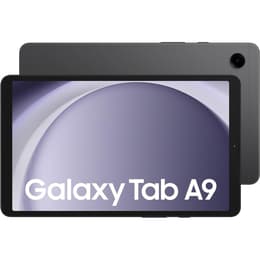
Galaxy Tab A9 (8.7", 2023)
Starting at

Refurbished price:£87.00

Versus £219.00 new

See options
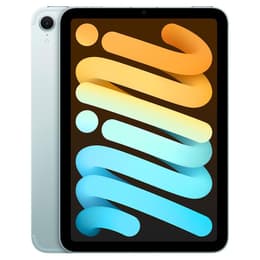
iPad mini 7 (2024, A17 series)
Starting at

Refurbished price:£332.00

Versus £499.00 new

See options

Ratings

The Samsung Galaxy Tab A9, released in October 2023, and the Apple iPad Mini (A17 Pro), launched in October 2024, represent two distinct approaches to compact tablet computing. While both offer portability and a focused user experience, they differ significantly in their operating systems, core performance capabilities, and ecosystem integration. The Galaxy Tab A9 operates on Android, providing a versatile platform with extensive customization, whereas the iPad Mini runs on iPadOS, known for its optimized app ecosystem and seamless integration within Apple's device family.

Scores

Durability

The longevity of a tablet is influenced by its release timeline, software support, and physical durability.

  • Release Timeline and OS Support: The Galaxy Tab A9, released in late 2023, ships with Android 13 and is expected to receive two major Android OS updates, extending its software support to Android 15, along with four years of security updates. The iPad Mini (A17 Pro), released in late 2024, launched with iPadOS 18 and benefits from Apple's typically longer software support, often spanning 5-7 years of major iPadOS updates. This difference means the iPad Mini will likely receive new features and security patches for a longer duration.
  • Physical Durability: The Galaxy Tab A9 features a metal back with plastic sections, offering a solid build for its segment. The iPad Mini (A17 Pro) maintains the design of its predecessor, featuring an aluminum frame and glass front, with Touch ID integrated into the power button. Both devices are designed for everyday use, but the iPad Mini's construction and Apple's ecosystem often lead to a perception of extended practical lifespan due to consistent software and hardware optimization.
  • Repairability: While specific repairability scores can vary, both devices are generally designed with a balance of user experience and internal component protection. Users considering a quality-assured refurbished option for either model can benefit from devices that have undergone professional inspection and repair, extending their useful life.

Year of Release

2023

2024

Compatible with latest Update

Yes

Yes

OS

Android

iPadOS

Performance

Performance is a key differentiator, impacting how smoothly applications run and how efficiently tasks are handled.

  • Processor Capabilities: The Galaxy Tab A9 is powered by an octa-core processor that delivers solid performance for daily tasks such as web browsing, video streaming, and social media. It can handle casual gaming and some more demanding titles with adjusted settings, and multitasking with a few apps open is generally smooth. The iPad Mini (A17 Pro) features a significantly more powerful processor, offering a substantial boost in processing power and graphical performance. This allows for very smooth operation across all applications, demanding games, and intensive creative tasks, with ample headroom for future software advancements and complex multitasking.
  • System Responsiveness and Multitasking: The Galaxy Tab A9 provides a responsive experience for typical tablet usage, with apps loading efficiently. For heavy multitasking, users with the 8GB RAM variant will experience smoother transitions. The iPad Mini, with its advanced processor and 8GB of RAM, offers a highly fluid and responsive user experience, excelling in running multiple demanding applications simultaneously without noticeable slowdowns.
  • Storage Options: The Galaxy Tab A9 is available with 64GB or 128GB of internal storage, expandable up to 1TB via a microSD card. The iPad Mini (A17 Pro) starts with 128GB of internal storage, with options for 256GB and 512GB, but does not offer expandable storage.

Memory (GB)

4 GB

8 GB

Screen quality

The display is the primary interface for interaction, and differences in screen technology and specifications can greatly affect the viewing experience.

  • Display Technology and Resolution: The Galaxy Tab A9 features an 8.7-inch TFT LCD with a resolution of 1340 x 800 pixels, resulting in a pixel density where individual pixels may be discernible upon close inspection. The iPad Mini (A17 Pro) sports an 8.3-inch Liquid Retina IPS LCD with a higher resolution of 2266 x 1488 pixels, providing a sharper and more detailed image with a higher pixel density.
  • Brightness and Color: The Galaxy Tab A9 offers a decent brightness level, measured between 459 and 486 nits, making it usable indoors and in bright, but not direct, sunlight. The iPad Mini (A17 Pro) provides 500 nits of brightness, along with P3 wide color support and True Tone technology, which adjusts the display's color and intensity to match the ambient light, enhancing viewing comfort and color accuracy.
  • Refresh Rate and Smoothness: The Galaxy Tab A9 has a standard 60Hz refresh rate, which provides a smooth experience for most content but may show less fluidity during fast-paced scrolling or gaming compared to higher refresh rate displays. The iPad Mini (A17 Pro) also features a 60Hz refresh rate, but its powerful processor ensures animations and interactions remain very fluid.

Resolution

800 x 1340

2266 x 1488

Screen type

TFT LCD

Liquid Retina display

Pixel density

180ppp

326ppp

Audiovisual

While tablets are not typically primary photography devices, their cameras are useful for video calls, document scanning, and casual captures.

  • Camera System Capabilities: The Galaxy Tab A9 is equipped with an 8MP rear camera with autofocus and a 2MP front camera with fixed focus. These cameras are functional for basic tasks like scanning documents, participating in video conferences, and capturing quick snapshots in good lighting conditions. The iPad Mini (A17 Pro) features a more capable camera system, with a 12MP rear camera that supports 4K video recording at up to 60 frames per second and Smart HDR 4 for improved dynamic range. Its 12MP Ultra Wide front camera includes Center Stage, which automatically keeps subjects in the frame during video calls.
  • Low-Light and Video Performance: Both tablets will exhibit limitations in low-light environments, with the Galaxy Tab A9's cameras producing softer details and less reliable exposure. The iPad Mini's larger sensor and advanced image processing, supported by the A17 Pro chip, will generally yield better results in challenging lighting and offer higher quality video recording.
  • Audio Experience: The Galaxy Tab A9 features dual stereo speakers, providing a decent audio experience for media consumption. The iPad Mini (A17 Pro) also offers stereo speakers, which are generally well-regarded for their clarity and volume, enhancing the media consumption experience.

Miscellaneous

Beyond core specifications, several practical features contribute to the overall user experience and device utility.

  • Connectivity and Ports: The Galaxy Tab A9 supports Wi-Fi 5 (802.11ac) and Bluetooth 5.3, with an optional LTE variant for mobile data. It includes a USB-C 2.0 port and a 3.5mm headphone jack. The iPad Mini (A17 Pro) offers more advanced connectivity with Wi-Fi 6E and Bluetooth 5.3, and its USB-C port supports USB 3 speeds (up to 10Gb/s) for faster data transfer. It also has optional 5G cellular connectivity.
  • Biometric Security: The Galaxy Tab A9 relies on 2D face recognition for unlocking. The iPad Mini (A17 Pro) utilizes Touch ID, integrated into the power button, offering a secure and convenient fingerprint authentication method.
  • Design and Handling: The Galaxy Tab A9 weighs around 332-333 grams and has dimensions of 211 x 124.7 x 8mm, making it a compact and easily portable device. The iPad Mini (A17 Pro) is slightly lighter at 293-297 grams and has dimensions of 195.4 x 134.8 x 6.3mm, offering a slightly more compact and thinner profile. Neither device supports an active stylus like the S Pen for the Tab A9, but the iPad Mini (A17 Pro) supports the Apple Pencil Pro, enhancing its utility for note-taking and creative tasks.

Weight

332 g

293 g

Width

21,1 cm

13.48 cm

Height

12,47 cm

19.54 cm

Depth

0,8 cm

0.63 cm

Screen size (in)

8.7

8.3

Network

Wi-Fi + 4G

Wi-Fi

Carrier compatibility

Unlocked

Without SIM Port

User feedback for the Galaxy Tab A9 often highlights its suitability as an accessible entry-level tablet, praised for its bright display and solid performance for everyday tasks and casual gaming. Common criticisms include its 60Hz display, which some users find less fluid, and its battery life, which can be inconsistent depending on usage patterns. The iPad Mini (A17 Pro), building on its predecessors, is frequently lauded for its powerful performance, high-resolution Liquid Retina display, and compact design, making it a favorite for users seeking a premium small tablet experience. While generally well-received, some users might desire a higher refresh rate display or find the smaller screen size less ideal for extensive productivity tasks requiring multiple windows.

Users prioritizing a versatile Android ecosystem, expandable storage, and a functional device for media consumption and light productivity may find the Galaxy Tab A9 well-suited to their needs. Its robust build and consistent software updates for its class make it a practical choice. Conversely, users who value top-tier performance, a highly optimized app ecosystem, longer software support, and advanced features like Apple Pencil Pro compatibility will likely lean towards the iPad Mini (A17 Pro). Its superior processing power and display quality cater to more demanding applications and creative workflows.

Both tablets offer distinct advantages for different user profiles. For those seeking an eco-friendly alternative, exploring quality-assured refurbished options for either model can provide access to these devices while supporting sustainable consumption practices.


See all articles

Our recent comparisons