
Galaxy S9 Vs iPhone 11 Pro Max

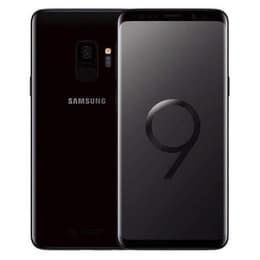
Galaxy S9
Galaxy S9
Starting at

Refurbished price:£77.00

Versus £449.00 new

See options
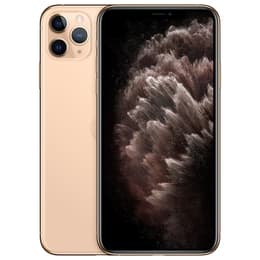
iPhone 11 Pro Max
iPhone 11 Pro Max
Starting at

Refurbished price:£181.00

Versus £749.00 new

See options

Ratings

The Samsung Galaxy S9, released in March 2018, and the iPhone 11 Pro Max, launched in September 2019, represent flagship smartphones from their respective eras. While both devices offer a premium mobile experience, they differ significantly in their operating systems, camera capabilities, and overall design philosophy. The Galaxy S9 runs on Android, providing a customizable interface, whereas the iPhone 11 Pro Max operates on iOS, known for its integrated ecosystem and streamlined user experience.

Scores

Durability

The practical lifespan of a smartphone is influenced by its initial release, ongoing software support, and physical resilience.

  • Release Timeline: The Galaxy S9 was released in March 2018, making it approximately 1.5 years older than the iPhone 11 Pro Max, which debuted in September 2019. This age difference impacts the remaining period of official software support.
  • Software Longevity: The Galaxy S9 officially received Android updates up to Android 10, with its security patch support ending in April 2022. In contrast, the iPhone 11 Pro Max, launched with iOS 13, is expected to continue receiving major iOS updates for several more years, potentially until 2025 or 2026, offering a longer period of current software features and security.
  • Physical Durability: Both devices feature glass front and back panels, with the Galaxy S9 using an aluminum frame and the iPhone 11 Pro Max opting for a stainless steel frame. The iPhone 11 Pro Max boasts an IP68 rating for water and dust resistance, allowing submersion up to 4 meters for 30 minutes, while the Galaxy S9 also has an IP68 rating, but for a maximum depth of 1.5 meters for 30 minutes.

Year of Release

2018

2019

Compatible with latest Update

No

Yes

OS

Android

iOS

Foldable

No

No

Performance

Performance in both devices is driven by their respective internal components, influencing app responsiveness, multitasking, and overall user fluidity.

  • Processing Power: The iPhone 11 Pro Max is equipped with a more recent-generation processor, which generally translates to smoother operation for demanding applications, faster game loading times, and more efficient handling of complex tasks compared to the Galaxy S9's processor.
  • Multitasking Capabilities: Both the Galaxy S9 and the iPhone 11 Pro Max typically come with 4GB of RAM. While the raw RAM capacity is similar, the efficiency of the operating systems and their memory management can lead to different experiences in keeping multiple applications open and switching between them.
  • Storage Options: The Galaxy S9 offers internal storage options of 64GB, 128GB, or 256GB, with the added flexibility of expanding storage up to 400GB via a microSD card. The iPhone 11 Pro Max provides internal storage choices of 64GB, 256GB, or 512GB, but does not support expandable storage.
  • Battery Behavior: The iPhone 11 Pro Max features a larger battery capacity at 3969 mAh compared to the Galaxy S9's 3000 mAh. This often results in the iPhone 11 Pro Max providing extended usage times, with users reporting it can last through a full day of heavy use, and offering significantly longer video playback.

Memory (GB)

4 GB

4 GB

Screen quality

The visual experience on both smartphones is defined by their display technology, resolution, and brightness capabilities.

  • Display Technology and Clarity: Both devices feature OLED display technology, known for deep blacks and vibrant colors. The Galaxy S9 has a 5.8-inch Super AMOLED display with a resolution of 1440 x 2960 pixels, resulting in a sharp visual experience. The iPhone 11 Pro Max sports a larger 6.5-inch Super Retina XDR OLED display with a resolution of 2688 x 1242 pixels, also delivering excellent clarity.
  • Brightness and Outdoor Visibility: The iPhone 11 Pro Max offers higher peak brightness levels, reaching up to 800 nits typically and 1200 nits for HDR content. This can provide better visibility in bright outdoor conditions compared to the Galaxy S9.
  • Refresh Rate: Both the Galaxy S9 and the iPhone 11 Pro Max feature a standard 60Hz refresh rate. This means that scrolling and animations will appear smooth, but they do not offer the higher refresh rates found in some newer devices.

Resolution

1440 x 2960

1242 x 2688

Screen type

Super AMOLED

Super Retina XDR OLED

Audiovisual

The camera systems on these devices offer distinct approaches to photography and videography, catering to different user preferences.

  • Rear Camera System: The Galaxy S9 features a single 12-megapixel rear camera with a unique variable aperture (f/1.5 and f/2.4), allowing it to adapt to different lighting conditions. The iPhone 11 Pro Max, on the other hand, boasts a versatile triple 12-megapixel camera system, including a wide, ultra-wide, and telephoto lens, providing more photographic flexibility and optical zoom capabilities.
  • Low-Light and Everyday Photography: The iPhone 11 Pro Max introduced a dedicated Night mode and advanced image processing features like Deep Fusion and Smart HDR, which significantly enhance low-light performance and overall image quality in various scenarios. While the Galaxy S9's variable aperture aids in low light, the iPhone 11 Pro Max generally delivers more consistent and detailed results in challenging lighting.
  • Video Recording Quality: Both phones are capable of recording 4K video at up to 60 frames per second. The iPhone 11 Pro Max offers cinematic video stabilization and the ability to switch between lenses during recording, providing a more professional video capture experience. The Galaxy S9 also features a super slow-motion mode, capturing video at 960 frames per second in HD.
  • Front Camera: The iPhone 11 Pro Max has a 12-megapixel TrueDepth front camera capable of 4K video recording and advanced portrait features. The Galaxy S9 comes with an 8-megapixel front camera.

Main camera

12 megapixels

12 megapixels

Front camera

8 megapixels

12 megapixels

Miscellaneous

Beyond core features, several practical elements contribute to the overall user experience and daily convenience of these devices.

  • Connectivity: The iPhone 11 Pro Max supports Wi-Fi 6 (802.11ax), offering potentially faster and more efficient wireless connections compared to the Galaxy S9's Wi-Fi 5 (802.11ac). Both devices support Gigabit-class LTE and Bluetooth 5.0. The iPhone 11 Pro Max also includes Apple's U1 Ultra Wideband chip for enhanced spatial awareness.
  • Ports and Biometrics: The Galaxy S9 retains a 3.5mm headphone jack and uses a USB-C port for charging and data transfer. It offers both a rear-mounted fingerprint sensor and an iris scanner for biometric authentication. The iPhone 11 Pro Max uses a Lightning port and relies solely on Face ID for secure facial recognition, lacking a headphone jack.
  • Weight and Dimensions: The Galaxy S9 is a more compact and lighter device, measuring 147.7 x 68.7 x 8.5 mm and weighing 163g. The iPhone 11 Pro Max is larger and heavier at 158 x 77.8 x 8.1 mm and 226g, which can impact one-handed use and pocketability.

Weight

163 g

226 g

Screen size (in)

5.8

6.5

Mobile network

4G

4G

SIM card

Physical SIM

Physical SIM + eSIM

Carrier compatibility

Unlocked

Unlocked

Connector

USB-C + Jack 3.5mm

Lightning

User sentiment for the Samsung Galaxy S9 often highlights its compact design, the inclusion of a headphone jack, and the versatility of its variable aperture camera as strong points. Some users, however, noted its battery life could be a limitation for heavy usage and that software updates ceased relatively early. The iPhone 11 Pro Max is frequently praised for its exceptional battery life, robust triple-camera system, and the smooth, integrated experience of iOS. Common criticisms sometimes point to its larger size and weight, and the absence of a headphone jack.

Users prioritizing a more compact device with a traditional headphone jack and expandable storage may find the Galaxy S9 suitable. Its Android operating system offers greater customization for those who prefer it. Conversely, users who value a longer period of software updates, superior camera versatility, and extended battery performance will likely lean towards the iPhone 11 Pro Max. Its larger display and powerful processor are well-suited for media consumption and demanding applications.

For those considering either of these devices, exploring quality-assured refurbished options can provide an eco-friendly alternative, extending the life of these capable smartphones while making an informed, sustainable choice.
See all articles

Our recent comparisons