
Compare models
Galaxy S26 Vs Google Pixel 10 Pro
- 1-year minimum warranty
- Free delivery on all items
- Free 30-day returns
Differences at a glance
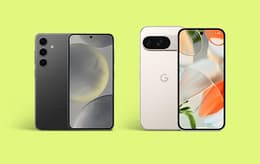
The Samsung Galaxy S26 (2026) and the Google Pixel 10 Pro (2025) represent two leading approaches to the modern flagship smartphone. While both devices offer high-end features and premium build quality, they differ primarily in their software ecosystems, camera processing philosophies, and hardware customization options. The Galaxy S26 runs on Android with Samsung's custom interface, whereas the Google Pixel 10 Pro features clean software directly from Google.
Available Models
Colour
Storage
Scores
Durability
Both smartphones are built to remain functional and secure for many years, though their release timelines and support windows differ slightly based on their launch schedules.
- Software Support: Both manufacturers provide long-term software updates covering many years of operating system upgrades and security patches, ensuring extended longevity for daily users.
- Repairability and Build: Both devices feature robust glass-and-metal construction designed to withstand everyday wear, while component availability supports standard maintenance over time.
- Practical Lifespan: High-capacity batteries and efficient internal processors mean both models maintain reliable performance through years of typical daily usage.
Year of Release
2026
2025
Compatible with latest Update
Yes
Yes
OS
Android
Android
Foldable
No
No
Performance
Performance capabilities across both devices handle intensive daily demands smoothly, though they utilize different hardware architectures to achieve system fluidity.
- Multitasking and Responsiveness: Generous memory configurations allow both devices to switch seamlessly between demanding applications, media streaming, and background tasks without stuttering.
- Battery Behavior: Battery capacities easily last through a full day of mixed usage under normal conditions, though heavy gaming or continuous navigation will require a top-up before evening.
- Storage and System Speed: Fast internal storage speeds ensure quick app loading times and rapid file transfers, keeping the overall user experience fluid.
Screen quality
Display characteristics on both handsets deliver sharp, vibrant viewing experiences tailored for media consumption and reading.
- Display Technology: Both models utilize advanced organic light-emitting diode panels that produce deep blacks, high contrast ratios, and vivid color reproduction.
- Outdoor Visibility: High peak brightness levels ensure that content remains legible and clear even under direct sunlight or bright outdoor lighting.
- Refresh Rate: Adaptive refresh rates scale up to fast speeds for smooth scrolling and gaming, while dropping lower during static tasks to conserve battery power.
Resolution
1080 x 2340
1280x2856
Audiovisual
Imaging capabilities on these flagship devices offer versatile setups designed to capture detailed photos and stable video in various environments.
- Camera System: Both phones feature multi-lens configurations including primary wide lenses, ultra-wide options, and dedicated telephoto lenses for distant subjects.
- Low-Light Performance: Advanced sensor hardware and image processing software pull detail out of dark scenes, producing clear low-light photographs with minimal noise.
- Video and Audio: High-resolution video recording modes benefit from robust stabilization features, complemented by clear microphone arrays for calls and audio capture.
Front camera
12.0
42 megapixels
Miscellaneous
Practical everyday features vary slightly between the two devices in terms of physical dimensions, connectivity, and hardware additions.
- Connectivity: Both models support modern network standards including fast cellular data connections, advanced wireless protocols, and precise positioning sensors.
- Physical Design: Ergonomic dimensions and balanced weight distribution make both handsets comfortable to hold and operate with one hand during daily tasks.
- Security Sensors: Quick biometric authentication options via under-display fingerprint readers and facial recognition provide secure, convenient access.
Weight
167 g
207 g
Screen size (in)
6.3
6.3
Mobile network
5G
5G
SIM card
Dual Physical SIM + eSIM
Physical SIM + eSIM
Carrier compatibility
Unlocked
Unlocked
Connector
USB-C
USB-C
What the community thinks
Choosing between the Samsung Galaxy S26 and the Google Pixel 10 Pro depends largely on individual preference for software interfaces and camera color science. Users who prefer deep customization options, extensive device settings, and Samsung's ecosystem integration often lean toward the Galaxy S26. Conversely, users who prioritize streamlined software experiences, direct updates from the developer, and specific computational photography styles frequently favor the Google Pixel 10 Pro.
For those exploring sustainable purchasing routes, opting for a quality-assured refurbished option provides an eco-friendly alternative that reduces electronic waste while delivering flagship performance. Ultimately, both devices offer robust capabilities that align well with modern professional and personal requirements.