
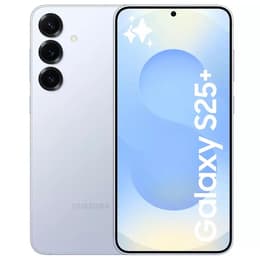


Galaxy S25+ Vs Google Pixel 7A

Galaxy S25+
Galaxy S25+
Starting at

Refurbished price:£550.00

Versus £958.39 new

See options
Google Pixel 7A
Google Pixel 7A
Starting at

Refurbished price:£129.00

Versus £649.99 new

See options

Ratings

The Samsung Galaxy S25 Plus, a flagship smartphone released in February 2025, and the Google Pixel 7a, a mid-range device launched in May 2023, offer distinct experiences within the Android ecosystem. While both devices provide a comprehensive smartphone experience, the Galaxy S25 Plus emphasizes cutting-edge hardware and a premium build, whereas the Pixel 7a focuses on a streamlined software experience and advanced computational photography. Both operate on the Android platform, with each manufacturer offering their unique software interpretations.

Scores

Durability

When considering the long-term usability of a smartphone, factors like software support, physical durability, and repairability play a significant role. The Galaxy S25 Plus, being a newer device, naturally benefits from a longer support window, while the Pixel 7a offers a solid, though shorter, commitment to updates.

  • Software Longevity: The Samsung Galaxy S25 Plus is designed for extended use, with Samsung committing to seven years of operating system and security updates, ensuring support well into 2032. In contrast, the Google Pixel 7a receives three years of major Android operating system upgrades and five years of security updates from its release date.
  • Physical Durability: The Galaxy S25 Plus features Gorilla Glass Victus 2 on both its front and back, complemented by an Armor Aluminum frame, providing robust protection against everyday wear and tear. It also boasts an IP68 rating for water and dust resistance. The Pixel 7a utilizes Corning Gorilla Glass 3 for screen protection and has an IP67 rating for water and dust resistance, with a frame made from recycled aluminum and a plastic back panel.
  • Expected Practical Lifespan: Users prioritizing the absolute longest software support and the latest hardware advancements will find the Galaxy S25 Plus more aligned with their needs. The Pixel 7a, while offering a respectable lifespan, will see its software support conclude sooner.

Year of Release

2025

2023

OS

Android

Android

Foldable

No

No

Performance

The performance capabilities of these two smartphones reflect their different market positions, with the Galaxy S25 Plus offering a more powerful and future-ready experience compared to the Pixel 7a.

  • Processing Power: The Galaxy S25 Plus is equipped with a current-generation processor, delivering a significant leap in performance for demanding applications, intensive multitasking, and graphic-heavy gaming. The Pixel 7a, powered by its custom-designed processor, handles daily tasks, app navigation, and most games smoothly, though it may not match the raw power of the latest flagship chipsets.
  • Multitasking and Storage: With 12 GB of RAM, the Galaxy S25 Plus provides ample capacity for seamless multitasking and keeping numerous applications open in the background without slowdowns. It also offers storage options of 256 GB and 512 GB. The Pixel 7a comes with 8 GB of RAM, which is sufficient for typical daily usage, and is available with 128 GB of non-expandable internal storage.
  • Battery Behavior: The Galaxy S25 Plus features a 4900 mAh battery, supporting 45W wired fast charging and 15W wireless charging, with users reporting excellent battery life, often lasting a full day or more with heavy use. The Pixel 7a has a 4385 mAh battery, offering all-day power for many users, with 18W wired charging and 7.5W wireless charging capabilities.

Memory (GB)

12 GB

8 GB

Screen quality

The visual experience on both devices is vibrant, though the Galaxy S25 Plus offers a more advanced display with higher resolution and brightness.

  • Display Technology and Clarity: The Galaxy S25 Plus features a 6.7-inch Dynamic LTPO AMOLED 2X display with a QHD+ resolution (3120x1440 pixels), resulting in exceptionally sharp and detailed visuals. The Pixel 7a sports a 6.1-inch OLED display with an FHD+ resolution (2400x1080 pixels), providing clear and vibrant images for everyday viewing.
  • Brightness and Refresh Rate: The Galaxy S25 Plus can reach a peak brightness of up to 2600 nits, ensuring excellent visibility even in bright outdoor conditions, and features an adaptive refresh rate that scales from 1Hz to 120Hz for smooth scrolling and responsive interactions. The Pixel 7a offers a 90Hz refresh rate for a smooth user interface and good brightness levels for outdoor use, though not as high as the S25 Plus.
  • Viewing Experience: The larger, higher-resolution display of the Galaxy S25 Plus provides a more immersive experience for media consumption and detailed work. The Pixel 7a's more compact screen is well-suited for users who prefer a smaller device that is easier to handle with one hand.

Resolution

1440x3120

1080 x 2400

Audiovisual

Both smartphones excel in photography, but they approach image capture with different strengths, with the Galaxy S25 Plus offering more versatile hardware and the Pixel 7a leveraging its computational photography prowess.

  • Camera System Capabilities: The Galaxy S25 Plus features a versatile triple-camera system on the rear, including a 50 MP wide-angle main sensor, a 12 MP ultra-wide lens, and a 10 MP telephoto lens with 3x optical zoom. This setup allows for a wide range of photographic scenarios, from expansive landscapes to detailed close-ups. The Pixel 7a comes with a dual-camera system, featuring a 64 MP wide-angle main sensor and a 13 MP ultra-wide lens, relying on its advanced software for zoom capabilities.
  • Photography Performance: The Galaxy S25 Plus delivers sharp, vibrant photos with strong detail, particularly benefiting from its dedicated telephoto lens for optical zoom. Its ProVisual Engine and AI features enhance various shooting modes, including low-light performance. The Pixel 7a is renowned for its computational photography, producing consistently excellent images with natural colors and impressive dynamic range, especially in everyday and low-light conditions, utilizing features like Night Sight and Photo Unblur.
  • Video and Audio: The Galaxy S25 Plus supports video recording up to 8K resolution from its rear cameras, offering high-quality video capture. The Pixel 7a records 4K video at up to 60 frames per second from its main rear camera and 4K at 30 frames per second from its front camera. Both devices offer good microphone quality for calls and recording, and stereo speakers for media consumption.

Miscellaneous

Beyond core features, several practical elements differentiate the user experience and connectivity options of these two devices.

  • Connectivity and Ports: The Galaxy S25 Plus supports the latest Wi-Fi 7 standard, along with Bluetooth 5.4, and includes a USB Type-C 3.2 port that supports DisplayPort 1.2 and OTG functions for versatile wired connections. It also offers Ultra-Wideband (UWB) connectivity. The Pixel 7a features Wi-Fi 6E, Bluetooth 5.3, and a USB-C 3.2 port. Both devices support 5G connectivity and dual SIM functionality (Nano-SIM + eSIM).
  • Security and Sensors: For biometric security, the Galaxy S25 Plus incorporates an ultrasonic in-screen fingerprint sensor. The Pixel 7a also features an in-display fingerprint sensor and adds face unlock for convenient access. Both devices include a standard array of sensors such as accelerometers, gyroscopes, and ambient light sensors.
  • Design and Handling: The Galaxy S25 Plus measures 158.4 x 75.8 x 7.3 mm and weighs 190 g, featuring a premium build with glass and an aluminum frame. The Pixel 7a is more compact at 152 x 72.9 x 9 mm and weighs 193.5 g, with a design that includes a recycled aluminum frame and a plastic back.

Weight

190 g

193 g

Screen size (in)

6.7

6.1

Mobile network

5G

5G

SIM card

Dual Physical SIM

Physical SIM + eSIM

Carrier compatibility

Unlocked

Unlocked

User feedback for the Samsung Galaxy S25 Plus frequently praises its exceptional display quality, robust performance for demanding tasks, and impressive battery longevity. Many users appreciate its premium build and the extended software support commitment. Common criticisms sometimes point to the camera system not being a revolutionary upgrade from its predecessor and charging speeds, while fast, not being the absolute quickest available.

The Google Pixel 7a is widely lauded for its outstanding camera capabilities, particularly its computational photography features that deliver consistent and high-quality results across various conditions. Users also value its clean software experience and the inclusion of flagship-level features at a more accessible point. Some common concerns include its performance potentially feeling less snappy compared to higher-end devices, the absence of storage expansion, and slower charging speeds.

Users prioritizing the latest in processing power, a larger and more vibrant display, and a longer software support window will find the Samsung Galaxy S25 Plus well-suited to their needs. Its premium construction and advanced features cater to those seeking a top-tier Android experience. Conversely, individuals who place a strong emphasis on exceptional camera performance, a streamlined software experience, and a more compact form factor may lean towards the Google Pixel 7a. Both devices offer compelling options, and choosing a quality-assured refurbished option can be a sustainable choice for either model, providing an eco-friendly alternative.


See all articles

Our recent comparisons






