

Galaxy S25 Ultra Vs Google Pixel 6A

Galaxy S25 Ultra
Galaxy S25 Ultra
Starting at

Refurbished price:£654.00

Versus £1,249.00 new

See options
Google Pixel 6A
Google Pixel 6A
Starting at

Refurbished price:£107.00

Versus £459.00 new

See options

Ratings

The Samsung Galaxy S25 Ultra, released in early 2025, represents a top-tier flagship smartphone, while the Google Pixel 6A, launched in mid-2022, is positioned as a capable mid-range device. Both run on the Android operating system, offering distinct user experiences tailored to different priorities. The primary differentiators lie in their processing power, camera systems, and display technologies, reflecting their respective market segments and release timelines.

Scores

Durability

When considering the longevity of these devices, their release timelines and software support policies are key factors. The Galaxy S25 Ultra, being a more recent flagship, benefits from an extended support period compared to the Pixel 6A.

  • Release Timeline and Age: The Galaxy S25 Ultra was released in February 2025, making it a current-generation device. The Google Pixel 6A, released in July 2022, is an older model.
  • OS Support Duration: Samsung has committed to seven years of operating system and security updates for the Galaxy S25 Ultra, with support expected to continue until 2032. The Pixel 6A is scheduled to receive OS updates until at least July 2025 and security updates until at least July 2027.
  • Build Materials and IP Rating: The Galaxy S25 Ultra features a titanium frame and Corning Gorilla Glass Armor for enhanced durability, along with an IP68 rating for dust and water resistance. The Pixel 6A uses Gorilla Glass 3 on its front and has an IP67 rating for water and dust protection.

Year of Release

2025

2022

Compatible with latest Update

Yes

Yes

OS

Android

Android

Foldable

No

No

Performance

The performance capabilities of these two smartphones reflect their different design philosophies and target audiences, with the Galaxy S25 Ultra offering significantly more power for demanding tasks.

  • Processor Capabilities: The Galaxy S25 Ultra is equipped with a current-generation flagship processor, such as the Snapdragon 8 Elite for Galaxy, designed to handle intensive applications and multitasking with ease. The Pixel 6A features Google's Tensor (G1) chip, which, while capable for everyday use and AI-driven tasks, is an older generation processor.
  • Memory and Storage: The Galaxy S25 Ultra typically comes with 12GB of RAM, with some regional variants offering up to 16GB, and storage options extending up to 1TB. The Pixel 6A includes 6GB of RAM and 128GB of internal storage, which is not expandable.
  • Battery Behavior: The Galaxy S25 Ultra houses a 5000 mAh battery, providing extended usage even for heavy users, often lasting more than a full day. The Pixel 6A has a 4410 mAh battery, which generally provides a full day of moderate use, though heavy usage may require a top-up.

Memory (GB)

12 GB

6 GB

Screen quality

The visual experience on these devices differs considerably due to advancements in display technology and size, catering to varied user preferences.

  • Display Technology and Size: The Galaxy S25 Ultra features a large 6.9-inch Dynamic AMOLED 2X display, offering vibrant colors, deep blacks, and high contrast. The Pixel 6A has a more compact 6.1-inch OLED screen, which also provides good color accuracy and contrast.
  • Resolution and Brightness: The S25 Ultra boasts a QHD+ resolution (3120x1440 pixels) and can reach a peak brightness of up to 2600 nits, making it highly visible in bright outdoor conditions and ideal for detailed content. The Pixel 6A offers a 1080p (2400x1080 pixels) resolution, which is clear for its size, and gets bright enough for comfortable outdoor viewing.
  • Refresh Rate: The Galaxy S25 Ultra features an adaptive refresh rate that can scale from 1Hz to 120Hz, providing smooth scrolling and responsive interactions. The Pixel 6A has a standard 60Hz refresh rate, which is sufficient for most tasks but may not feel as fluid as higher refresh rate displays.

Resolution

1440x3120

1080 x 2400

Audiovisual

Both devices offer strong camera capabilities, though the Galaxy S25 Ultra provides a more versatile and advanced system due to its flagship status.

  • Rear Camera System: The Galaxy S25 Ultra is equipped with a quad-camera setup, including a 200MP main sensor, a 50MP ultrawide lens, a 50MP telephoto lens with 5x optical zoom, and a 10MP telephoto lens with 3x optical zoom, offering extensive versatility and advanced zoom capabilities. The Pixel 6A features a dual-camera system with a 12.2MP main sensor and a 12MP ultrawide lens, relying heavily on Google's computational photography for image quality.
  • Photography Performance: The S25 Ultra excels in various lighting conditions, offering strong low-light performance and highly detailed images across its multiple lenses, including impressive long-range zoom. The Pixel 6A is praised for its excellent point-and-shoot capabilities and strong computational photography, producing balanced and well-exposed shots, even with its older hardware.
  • Video Recording and Front Camera: The Galaxy S25 Ultra supports 8K video recording and offers advanced video features. It has a 12MP front-facing camera. The Pixel 6A can record 4K video at 30 or 60 frames per second and includes an 8MP front camera, which performs well in good lighting.

Front camera

12

8 megapixels

Miscellaneous

Beyond core features, several practical elements differentiate these two smartphones, impacting daily usability and connectivity.

  • Connectivity Options: The Galaxy S25 Ultra supports the latest connectivity standards, including Wi-Fi 7, Bluetooth 5.3, and comprehensive 5G band support, ensuring fast and reliable wireless connections. The Pixel 6A offers Wi-Fi 802.11ax, Bluetooth 5.2, and 5G connectivity, providing solid performance for its generation.
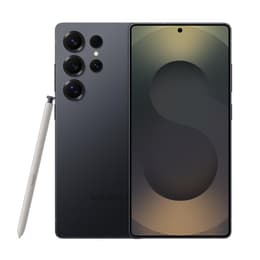
  • Physical Design and Handling: The S25 Ultra is a larger and heavier device, measuring 162.80 x 77.60 x 8.20mm and weighing 218g, which can be significant for one-handed use. It also integrates an S Pen stylus. The Pixel 6A is more compact and lighter at 152.2 x 71.8 x 8.7mm and 178g, making it easier to handle for many users.
  • Biometric Security and Ports: Both devices feature in-display fingerprint sensors for secure unlocking. The Galaxy S25 Ultra uses a USB-C port, while the Pixel 6A also features a USB-C port but lacks a traditional headphone jack.

Weight

233 g

250 g

Screen size (in)

6.9

6.1

Mobile network

5G

5G

SIM card

Dual Physical SIM + eSIM

Physical SIM + eSIM

Carrier compatibility

Unlocked

Unlocked

Connector

USB-C

USB-C

User feedback for the Galaxy S25 Ultra, often mirrored by its predecessor the S24 Ultra, frequently highlights its exceptional battery life, robust performance for demanding applications and gaming, and a highly versatile camera system, particularly praising its zoom capabilities. Some users note the complexity of Samsung's software interface as a point of adjustment. For the Pixel 6A, common praise centers on its strong camera performance for still photography, especially given its market segment, and its clean, user-friendly Android experience. Criticisms sometimes mention the 60Hz display as a noticeable difference compared to devices with higher refresh rates, and for heavy users, the battery might require more frequent charging.

Users prioritizing cutting-edge performance, a highly advanced and versatile camera system with extensive zoom, a large and vibrant display, and long-term software support will find the Samsung Galaxy S25 Ultra well-suited to their needs. Its integrated stylus also appeals to those who value productivity and creative input. Conversely, users who prefer a more compact device, a straightforward Android experience, and excellent point-and-shoot photography without needing the absolute latest in hardware specifications may lean toward the Google Pixel 6A. This device offers a quality experience for everyday tasks and photography in a more manageable form factor. Both devices, whether new or as quality-assured refurbished options, provide distinct advantages depending on individual user priorities.


See all articles

Our recent comparisons