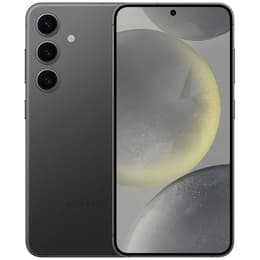


Galaxy S24 Vs Xiaomi Redmi Note 11 Pro 5G

Galaxy S24
Galaxy S24
Starting at

Refurbished price:£273.00

Versus £817.67 new

See options
Xiaomi Redmi Note 11 Pro 5G
Starting at

Refurbished price:£102.00

Versus £599.00 new

See options

Ratings

The Samsung Galaxy S24, released in January 2024, and the Xiaomi Redmi Note 11 Pro 5G, launched in January 2022, are both smartphones designed for different user expectations. While the Galaxy S24 represents a more recent flagship offering with advanced features and extended software support, the Redmi Note 11 Pro 5G provides a robust experience with a focus on display quality and battery endurance. Both devices operate on the Android platform, though with different versions and update policies.

Scores

Durability

When considering the long-term usability of these devices, their release timelines and software support policies are key differentiators.

  • Release Timeline: The Galaxy S24, being a 2024 release, benefits from a significantly longer period of guaranteed software updates compared to the Redmi Note 11 Pro 5G, which was released in early 2022.
  • OS Support: Samsung has committed to providing seven years of operating system upgrades and security updates for the Galaxy S24, meaning it is expected to receive updates up to Android 21. In contrast, the Redmi Note 11 Pro 5G launched with Android 11 and MIUI 13, with updates to Android 13 and HyperOS reported, but its long-term update commitment is shorter.
  • Durability Features: The Galaxy S24 features Gorilla Glass Victus 2/3 on its front and back, along with an aluminum frame and an IP68 rating for dust and water resistance. The Redmi Note 11 Pro 5G offers Corning Gorilla Glass 5 protection for its display and an IP53 rating for dust and splash resistance.

Year of Release

2024

2022

Compatible with latest Update

Yes

No

OS

Android

Android

Foldable

No

No

Performance

The performance capabilities of these two smartphones vary, reflecting their different market positions and release dates.

  • Processing Power: The Galaxy S24 is equipped with a current-generation octa-core processor, which allows it to handle demanding applications, complex multitasking, and graphic-intensive games with notable smoothness and responsiveness. The Redmi Note 11 Pro 5G features an octa-core processor that provides decent performance for everyday tasks and can manage gaming on medium to high settings.
  • Memory and Storage: The Galaxy S24 typically comes with 8GB of RAM and offers storage options of 128GB, 256GB, or 512GB. The Redmi Note 11 Pro 5G is available with 6GB or 8GB of RAM and 64GB or 128GB of internal storage, with the added flexibility of expandable storage up to 1TB via a microSD card.
  • Battery Behavior: The Galaxy S24 houses a 4000 mAh battery, supporting wireless charging and proprietary fast wired charging. User experiences regarding its battery life have been mixed, with some reporting lower endurance. The Redmi Note 11 Pro 5G is powered by a larger 5000 mAh battery and supports 67W turbo charging, which can achieve a 50% charge in approximately 15 minutes. This larger capacity and faster charging contribute to excellent battery life for many users.

Memory (GB)

8 GB

6 GB

Screen quality

Both devices offer vibrant displays, but with distinct differences in technology and viewing experience.

  • Display Technology and Size: The Galaxy S24 features a 6.2-inch Dynamic AMOLED 2X display, providing deep blacks and vibrant colors. The Redmi Note 11 Pro 5G comes with a larger 6.67-inch Super AMOLED or FHD+ AMOLED DotDisplay, also known for its rich colors and contrast.
  • Resolution and Brightness: The Galaxy S24 has an FHD+ resolution (2340x1080 pixels) and boasts a peak brightness of up to 2600 nits, ensuring excellent visibility even in bright outdoor conditions. The Redmi Note 11 Pro 5G offers a 1080x2400 pixel resolution and a peak brightness of 1200 nits, with a typical brightness of 700 nits, which is also suitable for outdoor viewing.
  • Refresh Rate: Both smartphones feature a 120Hz adaptive refresh rate, contributing to smooth scrolling and a responsive user interface.

Resolution

1080 x 2340

1080 x 2400

Screen type

Dynamic LTPO AMOLED 2X

Super AMOLED

Audiovisual

The camera systems on these phones cater to different photography needs and expectations.

  • Rear Camera Setup: The Galaxy S24 includes a versatile triple rear camera system with a 50MP wide sensor, a 12MP ultrawide sensor, and a 10MP telephoto lens capable of 3x optical zoom. The Redmi Note 11 Pro 5G also has a triple rear camera array, featuring a 108MP wide sensor, an 8MP ultrawide lens, and a 2MP macro sensor.
  • Photography Performance: The Galaxy S24 generally produces good photos in well-lit conditions, with improved image processing, but some users have noted challenges with low-light photography and color accuracy in certain scenarios. The Redmi Note 11 Pro 5G captures detailed images in good lighting, but its low-light performance is less consistent, and its secondary cameras are considered less capable than the main sensor.
  • Video Recording: The Galaxy S24 supports high-resolution video recording, including 8K at 24/30fps and 4K at 30/60fps, with features like Instant Slow-mo. The Redmi Note 11 Pro 5G is limited to 1080p video recording at 30fps, lacking 4K capability.
  • Audio Experience: The Redmi Note 11 Pro 5G features dual stereo speakers and a 3.5mm headphone jack, offering a robust audio experience for media consumption. Information on the Galaxy S24's specific audio features beyond stereo speakers is less detailed in the provided snippets, but it supports Dolby Atmos.

Main camera

50 megapixels

108 megapixels

Front camera

12 megapixels

16 megapixels

Miscellaneous

Beyond core features, several practical elements distinguish these two smartphones.

  • Connectivity: Both devices support 5G connectivity. The Galaxy S24 offers Wi-Fi 6E and Bluetooth 5.3. The Redmi Note 11 Pro 5G supports Wi-Fi 802.11 a/b/g/n/ac and Bluetooth 5.1.
  • Ports and Sensors: Both phones utilize a USB-C port for charging and data transfer. The Redmi Note 11 Pro 5G retains a 3.5mm headphone jack, which is absent on the Galaxy S24. For security, the Galaxy S24 features an ultrasonic in-screen fingerprint reader, while the Redmi Note 11 Pro 5G uses a side-mounted fingerprint sensor. The Redmi Note 11 Pro 5G also includes an IR blaster.
  • Dimensions and Build Materials: The Galaxy S24 is more compact and lighter, measuring 147 x 70.6 x 7.6 mm and weighing 168 grams, with a glass front and back (Gorilla Glass Victus 2/3) and an aluminum frame. The Redmi Note 11 Pro 5G is larger and heavier at 164.2 x 76.1 x 8.1 mm and 202 grams, featuring a glass front (Gorilla Glass 5), a glass back with a matte finish, and a plastic frame.

Weight

167 g

202 g

Screen size (in)

6.2

6.67

Mobile network

5G

5G

SIM card

Dual Physical SIM + eSIM

Dual Physical SIM

Carrier compatibility

Unlocked

Unlocked

User feedback for the Galaxy S24 often praises its powerful performance, vibrant display, and the extensive software support commitment from Samsung. However, some users have expressed concerns regarding its battery life and camera performance in low-light conditions. For the Redmi Note 11 Pro 5G, common praise points include its excellent battery life, fast charging, large and smooth AMOLED display, and the inclusion of a headphone jack and expandable storage. Criticisms frequently mention its lack of 4K video recording and less consistent camera performance compared to some rivals, particularly in challenging lighting.

Users prioritizing long-term software support, a more compact design, and advanced processing power for demanding tasks may find the Samsung Galaxy S24 better suited to their needs. Conversely, individuals who value a larger display, exceptional battery endurance with rapid charging, expandable storage, and a traditional headphone jack might lean towards the Xiaomi Redmi Note 11 Pro 5G. Both devices offer distinct advantages, and choosing between them depends on individual priorities for daily use. For those considering a more sustainable choice, exploring quality-assured refurbished options for either model can be a practical approach.


See all articles

Our recent comparisons