Galaxy S23 Ultra Vs Google Pixel 9a

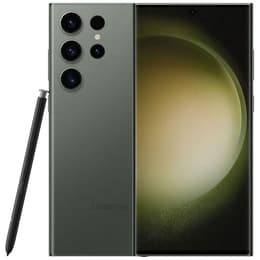
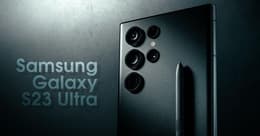
Galaxy S23 Ultra
Galaxy S23 Ultra
Starting at

Refurbished price:£299.00

Versus £1,599.00 new

See options
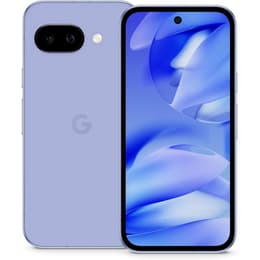
Google Pixel 9a
Google Pixel 9a
Starting at

Refurbished price:£319.00

Versus £499.00 new

See options

Ratings

The Samsung Galaxy S23 Ultra, released in February 2023, is a high-end smartphone known for its expansive display and advanced camera system. In contrast, the Google Pixel 9A, launched in March 2025, represents Google's mid-range offering, focusing on a balanced user experience with strong software integration. These devices operate on the Android platform, but offer distinct approaches to hardware and software features.

Scores

Durability

When considering the longevity of these devices, both offer substantial software support, though with different timelines and hardware foundations.

  • Release Timeline: The Galaxy S23 Ultra was released in February 2023, making it an earlier model compared to the Pixel 9A, which launched in March 2025. This two-year difference in release directly impacts their remaining software support windows.
  • Software Longevity: The Galaxy S23 Ultra is guaranteed four generations of OS upgrades and five years of security updates from its release, extending support until approximately February 2028. The Pixel 9A, being a newer Pixel model, benefits from Google's extended support policy, offering seven years of OS and security updates from its launch, which means support until March 2032.
  • Repairability: The Galaxy S23 Ultra received a repairability score of 9/10 from PBKReviews, noting features like easy-to-access battery pull tabs and clearly labeled components. However, iFixit gave it a lower score of 4/10, citing challenges with adhesive and the lack of official repair guides. The Pixel 8a, a predecessor to the 9A, received a moderate repairability score, with strong adhesives and delicate flex cables making DIY repairs tricky. Google's Pixel phones generally aim for higher repairability, with the Pixel 8 series (and by extension, the 9A) scoring well due to available manuals and OEM parts.

Year of Release

2023

2025

Compatible with latest Update

Yes

Yes

OS

Android

Android

Foldable

No

No

Performance

The performance of these two smartphones caters to different user expectations, with one designed for demanding tasks and the other for efficient everyday use.

  • Processor Capabilities: The Galaxy S23 Ultra features a high-performance processor designed for intensive applications, smooth multitasking, and advanced gaming. This allows it to handle demanding apps and complex operations with ease. The Pixel 9A is equipped with a processor that integrates closely with Google's software, providing a responsive experience for daily tasks and efficient handling of AI-driven features.
  • System Responsiveness: Users of the Galaxy S23 Ultra generally report a very fluid and fast experience, even with multiple applications running simultaneously. The Pixel 9A offers a consistently smooth user interface, optimized for quick app launches and seamless navigation within its operating system.
  • Storage and RAM: The Galaxy S23 Ultra offers configurations with up to 12 GB of RAM and internal storage options up to 1 TB, utilizing faster UFS 4.0 storage for most variants, which benefits data-intensive tasks. The Pixel 9A typically comes with 8 GB of RAM and storage options up to 256 GB, providing ample space and memory for most users.

Memory (GB)

8 GB

8 GB

Screen quality

The visual experience on both devices is distinct, reflecting their different design philosophies and target audiences.

  • Display Technology and Size: The Galaxy S23 Ultra features a large 6.8-inch Dynamic AMOLED 2X display, offering deep blacks and vibrant colors, along with a curved design. The Pixel 9A comes with a 6.3-inch OLED display, providing clear visuals and good color reproduction in a more compact form factor.
  • Resolution and Clarity: The S23 Ultra boasts a Quad HD+ resolution (3088x1440 pixels), resulting in exceptionally sharp images and text. The Pixel 9A offers a Full HD+ resolution (2424x1080 pixels), which delivers clear and detailed visuals suitable for most content consumption.
  • Brightness and Refresh Rate: With a peak brightness of 1750 nits, the Galaxy S23 Ultra's display is highly visible even in bright outdoor conditions and supports an adaptive 120Hz refresh rate for smooth scrolling and animations. The Pixel 9A's display also supports a 120Hz variable refresh rate and offers high peak brightness for good outdoor visibility.

Resolution

1440 x 3088

2424 x 1080

Audiovisual

Both smartphones offer capable camera systems, but they approach photography with different strengths and features.

  • Camera System Capabilities: The Galaxy S23 Ultra features a versatile quad-camera setup, including a 200-megapixel main sensor, a 12-megapixel ultrawide lens, and two 10-megapixel telephoto lenses offering up to 10x optical zoom. The Pixel 9A typically includes a dual-camera system with a 48-megapixel or 50-megapixel main sensor and a 13-megapixel ultrawide lens, focusing on computational photography.
  • Photography Performance: The S23 Ultra excels in capturing highly detailed images, especially with its high-resolution main sensor and impressive zoom capabilities, making it suitable for a wide range of photographic scenarios. User feedback indicates that while the 200MP setting can have shutter lag, normal mode performs well. The Pixel 9A leverages Google's advanced image processing to produce consistent, high-quality photos with accurate colors and excellent dynamic range, particularly in challenging lighting conditions.
  • Video Recording and Audio: The Galaxy S23 Ultra supports video recording up to 8K resolution and offers advanced stabilization features. The Pixel 9A provides strong video capabilities, often benefiting from Google's software optimizations for stable and clear footage. For audio, the S23 Ultra features stereo speakers tuned by AKG, providing a rich sound experience. The Pixel 9A also offers good speaker output for media consumption and clear microphone quality for calls.

Front camera

12 megapixels

13 megapixels

Miscellaneous

Beyond core features, several practical elements differentiate these two devices in terms of daily usability and design.

  • Connectivity and Ports: Both devices support 5G connectivity, modern Wi-Fi standards (Wi-Fi 6E for S23 Ultra), and Bluetooth for wireless accessories. The Galaxy S23 Ultra uses a USB-C 3.2 port, while the Pixel 9A also features a USB-C port. Neither device includes a traditional 3.5mm headphone jack.
  • Biometric Security: The Galaxy S23 Ultra incorporates an ultrasonic fingerprint sensor embedded under the display for secure unlocking. The Pixel 9A also features an under-display fingerprint sensor for convenient and secure access.
  • Design and Build Materials: The S23 Ultra has a premium build with Gorilla Glass Victus 2 on both the front and back, and an aluminum frame, offering IP68 dust and water resistance. It also integrates an S Pen stylus for enhanced productivity. The Pixel 9A features a scratch-resistant display, often with Gorilla Glass 3, and a design that prioritizes a comfortable grip and a flat back profile without a prominent camera bump. The S23 Ultra is a larger and heavier device at 163.4 x 78.1 x 8.9 mm and 233 grams, compared to the Pixel 9A's more compact dimensions of 154.7 x 73.3 x 8.9 mm and 185.9 grams.

Weight

234 g

186 g

Screen size (in)

6.8

6.3

Mobile network

5G

5G

SIM card

Dual Physical SIM + eSIM

Physical SIM + eSIM

Carrier compatibility

Unlocked

Unlocked

Connector

USB-C

USB-C

User feedback for the Galaxy S23 Ultra frequently praises its exceptional battery life, powerful performance, and the versatility of its camera system, particularly the zoom capabilities. Many users appreciate the integrated S Pen for productivity and creative tasks. Criticisms sometimes point to its large size and weight, which can make one-handed use challenging for some. Some users have also noted occasional shutter lag with the 200-megapixel camera setting and software processing that can be inconsistent.

For the Google Pixel 9A, common praise centers on its consistent camera performance, especially its computational photography features that deliver reliable results across various conditions. Users also value the clean Android experience and the timely software updates that Google provides. The device is often lauded for its balanced performance for everyday use and its integration of Google's AI features. Potential concerns, based on previous A-series models, might include a less premium build compared to flagship devices and repairability challenges due to strong adhesives.

Users prioritizing a top-tier camera system with extensive zoom, a large and vibrant display for media consumption, and integrated stylus functionality for productivity may find the Samsung Galaxy S23 Ultra well-suited to their needs. Its robust performance is ideal for demanding applications and multitasking. Conversely, users who value a consistent and reliable camera experience, a streamlined Android interface with long-term software support, and a more compact design for comfortable handling may lean toward the Google Pixel 9A. Both devices offer compelling features, and choosing between them often comes down to these specific priorities. For those seeking a more sustainable choice, considering a quality-assured refurbished option for either model can provide an eco-friendly alternative.


See all articles

Our recent comparisons