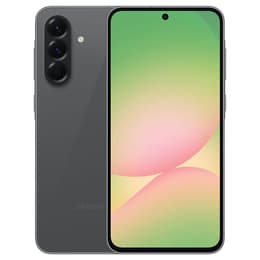
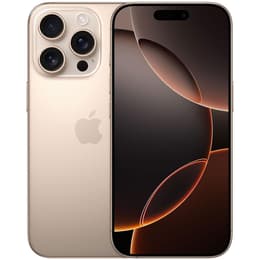

Galaxy A56 Vs iPhone 16 Pro

Galaxy A56
Galaxy A56
Starting at

Refurbished price:£274.00

Versus £422.50 new

See options
iPhone 16 Pro
iPhone 16 Pro
Starting at

Refurbished price:£564.00

Versus £999.00 new

See options

Ratings

The Samsung Galaxy A56, an Android-based smartphone, was announced in March 2025, succeeding the Galaxy A55. In contrast, the iPhone 16 Pro, part of Apple's flagship line, was released in September 2024, running on iOS. These devices cater to different ecosystems and user expectations, with the Galaxy A56 focusing on a balanced mid-range experience and the iPhone 16 Pro offering advanced features and performance.

Scores

Durability

When considering the long-term usability of these devices, their release timelines and software support policies are key differentiators. The Galaxy A56, released in March 2025, ships with Android 15 and is promised six major Android OS upgrades and up to seven years of security updates, extending its support until March 2032 in some regions. [3, 18, 26, 40, 41] The iPhone 16 Pro, launched in September 2024 with iOS 18, typically receives 5-6 years of major iOS updates from Apple, meaning its software support would likely extend into late 2029 or 2030. [1, 7]

  • Software Longevity: The Galaxy A56 offers an extended security update policy, potentially providing a longer period of security patches compared to the iPhone 16 Pro's typical update cycle for major OS versions. [26, 40, 41]
  • Repairability: The Galaxy A56 received a repairability score of 8.4 out of 10, indicating it is relatively straightforward to repair, though slightly less so than its predecessor. [4, 6, 8] The iPhone 16 Pro achieved a repairability score of 7 out of 10, a notable improvement over previous Pro models, attributed to features like a hard steel battery case and dual-entry access for repairs. [14, 28, 35]
  • Practical Lifespan: Both devices are designed for durability, with the Galaxy A56 featuring Gorilla Glass Victus+ and an IP67 rating for dust and water resistance, while the iPhone 16 Pro boasts a Ceramic Shield front and an IP68 rating. [10, 18, 21]

Year of Release

2025

2024

Compatible with latest Update

Yes

Yes

Foldable

No

No

Performance

The performance capabilities of the Galaxy A56 and iPhone 16 Pro reflect their respective market segments, with each offering a distinct user experience in terms of speed and efficiency.

  • Processing Power: The iPhone 16 Pro is equipped with a current-generation processor, enabling it to handle demanding applications, complex multitasking, and graphics-intensive gaming with smooth responsiveness. [13, 16] The Galaxy A56 features a mid-range processor that provides a performance boost over its predecessor, suitable for everyday tasks, social media, and light gaming, with users reporting a snappy experience. [23, 30, 36, 38, 44]
  • Multitasking and Storage: The iPhone 16 Pro comes with 8GB of RAM and offers storage options up to 1TB, utilizing fast NVMe storage for quick app loading and data access. [5, 7, 21] The Galaxy A56 is available with 8GB or 12GB of RAM and up to 256GB of internal storage, which can be expanded via a microSD card, providing flexibility for users who require more space for media and files. [10, 19, 29, 30]
  • Battery Behavior: The Galaxy A56 houses a 5000mAh battery, often praised for its ability to last a full day with normal usage, and potentially up to two days with lighter use, offering around 6 to 6.5 hours of screen-on time. [10, 24, 39, 42] The iPhone 16 Pro, with a 3582mAh battery, also delivers all-day power, with tests showing over 18 hours of video playback, and users reporting it can handle travel days and heavy photography without needing a charge. [25, 27, 31]

Memory (GB)

8 GB

8 GB

Screen quality

Both smartphones offer high-quality displays, but they differ in their specifications and the visual experience they provide to users.

  • Display Technology and Clarity: The Galaxy A56 features a 6.7-inch Super AMOLED display with a Full HD+ resolution (1080 x 2340 pixels), delivering vibrant colors and deep blacks. [2, 18, 38] The iPhone 16 Pro sports a 6.3-inch Super Retina XDR OLED display with a higher resolution of 2622 x 1206 pixels, resulting in a sharper image with 460 pixels per inch. [1, 21]
  • Brightness and Smoothness: Both devices offer a 120Hz refresh rate for smooth scrolling and responsive interactions. [2, 15, 21] The Galaxy A56 can reach up to 1900 nits peak brightness, ensuring good visibility outdoors. [15, 18] The iPhone 16 Pro offers 1000 nits typical brightness and can reach up to 2000 nits peak brightness outdoors, along with a 1 nit minimum brightness for comfortable viewing in low-light conditions. [1, 13, 21]
  • Viewing Experience: The iPhone 16 Pro features thinner display borders and an Always-On display, enhancing the immersive viewing experience. [1, 13, 21] The Galaxy A56 also provides a large, vibrant display suitable for media consumption, protected by Corning Gorilla Glass Victus+. [15, 18]

Resolution

1080 x 2340

1206 x 2622

Screen type

Super AMOLED

LTPO Super Retina XDR OLED

Audiovisual

The camera systems on the Galaxy A56 and iPhone 16 Pro are designed to capture different levels of detail and offer varying photographic capabilities.

  • Rear Camera System: The iPhone 16 Pro features a professional-grade triple-camera setup, including a 48MP wide lens, a 12MP periscope telephoto lens with 5x optical zoom, and a 48MP ultrawide lens, complemented by a TOF 3D LiDAR scanner for enhanced depth sensing. [1, 5, 21] The Galaxy A56 comes with a versatile triple-camera system, comprising a 50MP main sensor with optical image stabilization (OIS), a 12MP ultrawide lens, and a 5MP macro lens. [10, 29, 32]
  • Photography Performance: The iPhone 16 Pro's advanced camera system is designed for superior image quality across various conditions, including improved low-light performance and detailed telephoto shots. [1, 13] The Galaxy A56 is noted for its good performance in everyday photography and for casual users, with instant picture taking, though its low-light capabilities and the utility of its macro camera have received mixed feedback. [22, 39]
  • Video and Audio: The iPhone 16 Pro supports 4K Dolby Vision video recording at various frame rates, offering advanced video capabilities. [21] Both devices feature stereo speakers, providing a richer audio experience for media consumption. [18, 29, 38]

Main camera

4K@30fps

48 megapixels

Front camera

13 megapixels

12 megapixels

Miscellaneous

Beyond their core features, both devices offer a range of practical elements that contribute to their overall user experience and connectivity.

  • Connectivity Standards: The iPhone 16 Pro supports Wi-Fi 7, Bluetooth 5.3, and Ultra-wideband technology, along with LEO satellite connectivity for emergency services. [1, 21] The Galaxy A56 includes 5G, Wi-Fi 6, and Bluetooth 5.3, ensuring modern wireless communication capabilities. [18, 19, 29]
  • Physical Connections and Biometrics: The iPhone 16 Pro utilizes a USB-C port with USB 3.2 Gen 2 speeds for fast data transfer and charging. [1, 13] The Galaxy A56 also features a USB Type-C port and includes an under-display fingerprint sensor for secure unlocking. [10, 19, 29] The iPhone 16 Pro relies on Face ID for biometric authentication. [21]
  • Build and Handling: The iPhone 16 Pro features a titanium frame, contributing to its durability and a weight of 199 grams. [1, 21, 34] The Galaxy A56 has an aluminum frame with Gorilla Glass Victus+ on both sides, weighing 198 grams, and is designed with slimmed bezels for comfortable handling. [10, 18, 19, 32]

Weight

197 g

199 g

Screen size (in)

6.5

6.3

Mobile network

5G

5G

SIM card

Dual Physical SIM + eSIM

Physical SIM + eSIM

Carrier compatibility

Unlocked

Unlocked

Connector

USB-C

USB-C (USB 3)

User feedback for the Galaxy A56 often highlights its solid battery life, with many reporting it comfortably lasts a full day, and its vibrant Super AMOLED display is frequently praised for media consumption. [24, 39, 42] Some users appreciate its performance for everyday tasks and light gaming, noting its smooth operation. [23, 30, 44] Criticisms sometimes point to potential overheating during intensive use and the perceived lack of necessity for the macro camera. [23, 39] The iPhone 16 Pro receives acclaim for its significantly improved battery life compared to its predecessors, with users confirming it can endure demanding usage scenarios like travel and heavy photography. [25, 27, 31] Its advanced camera system and powerful processing capabilities are consistently lauded for delivering a premium experience. [13, 16]

Users prioritizing a long-lasting battery, a large and vibrant display, and extensive software support for security updates may find the Galaxy A56 well-suited to their needs. It offers a balanced experience for general use and media consumption. Conversely, individuals who prioritize cutting-edge performance, a professional-grade camera system with advanced features like optical zoom, and a higher-resolution display will likely lean towards the iPhone 16 Pro. Its enhanced repairability also appeals to those who value ease of maintenance. Both devices represent excellent choices within their respective ecosystems, and for those considering a more sustainable option, quality-assured refurbished versions of either model are available, offering an eco-friendly alternative.

See all articles

Our recent comparisons