

Compare models
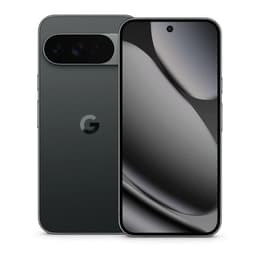
Galaxy A55 Vs Google Pixel 10 Pro XL
- 1-year minimum warranty
- Free delivery on all items
- Free 30-day returns
Differences at a glance
The Samsung Galaxy A55 (2024) and the Google Pixel 10 Pro XL (2025) represent two distinct approaches to modern smartphone engineering, spanning different market tiers and launch timelines. While the Galaxy A55 focuses on delivering essential capabilities through a balanced mid-range framework, the Google Pixel 10 Pro XL operates as a flagship device featuring advanced computational hardware and expansive display options. Both devices run on the Android operating system, though they offer different software experiences and update timelines that influence long-term usability. Understanding how these structural and software differences affect everyday tasks helps users determine which model aligns with their specific daily requirements.
Available Models
Colour
Storage (GB)
Scores
Durability
When evaluating structural longevity and software support, both devices provide reliable multi-year foundations but cater to different replacement cycles based on their initial release schedules and manufacturer policies.
- Software support timelines: The Google Pixel 10 Pro XL benefits from an extended multi-year operating system and security update commitment, whereas the Galaxy A55 offers a shorter yet substantial update window matching its mid-range category.
- Repair infrastructure and materials: Both models incorporate sturdy glass and metal construction, though repair accessibility varies by region, with quality-assured refurbished options providing a sustainable way to extend device life cycles without compromising on structural integrity.
- Expected battery degradation: Both units utilize modern lithium-ion technology designed to retain capacity over years of standard daily charging routines, though intensive usage patterns will accelerate normal wear over time.
Year of Release
2024
2025
Compatible with latest Update
Yes
Yes
OS
Android
Android
Foldable
No
No
Performance
Underneath the surface, these two smartphones handle multitasking, app loading, and processing demands differently based on their internal hardware configurations and memory capacities.
- App loading and multitasking: The Google Pixel 10 Pro XL features a higher-tier processor and increased RAM configuration that handles heavy applications, complex rendering, and simultaneous background tasks with minimal latency, while the Galaxy A55 manages everyday navigation, social media, and streaming reliably.
- Storage capacity choices: Both devices offer ample internal storage configurations for media libraries and applications, though neither provides physical expandable storage via memory cards.
- Thermal management during heavy use: The Pixel 10 Pro XL maintains stable performance during sustained intensive tasks, whereas the Galaxy A55 remains cool during standard daily use but may throttle slightly during extended high-end gaming sessions.
Screen quality
Display characteristics significantly impact media consumption, outdoor visibility, and general navigation comfort on both devices.
- Panel technology and clarity: Both smartphones utilize vibrant OLED display panels that deliver deep contrast levels and sharp resolutions, ensuring text and images appear crisp during reading and video playback.
- Brightness and outdoor legibility: The Google Pixel 10 Pro XL achieves higher peak outdoor brightness levels for easier viewing under direct sunlight, while the Galaxy A55 offers sufficient luminance for comfortable viewing in most ambient lighting conditions.
- Refresh rate smoothness: Both models support adaptive high refresh rates up to 120Hz, ensuring fluid scrolling through web pages, system menus, and supported applications.
Resolution
1080 x 2340
1344x2992
Audiovisual
Imaging hardware and internal processing tools shape how each smartphone captures daily moments, records video, and handles media output.
- Lens configurations: The Google Pixel 10 Pro XL features a versatile triple-lens setup including a dedicated telephoto lens for optical zoom, whereas the Galaxy A55 relies on a standard main, ultra-wide, and macro sensor array without dedicated optical zoom magnification.
- Computational photography: Google integrates advanced software processing for low-light clarity and balanced portraits, while Samsung emphasizes natural color reproduction and reliable snapshot capture across various lighting conditions.
- Audio and speaker output: Both devices incorporate stereo speakers suitable for hands-free calls and casual media viewing, accompanied by clear microphone arrays for voice recording and video calls.
Front camera
32 megapixels
42 megapixels
Miscellaneous
Practical physical traits, connectivity options, and daily handling ergonomics define how these devices integrate into a user's routine.
- Connectivity standards: Both smartphones support modern 5G networks, fast Wi-Fi standards, and Bluetooth pairing, ensuring stable connections for accessories and data transfer.
- Biometric security sensors: Each model utilizes under-display fingerprint sensors alongside facial recognition options for secure and quick device unlocking.
- Physical dimensions and handling: The Google Pixel 10 Pro XL features a larger physical footprint and heavier chassis to accommodate its expansive screen, while the Galaxy A55 offers a slightly more compact and lighter profile that may suit users preferring easier one-handed operation.
Weight
213 g
232 g
Screen size (in)
6.6
6.8
Mobile network
5G
5G
SIM card
Dual Physical SIM
Physical SIM + eSIM
Carrier compatibility
Unlocked
Unlocked
Connector
USB-C
USB-C
What the community thinks
User discussions across public forums highlight distinct preferences for each device based on everyday priorities. Owners of the Galaxy A55 frequently praise its reliable battery performance, solid daily handling, and balanced feature set for standard communication and media tasks. Common criticisms for the mid-range model note its lack of optical zoom capabilities and slower processing speeds during demanding tasks. Conversely, users of the Google Pixel 10 Pro XL often highlight its advanced camera versatility, smooth multitasking performance, and bright display, while noting that its larger physical size can feel heavy during prolonged one-handed use and that choosing an eco-friendly, quality-assured refurbished option represents a practical way to access these advanced features sustainably.
Users prioritizing advanced photography tools, maximum processing power for heavy applications, and an expansive viewing area will find the Google Pixel 10 Pro XL well-suited to their needs. Meanwhile, users prioritizing everyday reliability, comfortable physical handling, and a balanced core feature set may prefer the Galaxy A55. Evaluating these practical differences ensures an informed decision tailored to individual daily habits and workflow requirements.