
Galaxy A36 Vs Galaxy Z Fold4

Galaxy A36
Galaxy A36
Starting at

Refurbished price:£206.00

Versus £369.00 new

See options
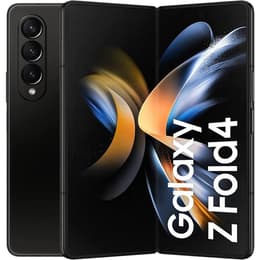
Galaxy Z Fold4
Galaxy Z Fold4
Starting at

Refurbished price:£352.00

Versus £1,889.00 new

See options

Ratings

The Samsung Galaxy A36, released in March 2025, represents a modern mid-range smartphone with a traditional slab design. In contrast, the Samsung Galaxy Z Fold4, launched in August 2022, is a premium foldable device that transforms from a compact smartphone into a larger tablet-like screen. The primary distinctions lie in their form factor, performance capabilities, and the unique display experience each offers. Both devices operate on the Android platform, providing a familiar software environment with Samsung's One UI.

Scores

Durability

When considering the practical lifespan of these devices, their release timelines and design philosophies play a significant role.

  • Release Timeline: The Galaxy A36 is a newer device, having been released in March 2025. The Galaxy Z Fold4 was released earlier, in August 2022. This difference in launch dates impacts their respective software support cycles.
  • Software Longevity: The Galaxy A36 is expected to receive 6 generations of Android operating system upgrades and 6 years of security updates, offering extended software support into the future. The Galaxy Z Fold4 was promised 4 Android OS upgrades (up to Android 16) and 5 years of security updates (until 2027) from its release, meaning it has fewer update cycles remaining.
  • Physical Durability: The Galaxy A36 features a conventional smartphone design with an IP67 rating for dust and water resistance, and Gorilla Glass Victus+ on both its front and rear, making it robust for everyday use. The Galaxy Z Fold4 offers IPX8 water resistance but lacks official dust resistance due to its folding mechanism. Its internal foldable screen, protected by Ultra-Thin Glass and plastic layers, is generally considered more delicate than a traditional glass display.
  • Repairability: Traditional slab phones like the Galaxy A36 are often simpler and less costly to repair than complex foldable devices, which involve intricate hinge mechanisms and specialized display components. User reports for the Z Fold4 have noted instances of inner screen protector peeling and hinge issues after about a year of use.

Year of Release

2025

2022

OS

Android

Android

Foldable

No

Yes

Performance

The performance capabilities of the Galaxy A36 and Galaxy Z Fold4 cater to different user expectations and demands.

  • Processing Power: The Galaxy A36 is equipped with a current-generation mid-range processor, the Qualcomm Snapdragon 6 Gen 3, providing smooth performance for daily applications, web browsing, and light gaming. The Galaxy Z Fold4, featuring a high-end processor from its release year, the Qualcomm Snapdragon 8+ Gen 1, delivers significantly more power, handling demanding applications, intensive multitasking, and graphic-heavy games with ease.
  • Multitasking and Responsiveness: Users will find the Galaxy A36 responsive for typical smartphone tasks. However, the Galaxy Z Fold4, with its more powerful internals and typically higher RAM (12GB across all configurations), offers a snappier experience, especially when running multiple applications simultaneously or switching between them rapidly on its larger screen. The Galaxy A36 is available with 6GB, 8GB, or 12GB of RAM.
  • Storage Options: The Galaxy A36 offers internal storage options of 128GB or 256GB, with some configurations supporting microSD card expansion. The Galaxy Z Fold4 comes with 256GB, 512GB, or 1TB of internal storage but does not support expandable storage.
  • Battery Behavior: The Galaxy A36 typically includes a large 5000mAh battery capacity, often providing extended usage throughout a full day for most users. The Galaxy Z Fold4 has a 4400mAh battery, and user reviews indicate it can last a full day with moderate use, with improved efficiency over its predecessor.

Memory (GB)

6 GB

12 GB

Screen quality

The display experience is a primary differentiator between these two Samsung smartphones.

  • Display Technology: Both devices utilize AMOLED display technology, known for deep blacks and vibrant colors. The Galaxy A36 features a single 6.7-inch Super AMOLED display. The Galaxy Z Fold4 boasts Dynamic AMOLED 2X panels for both its 6.2-inch cover screen and its larger 7.6-inch main foldable screen.
  • Resolution and Clarity: The Galaxy A36 offers a Full HD+ resolution (2340x1080) on its display. The Galaxy Z Fold4's main display has a higher QXGA+ resolution (2176x1812), providing greater detail, while its cover screen has an HD+ resolution (2316x904).
  • Brightness and Refresh Rate: Both phones feature a 120Hz refresh rate for smooth scrolling and animations. The Galaxy A36 can reach up to 1200 nits peak brightness, making it suitable for outdoor visibility. The Galaxy Z Fold4's displays also offer high brightness levels, ensuring good visibility in various lighting conditions.
  • Viewing Experience: The Galaxy A36 provides a single, expansive screen for media consumption and daily interactions. The Galaxy Z Fold4 offers a unique dual-screen experience, allowing users to use a traditional smartphone form factor when folded or unfold it for a larger, tablet-like display, enhancing multitasking and media immersion.

Resolution

1080 x 2340

1812 x 2176

Audiovisual

The camera systems on these devices offer different capabilities for capturing photos and videos.

  • Rear Camera System: The Galaxy A36 features a triple rear camera setup, including a 50MP main sensor with optical image stabilization (OIS), an 8MP ultra-wide lens, and a 5MP macro lens. The Galaxy Z Fold4 also has a triple rear camera system, comprising a 50MP wide-angle camera with OIS, a 12MP ultra-wide camera, and a 10MP telephoto lens capable of 3x optical zoom and 30x digital zoom.
  • Photography Performance: The Galaxy A36's main camera performs well in everyday conditions, producing good photos. However, its low-light performance and video quality, particularly dynamic range in videos, have been noted as less impressive by some users. The Galaxy Z Fold4's camera system is considered more versatile, offering strong performance across various lighting conditions and a dedicated telephoto lens for zoomed shots.
  • Front-Facing Cameras: For selfies and video calls, the Galaxy A36 has a 12MP front camera. The Galaxy Z Fold4 features a 10MP camera on its cover screen and a 4MP under-display camera on its main foldable screen.
  • Video Recording: The Galaxy A36 supports video recording up to 4K at 30 frames per second (fps). The Galaxy Z Fold4 can record video at up to 8K resolution at 24fps, and offers advanced slow-motion capabilities.

Front camera

12

4 megapixels

Miscellaneous

Beyond core specifications, several practical elements differentiate these two smartphones in daily use.

  • Connectivity: Both devices support 5G connectivity, along with modern Wi-Fi standards and Bluetooth. The Galaxy A36 features Bluetooth 5.3.
  • Port Types: Both devices include a USB-C port for charging and data transfer. The Galaxy A36 may retain a 3.5mm headphone jack, offering traditional audio connectivity, which is absent on the Galaxy Z Fold4.
  • Biometric Security: The Galaxy A36 typically integrates an in-display optical fingerprint sensor for convenient and secure unlocking. The Galaxy Z Fold4 features a side-mounted fingerprint sensor, often combined with face recognition for quick access.
  • Weight and Dimensions: The Galaxy A36 presents a familiar, lighter, and thinner traditional smartphone form factor, weighing around 195 grams. The Galaxy Z Fold4 is a heavier device at 263 grams, reflecting its foldable design and premium build materials like Armor Aluminum. Its folded dimensions are 155.1 x 67.1 x 14.2-15.8mm, expanding to 155.1 x 130.1 x 6.3mm when unfolded.
  • Build Materials: The Galaxy A36 features a glass back and front with a plastic chassis. The Galaxy Z Fold4 uses Gorilla Glass Victus+ on its cover screen and back, with an Armor Aluminum frame, contributing to its premium feel.

Weight

195 g

263 g

Screen size (in)

6,74

7.6

Mobile network

5G

5G

SIM card

Dual Physical SIM + eSIM

Dual Physical SIM + eSIM

Carrier compatibility

Unlocked

Unlocked

User feedback for the Samsung Galaxy A36 often praises its vibrant display, extended software support, and solid battery life for its category. Some common criticisms include occasional performance stutters, less impressive low-light camera performance, and the absence of a charger in the box. The Galaxy Z Fold4 receives commendation for its innovative foldable design, powerful performance, and versatile camera system, with users appreciating the enhanced multitasking capabilities and the improved aspect ratio of its cover screen. However, frequent concerns revolve around the durability of the inner screen protector, the lack of dust resistance, and the overall bulk and weight of the device.

Users prioritizing a long-lasting software experience, a robust traditional smartphone design, and a strong battery life for everyday tasks may find the Samsung Galaxy A36 well-suited to their needs. Its focus on core features and extended updates makes it a practical choice for those seeking reliability without the complexities of a foldable form factor. For individuals who value cutting-edge technology, a large, immersive display for productivity and media consumption, and top-tier performance for demanding applications, the Samsung Galaxy Z Fold4 offers a distinct advantage. Its unique folding mechanism provides unparalleled screen real estate in a portable format, catering to power users and those who enjoy a versatile device.

Both devices offer compelling features for different user profiles. Exploring quality-assured refurbished options for either model can provide an eco-friendly alternative for consumers looking to make a sustainable choice.


See all articles

Our recent comparisons