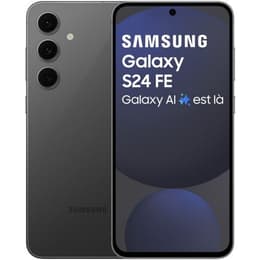

Galaxy A36 Vs Galaxy S24 FE

Galaxy A36
Galaxy A36
Starting at

Refurbished price:£206.00

Versus £369.00 new

See options
Galaxy S24 FE
Galaxy S24 FE
Starting at

Refurbished price:£250.00

Versus £741.91 new

See options

Ratings

The Samsung Galaxy A36 (released March 2025) and the Samsung Galaxy S24 FE (released October 2024) are both Android smartphones from Samsung, targeting different segments of the market. While the A36 focuses on delivering a strong mid-range experience, the S24 FE aims to bring flagship-like features to a broader audience. Key differentiators include their processing power, camera capabilities, and the level of software support offered, reflecting their respective positions within Samsung's lineup.

Scores

Durability

When considering the long-term usability of a smartphone, factors like release timeline, software support, and physical resilience are important. Both devices offer substantial longevity, but with some distinctions.

  • Release Timeline and OS Support: The Galaxy S24 FE, released in October 2024, benefits from Samsung's commitment to providing up to seven years of OS and security updates, aligning it with the flagship S24 series. The Galaxy A36, launched in March 2025, is promised six generations of OS upgrades and six years of security patches. This means the S24 FE will receive software support for a slightly longer duration.
  • Physical Durability: Both models feature Corning Gorilla Glass Victus+ on the front and rear for enhanced scratch and drop resistance. The Galaxy A36 carries an IP67 rating for dust and water resistance, while the Galaxy S24 FE boasts an IP68 rating, offering slightly better protection against water ingress. The A36 utilizes a plastic frame, whereas the S24 FE also incorporates a durable build.
  • Practical Lifespan: Users can expect both devices to remain functional and secure for several years, thanks to Samsung's extended software support policies. The S24 FE's longer update commitment and slightly higher ingress protection might appeal to those prioritizing maximum possible longevity and resilience.

Year of Release

2025

2024

OS

Android

Android

Foldable

No

No

Performance

The performance of a smartphone is crucial for daily tasks, from browsing and multitasking to gaming and demanding applications. Both the Galaxy A36 and S24 FE are designed to handle modern smartphone usage, but they approach performance from different tiers.

  • Processing Power: The Galaxy S24 FE is equipped with a current-generation processor, the Samsung Exynos 2400e, which is an underclocked variant of the flagship Exynos 2400. This allows it to handle demanding apps and multitasking smoothly, with user reports indicating strong performance and thermal efficiency. The Galaxy A36 features a Qualcomm Snapdragon 6 Gen 3 chipset, which provides robust performance for everyday activities and light gaming, with a larger vapor chamber to manage heat.
  • Multitasking and Responsiveness: The S24 FE typically comes with 8GB of RAM, with options up to 512GB of storage, contributing to fluid multitasking and app switching. The A36 offers various configurations, including 6GB, 8GB, and 12GB of RAM, alongside 128GB or 256GB of storage. While the A36's performance is generally smooth for its class, some users have noted occasional sluggishness in specific scenarios. The S24 FE's more powerful processor and optimized software experience, including Galaxy AI features, contribute to a consistently responsive user experience.
  • Storage Considerations: The S24 FE does not offer user-expandable storage, so choosing the appropriate internal storage variant (128GB, 256GB, or 512GB) at purchase is important. Similarly, the Galaxy A36 also lacks a microSD card slot, a change from its predecessor, making the choice between 128GB and 256GB crucial for users with extensive media libraries.

Memory (GB)

6 GB

8 GB

Screen quality

The display is a primary interface for smartphone interaction, influencing everything from media consumption to daily navigation. Both devices offer vibrant displays, but with differences in their underlying technology and capabilities.

  • Display Technology and Clarity: The Galaxy S24 FE features a 6.7-inch Dynamic AMOLED 2X display with FHD+ resolution, providing vibrant colors and deep blacks. The Galaxy A36 also sports a 6.7-inch Super AMOLED display with FHD+ resolution, known for its sharp visuals and rich color reproduction.
  • Brightness and Refresh Rate: Both phones offer a 120Hz refresh rate for smooth scrolling and fluid animations. The S24 FE has a peak brightness of 1900 nits, ensuring good visibility even in bright outdoor conditions. The A36 also provides strong outdoor visibility with a peak brightness of 1200 nits in auto mode, with sections reaching 1900 nits during HDR content.
  • Viewing Experience: The S24 FE's Dynamic AMOLED 2X panel, while having slightly thicker bezels than its more premium S24 counterparts, still delivers an impressive viewing experience with HDR10+ support. The A36's Super AMOLED display is praised for its vibrant visuals and is well-suited for streaming and watching videos.

Resolution

1080 x 2340

1080 x 2340

Audiovisual

Camera capabilities are a significant consideration for many users, and both the Galaxy A36 and S24 FE offer versatile camera systems, though with different strengths and features.

  • Rear Camera Systems: The Galaxy S24 FE features a triple rear camera setup, including a 50 MP wide-angle main sensor with optical image stabilization (OIS), a 12 MP ultrawide lens, and an 8 MP telephoto lens with 3x optical zoom. This telephoto lens is a notable inclusion for capturing distant subjects without significant loss of detail. The Galaxy A36 also has a triple rear camera system, comprising a 50 MP main sensor with OIS, an 8 MP ultrawide lens, and a 5 MP macro lens.
  • Photography Performance: The S24 FE's main camera generally captures clean details, though some users note that colors can appear unrealistic and shadows occasionally washed out. Its ultrawide camera offers accurate color representation. The A36's main camera delivers solid overall quality with good detail and dynamic range, though color rendition can sometimes be inconsistent. Its ultrawide camera performs decently, but with less detail compared to higher-resolution sensors.
  • Video Recording and Front Camera: The S24 FE supports 8K video recording at 30fps, and has a 10 MP front camera. The A36 can record 4K video at 30fps with its main and selfie cameras, and features a 12 MP front camera. Both devices offer electronic stabilization for smoother video capture.

Front camera

12

10 megapixels

Miscellaneous

Beyond core performance and display, several practical elements contribute to the overall user experience and device utility.

  • Connectivity and Ports: Both smartphones support 5G connectivity, along with modern Wi-Fi standards (Wi-Fi 6 for A36, Wi-Fi 6E for S24 FE) and Bluetooth 5.3. The S24 FE includes a USB Type-C port, as does the A36. Neither device features a traditional 3.5mm headphone jack.
  • Biometric Security: The Galaxy S24 FE utilizes an optical in-display fingerprint sensor. The Galaxy A36 also features an optical under-display fingerprint reader. While both provide secure unlocking, the S24 FE's sensor is noted to be slightly slower than the ultrasonic sensors found in more premium S-series models.
  • Design and Handling: The S24 FE measures 162 x 77.3 x 8 mm and weighs 213g, making it slightly heavier than the A36. The A36 measures 162.9 x 78.2 x 7.4 mm and weighs 195g, offering a slightly thinner and lighter profile. Both phones feature a design aesthetic similar to other recent Samsung devices, with flat edges and a modern appearance. The S24 FE also integrates Galaxy AI features, enhancing its software capabilities.

Weight

195 g

213 g

Screen size (in)

6,74

6.7

Mobile network

5G

5G

SIM card

Dual Physical SIM + eSIM

Dual Physical SIM

Carrier compatibility

Unlocked

Unlocked

Connector

USB-C

USB-C

The Samsung Galaxy A36 and Galaxy S24 FE cater to users with distinct priorities, offering a blend of features and performance that reflect their respective market positions. User feedback for the Galaxy S24 FE often praises its strong performance, excellent battery life for moderate use, and the inclusion of Galaxy AI features, making it feel like a more premium device without the top-tier price. However, some users have noted that its camera performance, while decent, doesn't quite match the flagship S24 series, and its charging speeds are slower compared to some rivals. The optical fingerprint sensor is also perceived as less rapid than the ultrasonic variant.

For the Galaxy A36, common praise points include its robust battery life, vibrant display, and Samsung's commitment to long-term software support. Users appreciate its solid build quality with Gorilla Glass Victus+ and IP67 rating. Criticisms sometimes point to its camera performance, which, while capable, may not always deliver consistent color or detail, and the removal of the microSD card slot is a notable change from previous A-series models. Some reviews also suggest that while performance is adequate, it can occasionally feel less responsive than expected for its chipset.

Users prioritizing extended software support, a more powerful processor for demanding applications, and access to Galaxy AI features may find the Galaxy S24 FE well-suited to their needs. Its slightly better water resistance and telephoto camera also make it a strong contender for those who value these specific enhancements. Conversely, users who prioritize a slightly lighter device, a larger battery capacity, and a more budget-conscious approach to a modern smartphone experience might lean towards the Galaxy A36. Both devices represent compelling options, and choosing a quality-assured refurbished option for either model can be a sustainable choice for consumers looking to make an informed purchase.


See all articles

Our recent comparisons