

Galaxy A26 Vs Google Pixel 9

Galaxy A26
Galaxy A26
Starting at

Refurbished price:£152.00

Versus £419.55 new

See options
Google Pixel 9
Google Pixel 9
Starting at

Refurbished price:£331.00

Versus £892.46 new

See options

Ratings

The Samsung Galaxy A26, released in March 2025, and the Google Pixel 9, launched in August 2024, represent distinct approaches to the modern smartphone experience. While both operate on the Android platform, they cater to different user priorities through their hardware and software philosophies. The Galaxy A26 focuses on a vibrant display and extended battery life, while the Pixel 9 emphasizes advanced computational photography and a streamlined software experience with robust AI integration.

Scores

Durability

When considering the longevity of these devices, both the Galaxy A26 and the Pixel 9 offer substantial software support, a key factor in a phone's practical lifespan.

  • Software Support: The Samsung Galaxy A26 is designed for extended use, promising six generations of Android OS upgrades and six years of security updates from its March 2025 launch date. This means it will continue to receive new features and security patches for a considerable period. The Google Pixel 9, released in August 2024, sets an even higher standard with a commitment to seven years of OS, security, and Pixel Drop updates. This extended support ensures the device remains current and secure for a longer duration.
  • Physical Durability: The Galaxy A26 features Corning Gorilla Glass Victus+ on both its front and back, along with an IP67 rating for water and dust resistance, offering a good level of protection against everyday elements. The Pixel 9 steps up with Corning Gorilla Glass Victus 2 for its display and back, coupled with an IP68 rating, indicating a higher degree of water and dust protection. The Pixel 9 also incorporates a frame made from 100% recycled aluminum, contributing to its build quality.
  • Repairability: While specific repairability scores can vary by region and independent assessments, both devices are built with modern smartphone construction. Users looking to extend the life of their device through refurbishment will find that the availability of parts and repair guides can influence the ease and cost of maintenance over time.

Year of Release

2024

2024

Compatible with latest Update

Yes

Yes

OS

Android

Android

Foldable

No

No

Performance

The performance of a smartphone is largely determined by its internal components and how efficiently they handle daily tasks and demanding applications.

  • Processing Power: The Samsung Galaxy A26 is powered by an Exynos 1380 processor, which provides capable performance for general use, multitasking, and moderate gaming. Users can expect smooth navigation through the interface and efficient handling of most applications. The Google Pixel 9 features Google's Tensor G4 processor, specifically designed to optimize on-device artificial intelligence tasks and overall system responsiveness. This processor is noted for offering faster web browsing and quicker app launches compared to its predecessor.
  • Memory and Storage: The Galaxy A26 offers configurations with 6GB or 8GB of RAM and 128GB or 256GB of internal storage, with the added flexibility of microSDXC expansion for additional space. The Pixel 9 comes with 12GB of RAM and storage options of 128GB or 256GB, utilizing UFS 3.1 storage for faster data access. The higher RAM in the Pixel 9 is particularly beneficial for intensive multitasking and supporting its advanced AI features.
  • Battery Performance: Both devices are equipped with substantial battery capacities. The Galaxy A26 houses a 5000 mAh battery, supporting 25W fast charging and offering up to 17 hours of video playback. The Pixel 9 has a 4700mAh battery, which supports faster 45W wired charging, wireless charging, and even reverse wireless charging. Google claims the Pixel 9 can achieve over 24 hours of typical use, extending to up to 100 hours with its Extreme Battery Saver mode.

Memory (GB)

8 GB

12 GB

Screen quality

The visual experience on a smartphone is heavily influenced by its display technology, resolution, and brightness capabilities.

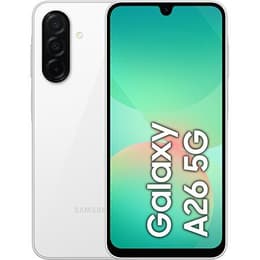
  • Display Technology and Size: The Samsung Galaxy A26 features a 6.7-inch FHD+ Super AMOLED display, known for its vibrant colors and deep blacks. This display offers a resolution of 1080 x 2340 pixels. The Google Pixel 9 comes with a slightly smaller 6.3-inch Actua OLED display, which also provides rich colors and strong contrast. Its resolution is 1080x2424 pixels, resulting in a pixel density of 422 PPI.
  • Brightness and Refresh Rate: The Galaxy A26's Super AMOLED panel can reach a peak brightness of 1000 nits, ensuring good visibility in various lighting conditions, and features a smooth 120Hz refresh rate for fluid scrolling and animations. The Pixel 9's Actua display is notably brighter, reaching up to 1800 nits for HDR content and a peak brightness of 2700 nits, making it highly visible even in direct sunlight. It also offers a variable refresh rate that adjusts between 60Hz and 120Hz for a balance of smoothness and power efficiency.
  • User Experience: The larger screen of the Galaxy A26 might appeal to users who prioritize immersive media consumption or require more screen real estate for productivity. The Pixel 9's display, while slightly smaller, offers superior brightness and features like Adaptive Touch, which adjusts sensitivity based on environmental factors like wet fingers or screen protectors, enhancing usability.

Resolution

1080 x 2340

1080 x 2424

Audiovisual

Both smartphones offer capable camera systems, but they approach photography with different strengths, particularly in their computational capabilities.

  • Rear Camera Systems: The Samsung Galaxy A26 is equipped with a triple-camera setup on the rear, featuring a 50MP main sensor with Optical Image Stabilization (OIS), an 8MP ultrawide lens, and a 2MP macro lens. It supports UHD 4K video recording at 30 frames per second. The Google Pixel 9 features a dual-camera system with a 50MP main sensor (Octa PD, f/1.68, OIS) and a 48MP ultrawide lens with autofocus (Quad PD, f/1.7). The Pixel 9's ultrawide lens is a significant upgrade, offering higher resolution and improved light sensitivity.
  • Front Camera and Features: For selfies and video calls, the Galaxy A26 has a 13MP front camera. It includes AI-powered tools like Object Eraser, Edit Suggestion, and Nightography for enhanced photos. The Pixel 9 comes with a 10.5MP front camera that includes autofocus and a wider field of view, which is beneficial for group selfies. Pixel phones are renowned for their computational photography features such as HDR+, Night Sight, Magic Editor (including 'Reimagine' and 'Add Me'), and Super Res Zoom, which enhance image quality and offer creative editing options.
  • Video Capabilities: While both can record in 4K, the Pixel 9's advanced image stabilization and features like Video Boost contribute to a more refined video recording experience. The Pixel's Super Res Zoom also applies to video, offering clearer zoomed-in footage.

Front camera

13 megapixels

10.5 megapixels

Miscellaneous

Beyond core performance and display, several practical elements contribute to the overall user experience and daily convenience of a smartphone.

  • Connectivity and Ports: Both devices support 5G connectivity for fast mobile data. The Galaxy A26 includes Wi-Fi 802.11ac and Bluetooth v5.3, with a USB Type-C 2.0 port for charging and data transfer. The Pixel 9 offers more advanced connectivity with Wi-Fi 6, Wi-Fi 6E, and Wi-Fi 7 support, alongside Bluetooth and a faster USB Type-C 3.2 port. A notable feature on the Pixel 9 is Satellite SOS, providing emergency assistance even without cellular service.
  • Biometrics and Design: The Galaxy A26 features a side-mounted fingerprint sensor for secure unlocking. Its design includes an elegant glass back and a slim profile. The Pixel 9 incorporates an ultrasonic in-display fingerprint sensor, offering a seamless unlocking experience. The Pixel 9 also has a redesigned appearance with a blocky design and a new look for the camera module.
  • Audio and Haptics: The Galaxy A26 features a single bottom-firing speaker, which may offer a less immersive audio experience compared to devices with stereo setups. While not explicitly detailed for the Pixel 9 in all sources, Pixel devices typically offer stereo speakers for a more balanced audio output. Neither device includes a 3.5mm headphone jack.

Weight

197 g

198 g

Screen size (in)

6.5

6.3

Mobile network

5G

5G

SIM card

Dual Physical SIM

Physical SIM + eSIM

Carrier compatibility

Unlocked

Unlocked

Connector

USB-C

USB-C

The Samsung Galaxy A26 and Google Pixel 9 each present a compelling package, tailored to different user needs and preferences. User feedback often highlights the Galaxy A26's vibrant Super AMOLED display and its substantial battery life as key advantages, making it a strong contender for those who prioritize media consumption and extended usage without frequent charging. Some users might note its processor, while capable for daily tasks, may not match the raw power of higher-end devices for intensive applications. The Pixel 9, on the other hand, is frequently praised for its exceptional camera capabilities, particularly its computational photography features that enhance image quality and offer creative editing tools. Its long-term software support and the integration of Google's AI features are also significant draws for users seeking a smart, future-proof device. However, some might find its battery capacity, while efficient, to be slightly less than the A26.

Users prioritizing a large, bright display for entertainment and a long-lasting battery for all-day use may find the Samsung Galaxy A26 well-suited to their needs. Its robust software update policy also ensures a good lifespan. Conversely, individuals who value cutting-edge camera technology, a streamlined Android experience with advanced AI, and the longest possible software support will likely lean towards the Google Pixel 9. Both devices offer a quality-assured refurbished option, providing an eco-friendly alternative for consumers looking to make a sustainable choice while still enjoying modern smartphone features.


See all articles

Our recent comparisons