Galaxy A26 Vs Galaxy Z Fold7

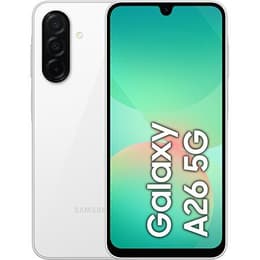
Galaxy A26
Galaxy A26
Starting at

Refurbished price:£152.00

Versus £419.55 new

See options
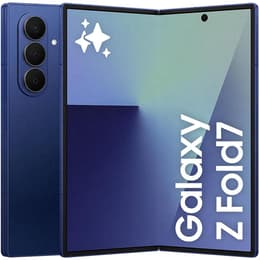
Galaxy Z Fold7
Galaxy Z Fold7
Starting at

Refurbished price:£916.00

Versus £1,799.00 new

See options

Ratings

The Samsung Galaxy A26 and the Samsung Galaxy Z Fold7 represent distinct approaches within the smartphone market, released in March 2025 and July 2025, respectively. While the Galaxy A26 offers a traditional smartphone experience with a focus on core functionalities, the Galaxy Z Fold7 introduces a foldable design, transforming from a conventional smartphone into a tablet-like device. Both operate on the Android platform, with the Z Fold7 launching with a newer version and offering extended software support.

Scores

Durability

When considering the long-term usability of these devices, their release timelines and software support policies are key factors.

  • Software Longevity: The Galaxy A26, released in March 2025, is expected to receive six years of software and security updates, extending its practical software lifespan until approximately 2031. The Galaxy Z Fold7, launched in July 2025 with Android 16 and One UI 8, is slated for up to seven major Android upgrades, suggesting a slightly longer period of feature updates and security patches.
  • Physical Durability: The Galaxy A26 features a glass front and back with Corning Gorilla Glass Victus+ protection and a plastic frame, along with an IP67 rating for dust and water resistance, indicating resilience against everyday elements. The Galaxy Z Fold7, while featuring a more complex foldable design, incorporates an Armor Aluminum frame and Corning Gorilla Glass Victus 2 ceramic material on its cover screen and back panel. Its hinge is tested to withstand 500,000 folds, and it carries an IP48 rating for dust and water resistance. However, the inner foldable display of the Z Fold7 remains more susceptible to scratches compared to traditional smartphone screens.
  • Expected Lifespan: Both devices are designed for extended use, with the A26 offering robust software support for its category and the Z Fold7 pushing boundaries in foldable durability. The A26's traditional form factor may offer a more straightforward long-term physical experience, while the Z Fold7's innovative design requires careful handling of its inner display.

Year of Release

2024

2025

Compatible with latest Update

Yes

Yes

OS

Android

Android

Foldable

No

Yes

Performance

The performance capabilities of the Galaxy A26 and Galaxy Z Fold7 cater to different user demands, influenced by their internal components and design philosophies.

  • Processing Power: The Galaxy A26 is equipped with a processor that handles daily tasks, social media, and light gaming smoothly. Users generally find it capable for general purposes, though some report occasional lag during heavy multitasking or with graphically intensive applications. The Galaxy Z Fold7, powered by a high-end processor, delivers a very responsive and fluid experience, excelling in demanding applications, intensive gaming, and seamless multitasking across its expansive display.
  • Multitasking and Responsiveness: The Galaxy A26 provides a solid experience for typical smartphone usage, allowing for app switching and general navigation without significant delays. The Galaxy Z Fold7, with its advanced processor and larger RAM options, is designed for superior multitasking, enabling users to run multiple applications simultaneously on its large internal screen with smooth transitions and quick app loading.
  • Storage and Memory: The Galaxy A26 offers storage options up to 256GB with 8GB of RAM, and includes a microSD card slot for expandable storage. The Galaxy Z Fold7 provides higher base storage and RAM configurations, up to 1TB of storage and 16GB of RAM, catering to users with extensive storage needs and those who demand maximum performance for complex workflows.
  • Battery Behavior: The Galaxy A26 features a 5000 mAh battery, generally providing all-day power for moderate use, though some users have noted instances of rapid drain or overheating. The Galaxy Z Fold7 has a 4400 mAh dual battery, which users describe as sufficient for daily use, though not exceptional, often requiring a charge by the end of a busy day.

Memory (GB)

8 GB

12 GB

Screen quality

The display experience on the Galaxy A26 and Galaxy Z Fold7 differs significantly due to their form factors and display technologies.

  • Display Technology and Clarity: The Galaxy A26 features a 6.7-inch Super AMOLED display with a Full HD+ resolution (1080x2340 pixels), offering vibrant colors and sharp contrast for everyday viewing. The Galaxy Z Fold7 boasts two Dynamic AMOLED 2X displays: an 8.0-inch foldable main screen with a QXGA+ resolution (2184x1968 pixels) and a 6.5-inch cover screen with a Full HD+ resolution (2520x1080 pixels). Both screens on the Z Fold7 provide exceptional clarity and color accuracy.
  • Brightness and Refresh Rate: Both devices offer a 120Hz adaptive refresh rate for smooth scrolling and responsive interactions. The Galaxy A26's display reaches an average brightness suitable for indoor and some outdoor use, with peak brightness around 550-731 nits. The Galaxy Z Fold7's displays are notably brighter, with the main screen capable of reaching up to 2600 nits, ensuring excellent visibility even in direct sunlight.
  • Viewing Experience and Size: The Galaxy A26 provides a large, immersive viewing area for a traditional smartphone. The Galaxy Z Fold7 offers a versatile viewing experience, functioning as a standard smartphone when folded and transforming into a tablet-like display when unfolded, ideal for media consumption, productivity, and multitasking. The wider aspect ratio of the Z Fold7's cover screen also enhances its usability as a standalone phone.

Resolution

1080 x 2340

1968 x 2184

Audiovisual

The camera systems on the Galaxy A26 and Galaxy Z Fold7 are designed to meet different photographic expectations, reflecting their respective market segments.

  • Rear Camera Capabilities: The Galaxy A26 features a triple-camera setup with a 50MP main sensor with optical image stabilization (OIS), an 8MP ultrawide lens, and a 2MP macro lens. It is capable of 4K video recording at 30 frames per second. The Galaxy Z Fold7 boasts a more advanced triple-rear camera system, including a 200MP wide-angle sensor with OIS, a 12MP ultrawide lens, and a 10MP telephoto lens with 3x optical zoom. It supports 8K video recording at 30 frames per second.
  • Photography Performance: The Galaxy A26 delivers good everyday photos with decent dynamic range, and its AI features enhance shots, including improved low-light performance. The Galaxy Z Fold7, with its high-resolution main sensor and ProVisual Engine, captures highly detailed and bright images across various lighting conditions, with notable improvements in low-light performance and faster shutter speeds.
  • Front and Selfie Cameras: The Galaxy A26 includes a 13MP front camera suitable for selfies and video calls. The Galaxy Z Fold7 features a 10MP cover camera and a 10MP main screen camera, offering high-resolution selfies and video calls, with AI editing tools available.
  • Audio and Media: The Galaxy A26 has a single bottom-firing speaker, which some users find to be adequate but lacking in depth. The Galaxy Z Fold7 offers good sound quality from its speakers, enhancing the media consumption experience on its larger displays.

Miscellaneous

Beyond core specifications, several practical elements differentiate the user experience of these two Samsung smartphones.

  • Connectivity Standards: Both devices support 5G connectivity. The Galaxy A26 includes Wi-Fi 5 (802.11 a/b/g/n/ac) and Bluetooth 5.3. The Galaxy Z Fold7, as a flagship device, is expected to feature more advanced Wi-Fi standards (likely Wi-Fi 6E or 7) and potentially a newer Bluetooth version for enhanced wireless performance.
  • Ports and Biometrics: Both phones utilize a USB-C port for charging and data transfer, but neither includes a 3.5mm headphone jack. The Galaxy A26 features a side-mounted fingerprint sensor for secure unlocking. The Galaxy Z Fold7 also incorporates a side-mounted fingerprint sensor, alongside face recognition capabilities.
  • Design and Handling: The Galaxy A26 has a slim, flat design with a 7.7mm thickness and weighs 200g, offering a comfortable grip for a traditional smartphone. The Galaxy Z Fold7 is notably thinner and lighter for a foldable, measuring 8.9mm when folded and 4.2mm when unfolded, and weighing 215g. Its design allows for a compact phone experience when closed and an expansive tablet experience when open, though some users note a slight wobble when unfolded on a flat surface due to the camera module.
  • Build Materials and Features: The A26 uses a glass front and back with a plastic frame, offering IP67 water and dust resistance. The Z Fold7 features an Armor Aluminum frame and Gorilla Glass Victus 2 ceramic material on its exterior, providing a premium feel and enhanced durability, along with an IP48 rating.

Weight

197 g

187 g

Screen size (in)

6.5

8

Mobile network

5G

5G

SIM card

Dual Physical SIM

Dual Physical SIM + eSIM

Carrier compatibility

Unlocked

Unlocked

Connector

USB-C

USB-C

The Samsung Galaxy A26 and Galaxy Z Fold7 cater to distinct user needs, offering different experiences in terms of form factor, performance, and features. User feedback for the Galaxy A26 often highlights its solid performance for everyday tasks, vibrant display, and extended software support as praise points. However, some users have expressed concerns regarding battery life consistency and occasional overheating, as well as the absence of a headphone jack and stereo speakers.

For the Galaxy Z Fold7, common praise centers on its innovative, thinner, and lighter foldable design, the impressive and bright dual displays, and its powerful performance for multitasking and demanding applications. The camera system also receives positive remarks for its significant upgrades. Criticisms frequently mention the average battery life for a flagship, the slow charging speeds, and the inherent fragility of the inner foldable screen, which remains susceptible to scratches. Some users also note the absence of S Pen support as a drawback.

Users prioritizing a traditional smartphone experience with reliable performance, a good display, and long-term software support for general use and light media consumption may find the Galaxy A26 well-suited to their needs. Its IP67 rating also adds a layer of practical durability. Conversely, individuals seeking a cutting-edge device that combines the functionality of a smartphone with the expansive screen real estate of a tablet, excelling in productivity, advanced multitasking, and high-end media consumption, will likely lean towards the Galaxy Z Fold7. Its advanced camera system also appeals to those who prioritize mobile photography. Both devices are available as quality-assured refurbished options, providing an eco-friendly alternative for consumers.

See all articles

Our recent comparisons