
Galaxy A25 Vs Motorola Moto G14

Galaxy A25
Galaxy A25
Starting at

Refurbished price:£121.00

Versus £272.58 new

See options
Motorola Moto G14
Motorola Moto G14
See options

Ratings

The Samsung Galaxy A25, released in late 2023, and the Motorola Moto G14, launched in mid-2023, are both smartphones designed for everyday use. While both devices operate on the Android platform, they offer distinct experiences in display technology, performance capabilities, and software support. The Galaxy A25 focuses on a vibrant screen and longer software commitment, whereas the Moto G14 emphasizes a balanced user experience with a robust battery and stereo sound.

Scores

Durability

When considering the long-term usability of a smartphone, factors like release timeline, software support, and physical durability play a significant role. The Galaxy A25 and Moto G14 present different profiles in these areas.

  • Release Timeline and OS Support: The Samsung Galaxy A25 was released in December 2023, shipping with Android 14, and is promised four years of OS updates and five years of security updates. In contrast, the Motorola Moto G14, released in August 2023 with Android 13, is guaranteed one OS update (to Android 14) and three years of bi-monthly security updates. This means the Galaxy A25 offers a considerably longer period of software relevance and security.
  • Physical Durability: The Galaxy A25 features Gorilla Glass 5 for its display, offering a degree of protection against drops and scratches. The Moto G14 comes with Panda Glass protection for its display and boasts a water-repellent design (IP52-rated), providing some resistance against splashes and dust.
  • Expected Practical Lifespan: Users prioritizing extended software support and the latest Android features will find the Galaxy A25 more aligned with their needs due to its longer update policy. The Moto G14, while offering a decent initial experience, will see its software support conclude sooner.

Year of Release

2023

2023

Compatible with latest Update

Yes

Yes

OS

Android

Android

Foldable

No

No

Performance

The performance of a smartphone impacts how smoothly applications run, how quickly tasks are completed, and the overall responsiveness of the device. Both the Galaxy A25 and Moto G14 are equipped to handle daily activities, but with varying levels of capability.

  • Processor Capabilities: The Samsung Galaxy A25 is powered by a current-generation processor that handles everyday tasks like web browsing, email, and media playback smoothly. It also manages moderate gaming and multitasking without significant lag. The Motorola Moto G14 features a processor that is capable for general app performance and basic daily tasks.
  • Multitasking and Responsiveness: The Galaxy A25 typically comes with 6GB of RAM, with some variants offering 8GB, contributing to responsive app switching and a polished user experience. The Moto G14 usually includes 4GB of RAM, which is sufficient for basic use but may experience slowdowns when multiple demanding applications are open simultaneously.
  • Battery Behavior: Both devices are equipped with a 5000mAh battery. The Galaxy A25 consistently provides a full day of use, even with moderate to heavy activity. The Moto G14 also offers strong battery endurance, often lasting a full day and potentially extending into a second day with lighter usage.

Memory (GB)

6 GB

4 GB

Screen quality

The display is a primary interface for smartphone interaction, and the quality of the screen significantly influences the viewing experience. The Galaxy A25 and Moto G14 utilize different display technologies.

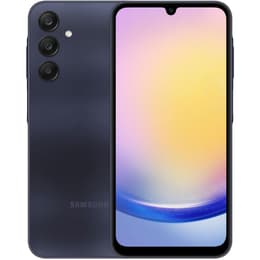
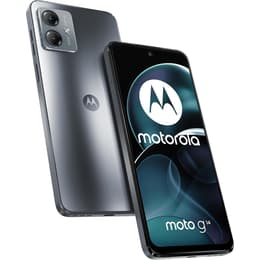
  • Display Technology and Clarity: The Samsung Galaxy A25 features a 6.5-inch Super AMOLED display with a Full HD+ resolution of 2340x1080 pixels. This technology delivers deep blacks and vibrant colors, enhancing the visual appeal of content. The Motorola Moto G14 has a 6.5-inch IPS LCD screen with a Full HD+ resolution of 2400x1080 pixels. While offering good sharpness and color, LCD panels typically do not achieve the same contrast levels as AMOLED.
  • Brightness and Refresh Rate: The Galaxy A25's display offers a 120Hz refresh rate for smoother scrolling and animations, along with a peak brightness of 1000 nits, making it easily viewable outdoors. The Moto G14 has a standard 60Hz refresh rate and generally good brightness, though it does not reach the same peak levels as the A25, which might affect visibility in direct sunlight.
  • Viewing Experience: Users who prioritize a highly fluid visual experience and superior contrast for media consumption will likely prefer the Galaxy A25's AMOLED display with its higher refresh rate and brightness. The Moto G14 provides a clear and respectable viewing experience for general use.

Resolution

1080 x 2340

1080 x 2400

Screen type

Super AMOLED

IPS LCD

Audiovisual

For many users, the camera system is a crucial component of a smartphone, capturing everyday moments and special occasions. The Galaxy A25 and Moto G14 offer capable camera setups for their segments.

  • Rear Camera System: The Samsung Galaxy A25 is equipped with a triple-camera setup, including a 50MP main sensor with Optical Image Stabilization (OIS), an 8MP ultrawide lens, and a 2MP macro lens. The OIS on the main sensor helps in capturing clearer photos and more stable videos, especially in challenging conditions. The Motorola Moto G14 features a dual-camera system with a 50MP main sensor and a 2MP macro lens.
  • Photography Performance: The Galaxy A25's main camera is noted for competent performance and good quality photos, even in low light, benefiting from OIS. The ultrawide lens provides more versatility for landscape and group shots. The Moto G14's main camera performs well in daylight conditions, producing good quality images.
  • Video and Audio: The Galaxy A25 supports video recording up to 4K resolution at 30 frames per second, offering higher detail for video content. The Moto G14 records video at 1080p resolution at 30 frames per second. Both phones feature stereo speakers, with the Moto G14 specifically mentioning Dolby Atmos support for an enhanced audio experience.

Main camera

50 megapixels

50 megapixels

Front camera

13 megapixels

8 megapixels

Miscellaneous

Beyond the core features, several practical elements contribute to the overall user experience and convenience of a smartphone. The Galaxy A25 and Moto G14 differ in their connectivity, physical design, and additional features.

  • Connectivity and Ports: The Samsung Galaxy A25 supports 5G connectivity, offering faster mobile data speeds where available, and includes Wi-Fi 5 (802.11ac) and Bluetooth 5.3. It also has NFC for tap-and-go payments and a 3.5mm headphone jack. The Motorola Moto G14 supports 4G LTE, Wi-Fi 5 (802.11ac), and Bluetooth 5.0. It also includes a 3.5mm headphone jack and NFC in some regions. Both devices use a USB-C 2.0 port for charging and data transfer.
  • Weight, Dimensions, and Handling: The Galaxy A25 measures approximately 161 x 76.5 x 8.3mm and weighs 197g. The Moto G14 is slightly lighter and thinner at around 161.5 x 73.8 x 8mm and 177g. The Moto G14's lighter build might offer a more comfortable in-hand feel for some users.
  • Sensors and Build Materials: Both phones feature a side-mounted fingerprint sensor for secure unlocking. The Galaxy A25 has a plastic frame and back, with Gorilla Glass 5 on the front. The Moto G14 also uses a plastic frame and back, with some variants offering a vegan leather finish, and Panda Glass on the front.

Weight

197 g

177 g

Screen size (in)

6.5

6.5

Mobile network

5G

4G

SIM card

Dual Physical SIM

Dual Physical SIM

Carrier compatibility

Unlocked

Unlocked

Connector

USB-C

USB-C + Jack 3.5mm

User feedback for the Samsung Galaxy A25 often praises its vibrant AMOLED display, extended software support, and reliable battery life, making it a solid choice for those who value a bright screen and long-term usability. Some common criticisms include its somewhat uninspired design and performance that, while capable, may not impress power users.

The Motorola Moto G14 is frequently commended for its balanced performance for everyday tasks, long-lasting battery, and the inclusion of stereo speakers with Dolby Atmos, which enhances the multimedia experience. Users sometimes note its 60Hz LCD display and limited OS update policy as areas where it could improve.

Users prioritizing a superior display with a high refresh rate, 5G connectivity, and a longer commitment to software updates will find the Samsung Galaxy A25 well-suited to their needs. This device is ideal for individuals who consume a lot of media, require consistent performance for daily tasks, and plan to keep their phone for several years. Conversely, users who value a lightweight design, excellent battery life for general use, and an immersive audio experience for media consumption may lean toward the Motorola Moto G14. It is a practical choice for those who need a reliable device for communication and entertainment without requiring the absolute latest in mobile technology.

Both models are available as quality-assured refurbished options, providing an eco-friendly alternative for consumers.


See all articles

Our recent comparisons