
Compare models
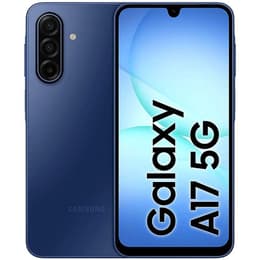
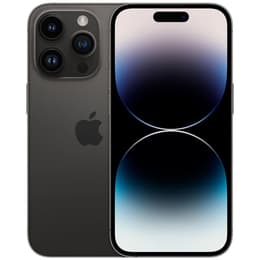
Galaxy A17 Vs iPhone 14 Pro
- 1-year minimum warranty
- Free delivery on all items
- Free 30-day returns
Differences at a glance
The Samsung Galaxy A17 (2025) and the Apple iPhone 14 Pro (2022) represent very different approaches to modern smartphone engineering, catering to distinct user expectations and daily workflows. While the Galaxy A17 focuses on long-term software commitments and a large viewing area, the iPhone 14 Pro prioritizes high-end computational power, premium build materials, and advanced photographic capabilities. Operating on Android and iOS respectively, these two devices offer contrasting software environments alongside divergent hardware philosophies.
Available Models
Colour
Storage (GB)
Scores
Durability
Both devices approach structural and software durability with distinct lifespans in mind, balancing hardware resilience with long-term operating system support.
- Software longevity: The Galaxy A17 benefits from an extensive software support window spanning multiple years of major updates, whereas the iPhone 14 Pro relies on Apple's established history of long-term iOS support.
- Build and protection: The iPhone 14 Pro uses surgical-grade stainless steel and textured matte glass with scratch-resistant screen protection, while the Galaxy A17 employs reinforced glass and a durable composite frame suited for daily handling.
- Expected lifespan: Both handsets maintain strong long-term usability, though users seeking a quality-assured refurbished option will find both models retain structural integrity and performance health well past their initial release years.
Year of Release
2025
2022
OS
Android
iOS
Foldable
No
No
Performance
System responsiveness and hardware capabilities differ significantly between the two models, directly influencing how they handle demanding applications and everyday multitasking.
- Everyday multitasking: The iPhone 14 Pro handles intensive professional apps, complex editing tools, and high-end gaming with maximum fluidity, while the Galaxy A17 smoothly manages routine web browsing, social media feeds, and media streaming.
- Storage configurations: Both models offer ample internal storage capacities for media libraries and applications, though the Galaxy A17 includes expandable storage via a memory card slot.
- Battery behavior: The Galaxy A17 features a large battery capacity that easily sustains moderate-to-heavy daily use, whereas the iPhone 14 Pro optimizes power efficiency through its hardware architecture to last through a full day of mixed tasks.
Screen quality
Display characteristics vary significantly in size, refresh dynamics, and peak illumination capabilities, shaping how users experience media and outdoor visibility.
- Display technology: The Galaxy A17 features a vibrant Super AMOLED panel with deep contrast levels, while the iPhone 14 Pro utilizes an advanced OLED display equipped with high peak outdoor brightness.
- Motion smoothness: The Galaxy A17 offers a smooth 90 Hz refresh rate for scrolling, whereas the iPhone 14 Pro incorporates an adaptive refresh rate scaling up to 120 Hz for enhanced visual fluidity.
- Viewing space: The Galaxy A17 provides a larger 6.7-inch viewing canvas suited for media consumption, while the iPhone 14 Pro opts for a more compact 6.1-inch form factor that improves one-handed reach.
Resolution
1080x2340
1179 x 2556
Audiovisual
Optics and media playback hardware differ to accommodate everything from casual snapshots to professional-grade videography and immersive audio consumption.
- Camera systems: The iPhone 14 Pro features a versatile triple-lens setup including a dedicated telephoto zoom lens and advanced low-light sensors, whereas the Galaxy A17 relies on a primary high-resolution lens accompanied by an ultra-wide and macro option.
- Video recording: The iPhone 14 Pro supports professional cinematic video recording modes and high-resolution stabilization, while the Galaxy A17 captures clear standard-definition video suitable for sharing.
- Audio output: The iPhone 14 Pro delivers rich stereo sound through its integrated speakers, while the Galaxy A17 provides balanced audio output adequate for casual listening and calls.
Front camera
50MP
12 megapixels
Miscellaneous
Practical physical traits and connectivity standards shape how each device integrates into daily travel, communication, and accessory ecosystems.
- Connectivity standards: Both devices support 5G connectivity, modern Wi-Fi protocols, and Bluetooth pairing for seamless wireless accessory integration.
- Physical ports: The iPhone 14 Pro utilizes Apple's proprietary Lightning connector for charging and wired data transfer, whereas the Galaxy A17 adopts the universal USB-C standard.
- Handling and dimensions: The Galaxy A17 has a slim profile despite its larger screen footprint, while the iPhone 14 Pro feels denser in the hand due to its heavy-duty stainless steel frame.
Weight
192 g
206 g
Screen size (in)
6.7
6.1
Mobile network
5G
5G
SIM card
Dual Physical SIM
Physical SIM + eSIM
Carrier compatibility
Unlocked
Unlocked
Connector
USB-C
Lightning
What the community thinks
User feedback highlights distinct preferences for each device based on everyday requirements. Owners of the Galaxy A17 frequently praise its reliable battery endurance, large display, and long-term software commitment. Conversely, users of the iPhone 14 Pro commonly emphasize satisfaction with its robust processing capabilities, premium materials, and versatile camera versatility. Common criticisms for the Galaxy A17 generally center on moderate gaming speeds under heavy loads, while iPhone 14 Pro discussions occasionally note its heavier physical weight.
Users prioritizing a large viewing area, expandable storage, and extended software commitments will find the Galaxy A17 well-suited to their needs. Meanwhile, users prioritizing advanced photographic flexibility, premium build materials, and heavy processing power may lean toward the iPhone 14 Pro. For those evaluating sustainable purchases, exploring a quality-assured refurbished option provides an eco-friendly alternative that matches individual tech preferences without compromise.