Compare models

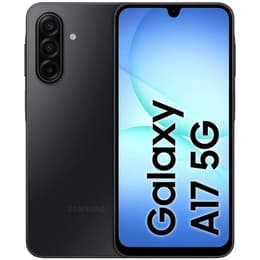
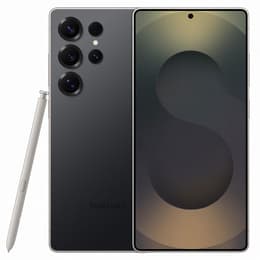
Galaxy A17 Vs Galaxy S25 Ultra

  • 1-year minimum warranty
  • Free delivery on all items
  • Free 30-day returns
Galaxy A17
Starting at

Refurbished price:£144.00

Versus £243.85 new

See options
Galaxy S25 Ultra
Starting at

Refurbished price:£562.00

Versus £1,249.00 new

See options

Differences at a glance

The Samsung Galaxy A17 (2025) and the Samsung Galaxy S25 Ultra (2025) represent two completely different tiers within Samsung's smartphone lineup, targeting distinct user priorities and everyday requirements. While both devices run on the Android operating system with Samsung's custom interface, they diverge significantly in hardware sophistication, build complexity, and intended use cases. Evaluating these differences helps determine which model aligns best with individual daily needs.

Available Models

Colour

Storage (GB)

Scores

Durability

When examining hardware longevity and support timelines, both models offer robust software commitments while differing in physical build resilience and expected operational lifespans.

  • Software support windows: Both smartphones benefit from multi-year operating system upgrades and security patches, helping maintain software relevance over extended periods of use.
  • Build and repair considerations: The Galaxy S25 Ultra utilizes high-grade titanium framing and specialized glass protection, whereas the Galaxy A17 employs practical composite materials that handle everyday wear reliably.
  • Expected lifespan: Users can anticipate several years of dependable daily operation from either device, provided they match their performance demands to the hardware capabilities.

Year of Release

2025

2025

Performance

Processing power and multitasking behavior vary substantially between the two handsets, influencing how smoothly demanding applications and daily routines execute.

  • App loading and multitasking: The Galaxy S25 Ultra handles heavy 3D gaming and intensive background tasks instantly, while the Galaxy A17 manages standard social media, browsing, and messaging apps smoothly with occasional loading pauses during heavy workloads.
  • Storage configurations: The Galaxy S25 Ultra provides expansive internal capacity options and higher random access memory allocations, whereas the Galaxy A17 offers streamlined storage choices suited to moderate media libraries.
  • Battery behavior: Both devices include large battery capacities, though efficient power management allows the Galaxy S25 Ultra to sustain prolonged heavy usage cycles slightly longer under demanding conditions.

Screen quality

Display characteristics define the visual interaction on each device, offering contrasting panel technologies, brightness capabilities, and refresh rates.

  • Display panels: The Galaxy S25 Ultra features an advanced adaptive refresh rate screen with exceptional peak brightness for clear outdoor viewing, while the Galaxy A17 relies on a vibrant high-refresh panel that handles everyday media consumption comfortably.
  • Clarity and resolution: High-resolution output on the Galaxy S25 Ultra yields razor-sharp text and intricate detail reproduction, whereas the Galaxy A17 delivers clean, sharp visuals adequate for streaming videos and reading.
  • Physical dimensions: The Galaxy S25 Ultra provides a wider viewing workspace tailored for productivity tasks and stylus integration, while the Galaxy A17 offers a balanced handheld footprint.

Audiovisual

Optics and media recording suites differ markedly, catering to casual photography needs versus advanced multi-lens imaging workflows.

  • Camera systems: The Galaxy S25 Ultra features a versatile multi-lens array including high-resolution telephoto capabilities for distant subjects, whereas the Galaxy A17 equips a dependable main sensor and supporting lenses for everyday snapshots.
  • Low-light performance: Advanced image processing on the Galaxy S25 Ultra pulls significant detail from dark environments, while the Galaxy A17 captures balanced nighttime photos under moderate ambient lighting.
  • Audio and video output: Built-in microphone arrays and stereo speakers deliver immersive media playback and clear call quality across both models, with the flagship offering finer tuning for professional-grade audio capture.

Miscellaneous

Practical daily utility elements, such as connectivity standards, physical handling, and integrated tools, shape the overall user experience.

  • Connectivity and ports: Both smartphones support modern fifth-generation cellular networks, fast Wi-Fi protocols, and reliable Bluetooth pairing through standard USB-C charging interfaces.
  • Biometric security: Secure authentication is handled via responsive fingerprint sensors and facial recognition systems integrated cleanly into each chassis design.
  • Ergonomics: The Galaxy A17 features a lighter, more pocket-friendly weight profile, whereas the Galaxy S25 Ultra presents a heavier, structured build that accommodates a dedicated stylus silo.

Screen size (in)

6.7

6.9

Mobile network

5G

5G

SIM card

Dual Physical SIM

Dual Physical SIM + eSIM

Carrier compatibility

Unlocked

Unlocked

Connector

USB-C

USB-C

What the community thinks

User feedback from online communities highlights distinct preferences for each device based on practical everyday utility. Owners of the Galaxy A17 frequently praise its reliable battery life, straightforward software experience, and accessible design for routine communication. Conversely, users of the Galaxy S25 Ultra often emphasize appreciation for its expansive display workspace, advanced multi-lens camera versatility, and responsive processing speeds during intensive multitasking. Common discussions note that while the flagship model delivers heavy-duty power, it comes with a heavier physical footprint.

Users prioritizing productivity, advanced photography, and maximum processing capability will find the Galaxy S25 Ultra well-suited to their workflow. Meanwhile, users focusing on straightforward daily communication, media browsing, and a lighter handheld form factor will lean toward the Galaxy A17. For those seeking an eco-friendly, quality-assured alternative, opting for a quality-assured refurbished option provides a sustainable choice that reduces electronic waste without compromising on functional reliability. Selecting between these two devices ultimately depends on matching specific performance expectations and daily handling preferences with the right hardware tier.


Our recent comparisons