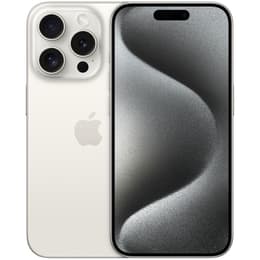
Galaxy S25 Ultra Vs iPhone 15 Pro

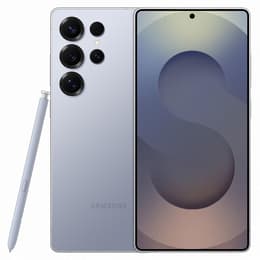
Galaxy S25 Ultra
Galaxy S25 Ultra
Starting at

Refurbished price:£649.00

Versus £1,249.00 new

See options
iPhone 15 Pro
iPhone 15 Pro
Starting at

Refurbished price:£399.00

Versus £999.00 new

See options

Ratings

The Samsung Galaxy S25 Ultra, an Android flagship released in early 2025, and the Apple iPhone 15 Pro, an iOS device launched in late 2023, represent premium offerings from their respective ecosystems. While both are high-performance smartphones, they cater to different user preferences through distinct operating systems and hardware philosophies. The Galaxy S25 Ultra emphasizes a larger display, an integrated stylus, and extensive camera versatility, whereas the iPhone 15 Pro focuses on a compact design, a streamlined user experience, and advanced video capabilities.

Scores

Durability

When considering the long-term usability of these devices, both offer substantial software support and robust build quality, though their release timelines differ.

  • Release Timeline: The iPhone 15 Pro was released in September 2023, making it approximately a year and a half older than the Galaxy S25 Ultra, which debuted in January 2025. This difference impacts their respective positions in the update cycle. [4, 6, 21, 30]
  • Software Longevity: Samsung promises 7 years of OS and security updates for the Galaxy S25 Ultra, with support expected to continue until at least 2032. [6] The iPhone 15 Pro is guaranteed a minimum of five years of major software updates, extending to at least 2028, with Apple typically providing support for 5-6 years from release. [3, 4]
  • Durability Features: The Galaxy S25 Ultra features a titanium frame and Corning Gorilla Armor 2 on the front, offering enhanced durability and scratch resistance. [2, 6] The iPhone 15 Pro also utilizes a grade 5 titanium frame and has an IP68 rating for water and dust resistance, similar to the S25 Ultra. [3, 4, 8]

Year of Release

2025

2023

Compatible with latest Update

Yes

Yes

OS

Android

iOS

Foldable

No

No

Performance

Both devices deliver high-end performance suitable for demanding applications and multitasking, but they approach power management and storage differently.

  • Processing Power: The Galaxy S25 Ultra is powered by a current-generation processor customized for Samsung, providing ultra-smooth performance across various tasks, including intensive gaming and complex AI features. [1, 2, 23, 30] The iPhone 15 Pro features Apple's A17 Pro chip, which ensures a fast and responsive iOS experience, handling demanding apps and multitasking with ease. [3, 8, 34]
  • Battery Behavior: The Galaxy S25 Ultra, equipped with a 5000 mAh battery, generally offers strong battery life, with many users reporting it lasts a full day or more under typical usage. [1, 2, 13, 22, 25, 29] The iPhone 15 Pro, with a 3274 mAh battery, may require more frequent charging for heavy users, and some reports indicate heating issues during prolonged intensive use. [3, 14, 26]
  • Storage and RAM: The Galaxy S25 Ultra typically comes with 12GB of RAM, with a 16GB option available in some regions for the 1TB storage variant, and offers storage options up to 1TB. [6, 40] The iPhone 15 Pro is available with 8GB of RAM and storage configurations up to 1TB. [3, 38]

Memory (GB)

12 GB

8 GB

Screen quality

The visual experience on both smartphones is a highlight, though they differ in size and specific display characteristics.

  • Display Technology and Size: The Galaxy S25 Ultra boasts a larger 6.9-inch Dynamic LTPO AMOLED 2X display, offering vibrant colors and deep blacks. [1, 2, 6, 27, 35, 40] The iPhone 15 Pro features a more compact 6.1-inch Super Retina XDR OLED display, known for its color accuracy and clarity. [3, 8, 9, 38]
  • Resolution and Brightness: The S25 Ultra provides a QHD+ resolution (3120x1440 pixels) and can reach a peak brightness of 2600 nits, making it highly visible outdoors. [1, 2, 6, 20, 40] The iPhone 15 Pro has a resolution of 2556x1179 pixels (460 ppi) and achieves a peak outdoor brightness of 2000 nits. [3, 8, 9]
  • Refresh Rate and Features: Both devices feature adaptive refresh rates up to 120Hz, ensuring smooth scrolling and fluid animations. [1, 2, 6, 8, 9] The S25 Ultra includes an anti-reflective coating for improved outdoor viewing, while the iPhone 15 Pro offers ProMotion technology and an Always-On display. [1, 2, 8, 9]

Resolution

1440x3120

1179 x 2556

Audiovisual

Both smartphones are equipped with advanced camera systems, delivering high-quality images and videos, but with different strengths and sensor configurations.

  • Rear Camera System: The Galaxy S25 Ultra features a versatile quad-camera setup, including a 200MP main sensor, a 50MP ultrawide, a 50MP telephoto with 5x optical zoom, and a 10MP telephoto with 3x optical zoom. [1, 2, 17, 27, 35, 40] The iPhone 15 Pro has a triple-camera system with a 48MP main sensor, a 12MP ultrawide, and a 12MP telephoto lens offering 3x optical zoom. [3, 8, 9, 38]
  • Photography Performance: The S25 Ultra is praised for its excellent low-light performance, vibrant colors, and strong detail, with the 50MP ultrawide being a notable upgrade. [1, 2, 11, 17, 23, 24, 31] The iPhone 15 Pro delivers natural color accuracy and improved 24MP default photos from its main camera, performing well in bright conditions. [3, 12, 18, 19, 26]
  • Video Recording: The Galaxy S25 Ultra offers crisp, smooth video recording with 10-bit HDR by default. [11] The iPhone 15 Pro excels in video, providing outstanding recording capabilities with Log support and excellent stabilization, making it suitable for content creators. [3, 8, 9, 12, 26]

Front camera

12

12 megapixels

Miscellaneous

Beyond core features, several practical elements differentiate the user experience and connectivity options of these devices.

  • Connectivity and Ports: Both phones support 5G connectivity. The Galaxy S25 Ultra supports Wi-Fi 7 and Bluetooth 5.4. [16, 27, 35] Both devices utilize a USB-C port for charging and data transfer, with the iPhone 15 Pro supporting USB 3.2 Gen 2x1 speeds. [4, 35, 38]
  • Biometric Security: The Galaxy S25 Ultra features an ultrasonic in-screen fingerprint sensor. [6, 29] The iPhone 15 Pro relies on Face ID for secure facial recognition. [8]
  • Design and Handling: The S25 Ultra has a larger form factor, measuring 77.6 x 162.8 x 8.2mm and weighing 218g, and includes an integrated S Pen. [27, 35] The iPhone 15 Pro is more compact at 146.6 x 70.6 x 8.3 mm and 187 grams, featuring a new customizable Action Button. [3, 4, 8, 34]

Weight

233 g

187 g

Screen size (in)

6.9

6.1

Mobile network

5G

5G

SIM card

Dual Physical SIM + eSIM

Physical SIM + eSIM

Carrier compatibility

Unlocked

Unlocked

Connector

USB-C

USB-C

The Samsung Galaxy S25 Ultra and iPhone 15 Pro offer distinct advantages for different user needs. Users frequently praise the Galaxy S25 Ultra for its expansive, vibrant display, the versatility of its camera system, and the utility of the integrated S Pen. Its long software support commitment is also a significant draw for those planning to keep their device for many years. However, some users have noted mixed experiences with battery life compared to other Android flagships, and the display's 8-bit panel can lead to minor visual artifacts. [13, 20, 22, 37]

The iPhone 15 Pro is often lauded for its compact and premium titanium design, the natural color accuracy of its cameras, and its exceptional video recording capabilities, particularly with Log support. The smooth and polished iOS experience is a consistent highlight. Criticisms often revolve around its battery life, which some heavy users find insufficient, and reports of the device experiencing heating under strenuous tasks. [3, 14, 26]

Users prioritizing a large, feature-rich display, extensive camera zoom capabilities, and the productivity features of a stylus may find the Galaxy S25 Ultra well-suited to their needs. Conversely, users who value a more compact form factor, a streamlined operating system, and professional-grade video recording will likely lean towards the iPhone 15 Pro. Both devices are available as quality-assured refurbished options, providing an eco-friendly alternative for consumers seeking premium technology.

See all articles

Our recent comparisons