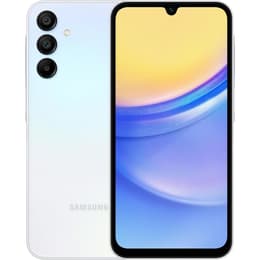


Galaxy A15 Vs Motorola Moto E13

Galaxy A15
Galaxy A15
Starting at

Refurbished price:£88.00

Versus £169.00 new

See options
Motorola Moto E13
Motorola Moto E13
Starting at

Refurbished price:£74.00

Versus £83.99 new

See options

Ratings

The Samsung Galaxy A15, released in late 2023, and the Motorola Moto E13, launched in early 2023, are both smartphones designed for everyday use. While both devices offer essential smartphone functionalities, they differ in their display technology, software support, and overall performance capabilities. The Galaxy A15 aims to provide a more vibrant visual experience and extended software longevity, whereas the Moto E13 focuses on a streamlined Android experience and robust battery life.

Scores

Durability

The longevity of a smartphone is influenced by its build quality and the duration of software support it receives. These two devices offer different expectations in terms of their practical lifespan and update cycles.

  • Release Timeline and Age: The Samsung Galaxy A15 was released in December 2023, making it a more recent device compared to the Motorola Moto E13, which launched in January 2023.
  • OS Support Duration: Samsung has committed to providing the Galaxy A15 with four generations of Android OS upgrades and five years of security updates. The Moto E13, running Android 13 Go Edition, typically receives fewer major OS updates, often limited to one, with security patches for about two years.
  • Build and Protection: Both phones feature plastic constructions. The Moto E13 includes a water-repellent design with an IP52 rating, offering some protection against dust and splashes. The Galaxy A15 does not specify an IP rating.

Year of Release

2023

2023

Compatible with latest Update

Yes

No

OS

Android

Android

Foldable

No

No

Performance

The daily performance of a smartphone is crucial for user satisfaction, encompassing everything from app responsiveness to battery endurance. These two models approach performance with different hardware configurations.

  • Storage and RAM: The Galaxy A15 offers configurations up to 8GB of RAM and 256GB of internal storage, expandable via microSD. The Moto E13 provides options up to 8GB of RAM and 128GB of storage, also expandable. Users requiring more space or smoother multitasking may benefit from the A15's options.
  • Processor Capabilities: The Galaxy A15 delivers smooth performance for common tasks like browsing and social media. Some users report occasional minor delays when opening or switching between more demanding applications. The Moto E13 is suited for essential functions, handling basic tasks adequately, but may show more pronounced slowdowns with multiple apps or intensive use.
  • Battery Life and Charging: Both devices feature a 5000 mAh battery, offering extended usage. The Galaxy A15 supports 25W wired charging for faster power-ups. The Moto E13 supports 10W wired charging, meaning a longer time to fully recharge.

Memory (GB)

4 GB

2 GB

Screen quality

The display is a primary interface for smartphone interaction, and its quality significantly impacts the user experience. The Galaxy A15 and Moto E13 feature distinct display technologies.

  • Display Technology and Resolution: The Samsung Galaxy A15 utilizes a 6.5-inch Super AMOLED display with a Full HD+ resolution (1080 x 2340 pixels). This results in deep blacks and vibrant colors, beneficial for media. The Motorola Moto E13 features a 6.5-inch IPS LCD display with an HD+ resolution (720 x 1600 pixels). LCDs offer good colors but typically less contrast than AMOLED.
  • Brightness and Refresh Rate: The Galaxy A15's display offers up to 800 nits of brightness, improving outdoor visibility, and a 90Hz refresh rate for smoother interactions. The Moto E13 has a standard 60Hz refresh rate and generally lower brightness, which might be less ideal in bright outdoor conditions.
  • Viewing Experience: Users prioritizing high contrast, vibrant colors, and fluid scrolling for media consumption or general navigation will find the Galaxy A15's display more engaging. The Moto E13's screen is suitable for basic tasks and less visually intensive content.

Resolution

1080 x 2340

720 x 1600

Screen type

Super AMOLED

IPS LCD

Audiovisual

Camera capabilities are a significant factor for many smartphone users, influencing how they capture and share moments. The Galaxy A15 and Moto E13 offer different camera systems.

  • Rear Camera System: The Samsung Galaxy A15 features a triple-camera setup: a 50 MP main sensor, a 5 MP ultrawide lens, and a 2 MP macro lens, providing versatility. The Motorola Moto E13 has a single 13 MP main camera on its rear.
  • Photography Performance: The Galaxy A15's main camera captures detailed and colorful photos in good lighting, with its ultrawide adding flexibility. Its low-light performance is acceptable, though noise can appear. The Moto E13's camera performs adequately in bright conditions for casual photos, but struggles more in low light, and users note the camera app can be slow.
  • Video and Front Camera: Both phones record video at 1080p at 30fps. The Galaxy A15 has a 13 MP front camera for detailed selfies. The Moto E13 includes a 5 MP front camera for basic video communication. The Moto E13 also features Dolby Atmos audio for an enhanced listening experience.

Main camera

50 megapixels

13 megapixels

Front camera

13 megapixels

5 megapixels

Miscellaneous

Beyond core features, several practical elements contribute to a smartphone's overall usability and convenience, including connectivity, physical ports, and biometric security.

  • Connectivity Options: The Samsung Galaxy A15 offers both 4G and 5G variants, providing access to faster mobile data where available. It supports Wi-Fi 5 and Bluetooth 5.3. The Motorola Moto E13 supports 4G, Wi-Fi 5, and Bluetooth 5.0. Users prioritizing the latest cellular speeds may prefer the 5G option of the A15.
  • Ports and Sensors: Both devices include a 3.5mm headphone jack and a USB-C 2.0 port for charging and data. The Galaxy A15 features a side-mounted fingerprint sensor for secure unlocking. The Moto E13 uses face unlock for biometric security, without a physical fingerprint sensor.
  • Physical Characteristics: The Galaxy A15 measures 160.1 x 76.8 x 8.4 mm and weighs 200 grams. The Moto E13 is 164.2 x 75 x 8.5 mm and weighs 179.5 grams, making it slightly lighter.

Weight

200 g

181 g

Screen size (in)

6.5

6.5

Mobile network

4G

4G

SIM card

Dual Physical SIM

Dual Physical SIM

Carrier compatibility

Unlocked

Unlocked

Based on user feedback and specifications, both the Samsung Galaxy A15 and Motorola Moto E13 cater to different user needs within the entry-level smartphone segment.


  • Common Praise and Criticisms: The Galaxy A15 is often praised for its vibrant Super AMOLED display, extended software support, and reliable battery life. However, some users note its performance can feel sluggish during demanding tasks. The Moto E13 is commended for its long-lasting battery, clean Android Go experience, and water-repellent design. Criticisms often highlight its less vibrant display, limited low-light camera performance, and slower overall processing.
  • User Profile Guidance: Users prioritizing a visually rich display with deep colors, extended software updates, and faster charging will find the Samsung Galaxy A15 well-suited to their needs, especially for media consumption or long-term use. Conversely, users who value a streamlined Android experience, robust battery life for basic tasks, and some splash protection may lean towards the Motorola Moto E13, suitable for communication and light usage.
  • For those considering either device, exploring quality-assured refurbished options can provide an eco-friendly alternative, offering excellent value and extending the lifespan of these electronics.

See all articles

Our recent comparisons