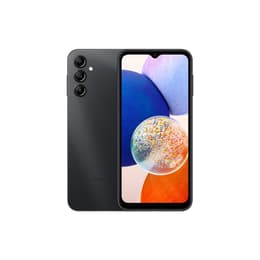


Galaxy A14 Vs Google Pixel 9a

Galaxy A14
Galaxy A14
Starting at

Refurbished price:£81.00

Versus £269.00 new

See options
Google Pixel 9a
Google Pixel 9a
Starting at

Refurbished price:£319.00

Versus £499.00 new

See options

Ratings

The Samsung Galaxy A14, released in early 2023, and the Google Pixel 9A, launched in April 2025, represent distinct approaches to the mid-range smartphone market. While both devices operate on the Android platform, they offer different user experiences shaped by their hardware and software philosophies. The Pixel 9A distinguishes itself with a focus on advanced computational features and extended software support, whereas the Galaxy A14 provides a more fundamental smartphone experience.

Scores

Durability

The expected lifespan and ongoing support for these devices vary significantly, largely due to their release timelines and manufacturer policies.

  • Release Timeline: The Samsung Galaxy A14 5G was released in January 2023, and the 4G variant in February 2023. In contrast, the Google Pixel 9A became available in April 2025. This difference in launch dates means the Pixel 9A benefits from more recent technology and a longer future support window.
  • Software Longevity: The Galaxy A14 5G is expected to receive two major Android OS upgrades, bringing it up to Android 15, and security updates until early 2027. The Pixel 9A, however, launched with Android 15 and is promised seven years of software and security updates, offering a considerably longer period of current software and security features.
  • Durability Features: The Pixel 9A boasts an IP68 rating, indicating robust protection against dust and water immersion up to 1.5 meters for 30 minutes. The Galaxy A14 does not carry an official IP rating, though some sources suggest an IPX2 rating for the 4G model, meaning it can withstand light splashes but is not designed for submersion. Both devices feature glass fronts and plastic backs, with the Pixel 9A's display protected by Corning Gorilla Glass 3.

Year of Release

2023

2025

Compatible with latest Update

No

Yes

OS

Android

Android

Foldable

No

No

Performance

Performance capabilities differ between these two smartphones, impacting how smoothly they handle daily tasks and more demanding applications.

  • Processing Power: The Google Pixel 9A is equipped with a current-generation processor, designed to handle demanding applications, multitasking, and advanced AI features with ease. Users generally report a very smooth and responsive experience for everyday use. The Galaxy A14 5G uses a processor that provides adequate performance for general use, while the 4G variant features a different processor. Some users of the Galaxy A14 have noted occasional sluggishness and lag, particularly with heavier workloads.
  • Multitasking and Storage: The Pixel 9A typically comes with 8GB of RAM, contributing to its ability to manage multiple applications simultaneously without significant slowdowns. It offers 128GB or 256GB of internal storage, utilizing faster UFS 3.1 technology. The Galaxy A14 is available with 4GB, 6GB, or 8GB of RAM and 64GB or 128GB of internal storage, which can be expanded via a microSD card. The Pixel 9A does not offer expandable storage.
  • Battery Behavior: Both devices feature large battery capacities, with the Galaxy A14 housing a 5000mAh battery and the Pixel 9A a 5100mAh battery. Users of both phones generally report solid battery life, often lasting through a full day of moderate to heavy use. The Pixel 9A also supports wireless charging, a feature not present on the Galaxy A14.

Memory (GB)

4 GB

8 GB

Screen quality

The visual experience on these two smartphones is a key differentiator, primarily due to their display technologies and specifications.

  • Display Technology and Clarity: The Google Pixel 9A features a 6.3-inch OLED display, known for its deep blacks, vibrant colors, and excellent contrast. Its resolution of 1080x2424 pixels provides a sharp and clear viewing experience. The Samsung Galaxy A14, on the other hand, uses a 6.6-inch PLS LCD display with a resolution of 1080 x 2408 pixels. While offering good clarity, LCD technology typically does not match the contrast and color vibrancy of OLED panels.
  • Brightness and Refresh Rate: The Pixel 9A's display can reach high brightness levels, up to 1800 nits for HDR content and a peak of 2700 nits, ensuring excellent visibility even in bright outdoor conditions. It also features a 120Hz variable refresh rate, contributing to smoother scrolling and a more fluid user interface. The Galaxy A14 5G offers a 90Hz refresh rate, while the 4G model has a standard 60Hz refresh rate. Its brightness levels are generally lower than the Pixel 9A, which may affect outdoor readability.
  • Viewing Experience: Users prioritizing a more immersive and visually rich experience, especially for media consumption, may find the Pixel 9A's OLED display with its higher refresh rate and brightness more appealing. The larger screen size of the Galaxy A14 might be preferred by those who value more screen real estate for general browsing or content viewing, though with a less premium visual quality.

Resolution

1080 x 2408

2424 x 1080

Audiovisual

The camera systems on these two phones offer different strengths, particularly in image processing and overall versatility.

  • Rear Camera Capabilities: The Google Pixel 9A features a dual-camera setup on the rear, typically comprising a 48MP main sensor and a 13MP ultrawide sensor. Google's strength lies in its computational photography, which enhances image quality, dynamic range, and low-light performance. Users frequently praise the Pixel 9A's ability to capture detailed and well-balanced photos. The Samsung Galaxy A14 5G comes with a triple camera system, including a 50MP main sensor, a 2MP macro lens, and a 2MP depth sensor. The 4G variant often includes a 5MP ultrawide instead of the macro/depth sensors. While the main sensor has a high megapixel count, user feedback suggests that the overall image quality, particularly in challenging conditions and zoom, may not match the Pixel 9A's output.
  • Front Camera and Video: Both devices feature a 13MP front-facing camera, suitable for selfies and video calls. For video recording, the Pixel 9A offers 4K video capture at 30 frames per second, along with various software enhancements. The Galaxy A14 typically records video at 1080p at 30 frames per second. The Pixel 9A's microphone quality for calls and recordings is generally considered good, and its stereo speakers provide a decent media consumption experience, though some users note a lack of bass.
  • Photography Experience: Users prioritizing consistent, high-quality photos with excellent dynamic range and reliable low-light performance will likely find the Pixel 9A's camera system more capable. For those who primarily take casual photos in good lighting and value a high megapixel count, the Galaxy A14 can deliver acceptable results.

Front camera

13 megapixels

13 megapixels

Miscellaneous

Beyond core specifications, several practical elements contribute to the overall user experience of these smartphones.

  • Connectivity and Ports: Both phones support 5G connectivity, enabling faster mobile data speeds. The Pixel 9A includes Wi-Fi 6E and Bluetooth v5, while the Galaxy A14 5G supports Wi-Fi 802.11 a/b/g/n/ac and Bluetooth 5.2. The Galaxy A14 retains a 3.5mm headphone jack, a feature absent on the Pixel 9A. Both devices use a USB-C port for charging and data transfer.
  • Biometric Security: The Pixel 9A incorporates an under-display fingerprint sensor and offers face unlock for convenient and secure access. The Galaxy A14 features a side-mounted fingerprint sensor, integrated into the power button.
  • Physical Characteristics: The Google Pixel 9A measures 154.7 x 73.3 x 8.9mm and weighs 185.9 grams, offering a relatively compact and manageable form factor. The Samsung Galaxy A14 5G is slightly larger and heavier at 167.7 x 78 x 9.1mm and 202 grams. Both devices feature a plastic build for their backs, with the Pixel 9A having a matte aluminum frame.

Weight

201 g

186 g

Screen size (in)

6.6

6.3

Mobile network

4G

5G

SIM card

Dual Physical SIM

Physical SIM + eSIM

Carrier compatibility

Unlocked

Unlocked

User feedback for the Google Pixel 9A frequently highlights its smooth performance, excellent camera capabilities, and impressive battery life as key strengths. Many users appreciate the clean Android experience and the promise of extended software updates. Some common observations include its design, which some find less modern due to thicker bezels, and the charging speed, which is not the fastest available.

For the Samsung Galaxy A14, users often praise its large battery capacity and the inclusion of a headphone jack. However, criticisms frequently point to occasional performance sluggishness, particularly with demanding tasks, and a camera system that may not consistently meet expectations. Some users have also noted the display's limitations compared to more advanced panels.

Users prioritizing a long-lasting device with a superior camera, a vibrant OLED display, and extensive software support will find the Google Pixel 9A well-suited to their needs. Its robust performance and IP68 water resistance also make it a strong contender for those seeking a reliable daily driver. Conversely, users who value a larger screen, expandable storage, and the presence of a traditional headphone jack, and who have more modest performance and camera expectations, may lean toward the Samsung Galaxy A14. Both devices offer a gateway to the Android ecosystem, and for those considering an eco-friendly alternative, quality-assured refurbished options are available for both models, providing a sustainable choice.

See all articles

Our recent comparisons