
Galaxy A13 Vs Galaxy A15

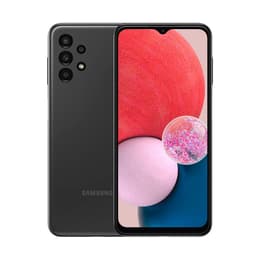
Galaxy A13
Galaxy A13
Starting at

Refurbished price:£73.00

Versus £249.00 new

See options
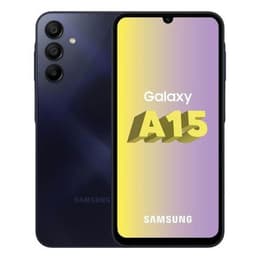
Galaxy A15
Galaxy A15
Starting at

Refurbished price:£88.00

Versus £169.00 new

See options

Ratings

The Samsung Galaxy A13 (released March 2022) and the Samsung Galaxy A15 (released December 2023) are both Android-based smartphones designed for everyday use. While they share a similar design philosophy and target audience, the newer Galaxy A15 introduces notable upgrades in display technology, processing capabilities, and software support, offering a more refined user experience compared to its predecessor.

Scores

Durability

When considering the long-term usability of these devices, their release timelines and software support policies are key factors. The Galaxy A15, being a more recent release, benefits from an extended period of software updates.

  • Release Timeline: The Galaxy A13 was launched in March 2022, while the Galaxy A15 followed in December 2023. This nearly two-year difference means the A15 starts with a significant advantage in its lifecycle.
  • OS Support: The Galaxy A13 was typically slated to receive two major Android OS upgrades and four years of security updates. In contrast, the Galaxy A15 is promised four generations of OS upgrades and five years of security patches, extending its functional lifespan and ensuring access to newer features and enhanced security for a longer duration.
  • Practical Lifespan: Users of the Galaxy A13 have reported a noticeable slowdown in performance after about 1.5 years of use, with some experiencing lag and unresponsiveness. The Galaxy A15, with its newer hardware and extended software support, is expected to maintain smoother performance for a longer period, making it a more future-proof option for users seeking extended device longevity.

Year of Release

2022

2023

Compatible with latest Update

No

Yes

OS

Android

Android

Foldable

No

No

Performance

The performance of a smartphone directly impacts daily tasks, from app navigation to media consumption. Both devices are designed for general use, but the Galaxy A15 offers a more responsive experience.

  • Processing Capabilities: The Galaxy A13 is powered by a processor that handles everyday tasks adequately but can show signs of sluggishness with more demanding applications or extensive multitasking. The Galaxy A15 features a newer generation processor, which provides a smoother overall user interface and more efficient handling of applications.
  • System Responsiveness: Users transitioning from the A13 to the A15 often note a more fluid experience, particularly in scrolling and app switching. While the A13 can become slow and laggy over time, the A15 maintains better responsiveness for common activities like web browsing, social media, and light gaming.
  • Storage and RAM: Both models offer various RAM and storage configurations, with options typically ranging from 3GB to 6GB RAM and 32GB to 128GB storage for the A13, and 4GB to 8GB RAM with 128GB or 256GB storage for the A15. The increased RAM options in the A15 contribute to better multitasking capabilities, reducing instances of apps needing to reload.

Memory (GB)

4 GB

4 GB

Screen quality

The display is a primary interface for smartphone interaction, and there are significant differences in screen technology between these two Galaxy models.

  • Display Technology: The Galaxy A13 features a 6.6-inch PLS LCD panel, which provides clear visuals suitable for general content consumption. The Galaxy A15, however, upgrades to a 6.5-inch Super AMOLED display, a first for the A1x series, offering deeper blacks, more vibrant colors, and better contrast.
  • Brightness and Clarity: The A15's Super AMOLED display also boasts enhanced brightness, reaching up to 800 nits in high brightness mode, making it easier to view content outdoors or in bright conditions compared to the A13's LCD panel. Both phones offer Full HD+ resolution, ensuring sharp images and text.
  • Refresh Rate: A notable improvement in the Galaxy A15 is its 90Hz refresh rate, which provides smoother scrolling and a more fluid visual experience compared to the A13's standard 60Hz refresh rate. This difference is particularly noticeable during fast-paced content or general navigation.

Resolution

1080 x 2408

1080 x 2340

Screen type

PLS LCD

Super AMOLED

Audiovisual

For many users, camera performance is a crucial aspect of a smartphone. Both the Galaxy A13 and A15 offer multi-camera setups, but with some distinctions in their capabilities.

  • Rear Camera System: Both devices feature a 50-megapixel main camera, capable of capturing detailed photos in good lighting conditions. The Galaxy A13 typically includes a quad-camera setup with a 5MP ultrawide, 2MP macro, and 2MP depth sensor. The Galaxy A15 generally offers a triple-camera system with a 5MP ultrawide and 2MP macro lens.
  • Photography Performance: In daylight, both phones produce social-media-ready photos. However, the A15 often yields marginally brighter photos with less noise due to improved software tuning. Low-light performance is a challenge for both, though the A15 shows a slight improvement. Users of the A13 have sometimes expressed disappointment with its camera, particularly in low light or with movement.
  • Front Camera and Video: The Galaxy A13 comes with an 8-megapixel front camera, while the Galaxy A15 features a 13-megapixel front camera, offering higher resolution for selfies and video calls. Both devices are capable of recording videos at 1080p resolution at 30 frames per second from both front and rear cameras.

Main camera

50 megapixels

50 megapixels

Front camera

8 megapixels

13 megapixels

Miscellaneous

Beyond core features, several practical elements contribute to the overall user experience and daily convenience of these smartphones.

  • Connectivity and Ports: The Galaxy A13 supports Wi-Fi 802.11 a/b/g/n/ac and Bluetooth 5.0, and some variants offer 5G connectivity. The Galaxy A15 upgrades to Bluetooth 5.3 and is available in both 4G and 5G variants, with Wi-Fi 802.11 a/b/g/n/ac support. Both devices retain a 3.5mm headphone jack and use a USB Type-C 2.0 port for charging and data transfer. The A15 also includes NFC for contactless payments in supported regions.
  • Security and Build: Both phones feature a side-mounted fingerprint sensor for secure unlocking. The Galaxy A13 has a glass front (Gorilla Glass 5) with a plastic back and frame. The Galaxy A15 also features a plastic frame and back, with a design that includes a 'Key Island' for the power and volume buttons.
  • Dimensions and Weight: The Galaxy A13 measures approximately 165.1 x 76.4 x 8.8 mm and weighs around 195 grams. The Galaxy A15 is slightly more compact at 160.1 x 76.8 x 8.4 mm and weighs 200 grams. These differences are minor and both devices offer a comfortable in-hand feel.

Weight

195 g

200 g

Screen size (in)

6.6

6.5

Mobile network

4G

4G

SIM card

Dual Physical SIM

Dual Physical SIM

Carrier compatibility

Unlocked

Unlocked

The Samsung Galaxy A13 and A15 cater to users seeking functional smartphones for everyday tasks. User feedback for the Galaxy A13 often highlights its initial solid performance for basic use, but some reports indicate a decline in speed and responsiveness over time, alongside criticisms regarding camera quality in challenging conditions. Conversely, the Galaxy A15 generally receives praise for its improved display, smoother performance, and extended software support, making it a more robust option for those who prioritize a responsive and visually engaging experience.

Users who prioritize a vibrant display for media consumption, smoother navigation, and a longer period of software updates will likely find the Galaxy A15 to be a more suitable choice. Its Super AMOLED screen and 90Hz refresh rate offer a noticeable upgrade for daily interaction. For individuals who primarily use their phone for essential communication, light browsing, and occasional photography, and are content with a more basic visual experience, the Galaxy A13 remains a functional option. When considering either device, exploring quality-assured refurbished options can provide an eco-friendly alternative, extending the life of these electronics and offering a sustainable choice for consumers.


See all articles

Our recent comparisons