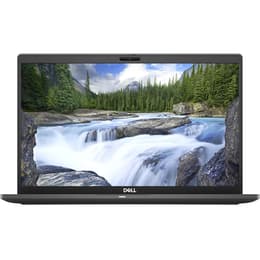
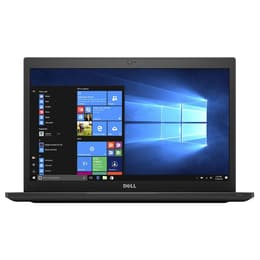

Dell Latitude 7410 14" Vs Dell Latitude 7490 14"

Dell Latitude 7410 14"
Starting at

Refurbished price:£191.00

Versus £671.28 new

See options
Dell Latitude 7490 14"
Starting at

Refurbished price:£204.00

Versus £864.72 new

See options

Ratings

The Dell Latitude 7410 (released in 2020) and the Dell Latitude 7490 (released in 2018) are both 14-inch business-oriented laptops designed for productivity and reliability. While they share a similar form factor and target audience, the 7410 introduces a more modern design, updated internal components, and enhanced connectivity options compared to its predecessor. Both devices typically run on the Windows operating system, offering a familiar experience for most users.

Scores

Durability

When considering the long-term usability of these laptops, their release timelines and design philosophies offer distinct advantages.

  • Release Timeline: The Latitude 7410, launched in 2020, benefits from a more recent release date, providing a longer window for software updates and security patches compared to the Latitude 7490, which debuted in 2018.
  • OS Support: Both models are compatible with Windows 11, but the 7410's newer hardware generation means it is likely to receive official operating system and driver support for a longer duration.
  • Repairability and Build: The Latitude 7490 is noted for its straightforward maintenance, with many components being easily accessible for replacement or upgrade. The 7410, while also built for durability with an all-aluminum chassis and MIL-STD 810G certifications, often features soldered RAM, which can limit future upgrades.

Year of Release

2020

2017

Last Os Compatibility

Yes

Yes

OS

Windows 11

Windows 11

Performance

The performance of these two Latitude models is primarily influenced by their respective processor generations and system configurations.

  • Processor Capabilities: The Latitude 7410 typically features 10th-generation Intel Core processors, offering improved efficiency and processing power for demanding applications and multitasking. The Latitude 7490, on the other hand, commonly utilizes 8th-generation Intel Core processors, which still provide solid performance for everyday business tasks and general productivity.
  • System Responsiveness: Users of the 7410 may experience slightly faster application loading and smoother transitions during heavy multitasking due to the newer processor architecture and often faster RAM speeds. Both models generally come with solid-state drive (SSD) storage, contributing to quick boot times and responsive file access.
  • RAM and Storage: While both offer various RAM and storage configurations, the 7490 often allows for RAM upgrades, providing flexibility for users who anticipate needing more memory in the future. The 7410's RAM is frequently soldered, meaning its capacity is fixed at the time of purchase.

Memory (GB)

8 GB

16 GB

Processor

Core i5 - Gen 10 (U)

Core i7 - Gen 8 (U)

Graphic card

Integrated Graphics

Integrated Graphics

Screen quality

Both laptops offer 14-inch displays, but there are notable differences in available panel technologies and visual experiences.

  • Display Technology and Resolution: The Latitude 7410 offers a range of 14-inch panels, including Full HD (1920x1080) with anti-glare, low-power, or touch options. A significant upgrade available for the 7410 is a 4K UHD (3840x2160) display with low-blue-light technology and 400 nits brightness, providing exceptional clarity and vibrant colors. The Latitude 7490 typically features Full HD (1920x1080) IPS panels, often with a matte finish to reduce glare, and some configurations included an HD (1366x768) TN option.
  • Brightness and Clarity: The 7410's optional 4K display offers superior brightness and pixel density, making text and images appear sharper, especially beneficial for detailed work or media consumption. The 7490's Full HD IPS panels provide good viewing angles and adequate brightness for indoor use, though they may not perform as well in bright outdoor conditions compared to the 7410's brighter options.
  • Viewing Experience: The 7410 features narrower bezels around the display, contributing to a more immersive viewing experience and a more modern aesthetic.

Resolution

1920 x 1080

1920 x 1080

Screen type

LCD

IPS

Camera

Audiovisual

For communication and multimedia, both laptops include integrated audio and visual components suitable for business use.

  • Camera System: Both the Latitude 7410 and 7490 are equipped with a 720p HD webcam, suitable for video conferencing and online meetings. The 7410's webcam often includes IR facial recognition for enhanced security features like Windows Hello.
  • Microphone Quality: Both models feature integrated microphones designed for clear voice capture during calls. The 7410 often includes dual array microphones for better noise cancellation.
  • Speaker Output: Both laptops provide stereo speakers for audio playback. User experiences suggest that the speakers on both models are generally adequate for typical business use, such as video calls and presentations, rather than high-fidelity media consumption.

Miscellaneous

Beyond core components, several practical features differentiate these two Latitude laptops, impacting daily usability and connectivity.

  • Connectivity Options: The Latitude 7410 supports newer wireless standards, including Wi-Fi 6 (802.11ax) and Bluetooth 5.1, offering faster and more stable connections. The Latitude 7490 typically uses Wi-Fi 5 (802.11ac) and Bluetooth 4.2. Both can have optional LTE for mobile connectivity.
  • Port Types: The 7410 features two Thunderbolt 3 (USB-C) ports, providing versatile connectivity for high-speed peripherals, external displays, and charging. It also includes HDMI 2.0 and two USB-A ports. The 7490 offers a USB Type-C port (with optional Thunderbolt 3), HDMI 1.4, three USB-A ports, and a Gigabit Ethernet port.
  • Weight and Dimensions: The 7410 has a slightly more compact design with narrower bezels, making it feel smaller than its 14-inch screen size suggests, weighing around 1.3-1.4 kg (3.1 lbs). The 7490 is comparable in weight, typically ranging from 1.4-1.56 kg (3.1-3.5 lbs).

Weight

1330 g

1500 g

Screen size

14

14

User feedback for the Dell Latitude 7490 often praises its robust build quality, comfortable keyboard with good key travel, and reliable performance for everyday business tasks. Many appreciate its decent battery life and the presence of a full complement of traditional ports, reducing the need for adapters. Some common criticisms include the display not being as bright as some competitors and the touchpad being smaller than preferred by some users.

The Dell Latitude 7410 is frequently lauded for its more modern, compact design with narrower display bezels and the option for a stunning 4K display that doesn't significantly compromise battery life. Its updated processors and Wi-Fi 6 connectivity are also seen as significant advantages for future-proofing. However, some users note its slightly heavier build compared to some ultraportables and the fact that its RAM is often soldered, limiting upgradeability.

Users prioritizing a more modern design, potentially higher-resolution display options, and the latest connectivity standards like Wi-Fi 6 and Thunderbolt 3 will find the Dell Latitude 7410 well-suited to their needs. It is ideal for professionals who require strong performance for current applications and appreciate a sleek aesthetic. Conversely, those who value upgradability, a slightly more traditional port selection, and a proven, highly repairable design might lean towards the Dell Latitude 7490. Both models offer a dependable computing experience, and choosing a quality-assured refurbished option can provide an eco-friendly alternative for either device.

See all articles

Our recent comparisons