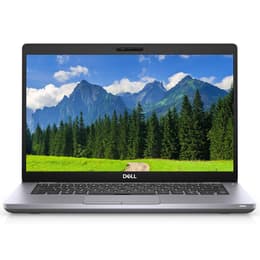

Dell Latitude 5410 14" Vs Dell Latitude 5490 14"

Dell Latitude 5410 14"
Starting at

Refurbished price:£167.00

Versus £397.19 new

See options
Dell Latitude 5490 14"
Starting at

Refurbished price:£184.00

Versus £793.00 new

See options

Ratings

The Dell Latitude 5410 and Dell Latitude 5490 are 14-inch business-oriented laptops designed for productivity and reliability. While both models share the Latitude series' focus on robust build and essential features, the 5410, released in 2020, introduces more recent internal components and updated connectivity compared to the 5490, which debuted in 2018. Both devices typically run on the Windows operating system, offering a familiar experience for business and general use.

Scores

Durability

When considering the long-term usability of these laptops, several factors contribute to their expected lifespan, including their release dates and potential for software updates and physical maintenance.

  • Release Timeline and OS Support: The Latitude 5410, being a 2020 model, benefits from a more recent release compared to the 2018 Latitude 5490. This typically translates to an additional two years of official operating system support and security updates from Microsoft, extending its software longevity.
  • Repairability and Upgradeability: Both Latitude models are generally regarded as business-grade machines with good repairability. The Latitude 5490 is noted for being highly repairable, allowing for component replacements. The Latitude 5410 also offers good upgradeability, particularly for RAM and storage, which can prolong its practical lifespan by allowing users to adapt it to evolving performance needs. [24, 28, 29, 33]
  • Expected Practical Lifespan: Users can expect both devices to offer several years of reliable service, especially when considering quality-assured refurbished options. The 5410's newer hardware provides a slight edge in future-proofing against increasing software demands.

Year of Release

2019

2017

Last Os Compatibility

Yes

Yes

OS

Windows 11

Windows 11

Performance

The core performance of these laptops is largely determined by their internal processing capabilities, which impact how smoothly they handle daily tasks and more demanding applications.

  • Processor Capabilities: The Latitude 5410 is equipped with 10th Generation Intel Core processors, while the Latitude 5490 features 8th Generation Intel Core processors. This generational difference means the 5410 generally offers improved processing efficiency and speed, leading to quicker application loading and more responsive multitasking. [3, 5, 7, 12]
  • Multitasking and Responsiveness: Both laptops are capable of handling typical office applications, web browsing with multiple tabs, and video conferencing. However, the 5410's newer processor provides a noticeable advantage for users who frequently engage in more intensive multitasking or run applications that benefit from enhanced computational power. The 5410 also features Dell Optimizer, which uses AI to adjust performance levels based on user routines, potentially offering a more optimized experience. [11, 34]
  • Storage and RAM: Both models support DDR4 RAM, with the 5410 configurable up to 64GB and the 5490 up to 32GB, both typically featuring two SODIMM slots for upgrades. [3, 5, 28, 29] Both also offer fast M.2 PCIe NVMe SSD storage options, contributing to quick boot times and rapid data access. [3, 5, 7]

Memory (GB)

8 GB

8 GB

Processor

Core i5 - Gen 10 (U)

Core i5 - Gen 8 (U)

Graphic card

Integrated Graphics

Integrated Graphics

Screen quality

The visual experience on these laptops is influenced by their display technology, resolution, and brightness levels, which are important for comfort during extended use.

  • Display Technology and Resolution: Both the Latitude 5410 and 5490 typically feature 14-inch anti-glare LCD displays, with Full HD (1920x1080) resolution being a common option across both. Some configurations of the 5410 may offer IPS panels, providing wider viewing angles. [2, 3, 5, 11, 28]
  • Brightness and Clarity: Standard brightness levels for both models are often around 220 nits, which is suitable for indoor environments. Some 5410 configurations offer a brighter 300-nit option, which can improve visibility in well-lit rooms or outdoors. [3, 9] The anti-glare finish on both helps reduce reflections, making them more comfortable for prolonged work. [2, 17]
  • Refresh Rate: Both laptops generally feature a standard 60Hz refresh rate, which is adequate for general productivity tasks and media consumption. Some 5410 displays might offer dual refresh rates (48Hz/60Hz). [25]

Audiovisual

For communication and media consumption, the camera, microphone, and speaker systems play a role in the overall user experience.

  • Webcam and Microphone Quality: Both the Latitude 5410 and 5490 include a 720p HD webcam, suitable for video conferencing and online meetings. [2, 5, 11, 17] The 5410 may include a privacy shutter for the webcam, offering an added layer of security. [4, 25] Both integrate microphones for clear audio input during calls.
  • Speaker Output: Both models feature integrated stereo speakers, designed for general media consumption and conference calls. The audio quality is functional for business use, though external speakers might be preferred for a richer media experience. [2, 5, 9, 11] The 5410 also benefits from Dell Optimizer's Intelligent Audio feature, which aims to reduce background noise and refine sound for clearer communication. [34]
  • Video Recording: The 720p webcams on both devices provide standard video recording capabilities for casual use or business communication.

Miscellaneous

Beyond the core components, several practical elements differentiate these two Latitude models, affecting their daily usability and connectivity.

  • Connectivity Options: The Latitude 5410 features more modern wireless connectivity with Intel Wi-Fi 6 (AX201) and Bluetooth 5.1, offering faster speeds and improved network performance compared to the Latitude 5490's Wi-Fi 5 (Intel 8265) and Bluetooth 4.2. [3, 4, 5, 11, 13, 17, 34] Both include an RJ45 Ethernet port for wired network connections. [3, 5, 11]
  • Port Selection: The 5410 offers three USB 3.2 Gen 1 Type-A ports and one USB 3.2 Gen 2 Type-C port with DisplayPort Alt Mode and Power Delivery, with optional Thunderbolt 3 support. [3, 4, 11, 29, 32, 37, 38] The 5490 also has three USB 3.1 Gen 1 Type-A ports and a USB Type-C port with DisplayPort, but optional Thunderbolt 3 is less common. Notably, the 5490 includes a legacy VGA port, which is absent on the 5410. [1, 2, 4, 5, 7, 13] Both have HDMI and an SD or MicroSD card reader. [1, 3, 5, 11]
  • Design and Portability: The Latitude 5410 generally presents a more refined design with slightly thinner dimensions and smaller display bezels compared to the 5490. [4] The 5410 starts at approximately 1.47 kg (3.26 lb), while the 5490 starts around 1.69 kg (3.73 lb), making the 5410 marginally lighter. [3, 5, 7]

Weight

3000 g

1600 g

Screen size

14

14

The Dell Latitude 5410 and 5490 both offer solid foundations for business and productivity, each with distinct advantages that cater to different user priorities. User feedback for both models often highlights their robust build quality and suitability for everyday work tasks. The Latitude 5490 is frequently praised for its exceptional durability and high repairability, with some users noting its ability to handle Windows 11 despite its age. [12, 15, 16, 33] However, some reviews mention that the 5490's screen quality and audio output might not be its strongest points, and it can struggle under heavy multitasking loads. [7, 9, 16]

Conversely, the Latitude 5410 receives positive remarks for its overall performance and the condition of refurbished units. [10] While generally well-received, some users have pointed out potential issues with display quality, such as PWM, and in isolated cases, keyboard or power button functionality in refurbished units. [21, 26, 28]

Users prioritizing a more modern computing experience with enhanced processing power, faster wireless connectivity (Wi-Fi 6), and a slightly more portable design may prefer the Dell Latitude 5410. Its 10th-generation Intel processors and Dell Optimizer features offer a more responsive and adaptive performance for demanding workflows. On the other hand, users who value proven durability, a wider array of legacy ports including VGA, and a highly repairable design might find the Dell Latitude 5490 to be a more suitable choice. Both models, especially when acquired as quality-assured refurbished options, represent an eco-friendly alternative for those seeking reliable business laptops.

See all articles

Our recent comparisons