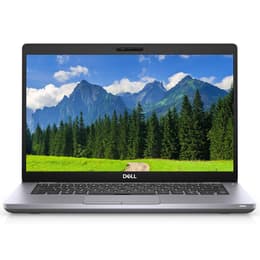

Dell Latitude 5410 14" Vs Dell Latitude 5420 14"

Dell Latitude 5410 14"
Starting at

Refurbished price:£167.00

Versus £397.19 new

See options
Dell Latitude 5420 14"
Starting at

Refurbished price:£204.00

Versus £546.18 new

See options

Ratings

The Dell Latitude 5410 and Dell Latitude 5420 are business-oriented laptops from Dell's Latitude 5000 series, designed for productivity and reliability. The Latitude 5410 was released in 2020, while the Latitude 5420 followed in early 2021. While both share a similar design philosophy, the 5420 introduces updated internal components and enhanced connectivity options, building upon its predecessor's foundation. Both models operate on the Windows platform, offering a consistent user experience.

Scores

Durability

When considering the longevity of these devices, several factors come into play, including their release timelines, operating system support, and potential for hardware upgrades.

  • Release Timeline and OS Support: The Latitude 5410, released in 2020, features 10th Generation Intel processors, while the 5420, released in 2021, incorporates 11th Generation Intel processors. Both models support Windows 10 and are compatible with Windows 11, ensuring several years of continued software updates and security patches from Microsoft. The newer 5420 may receive official OS support for a slightly longer duration due to its later release.
  • Software Longevity: Dell provides drivers and support through its applications for both models, contributing to their practical lifespan. The business-oriented nature of the Latitude series generally means robust long-term support.
  • Repairability and Practical Lifespan: Both laptops are designed with upgradeability in mind, featuring easily accessible RAM and SSD slots. This allows users to extend the device's useful life by upgrading components as needed. The 5420, in particular, is noted for its excellent upgradeability, with major components not being soldered.

Year of Release

2019

2020

OS

Windows 11

Windows 11

Performance

The performance of the Dell Latitude 5410 and 5420 is primarily influenced by their respective processor generations and memory configurations, impacting overall system responsiveness and multitasking capabilities.

  • Processor Capabilities: The Latitude 5410 is equipped with 10th Generation Intel Core processors, providing solid performance for everyday office applications, web browsing, and general productivity tasks. The Latitude 5420, featuring 11th Generation Intel Core processors, offers enhanced processing power and improved integrated graphics, resulting in smoother handling of demanding applications and more efficient multitasking.
  • Multitasking and Responsiveness: The 5410 supports up to 32GB of DDR4 RAM, with some configurations or aftermarket upgrades potentially supporting up to 64GB. The 5420 officially supports up to 64GB of DDR4 RAM at 3200MHz, providing ample headroom for extensive multitasking and running multiple applications simultaneously without significant slowdowns. Both models utilize M.2 PCIe NVMe SSDs for storage, ensuring fast boot times and quick application loading.
  • Typical Use Cases: Users engaged in routine office work, document editing, and video conferencing will find the 5410 capable. For professionals requiring more intensive data processing, frequent use of complex software, or light content creation, the 5420's newer processor and higher RAM capacity offer a more responsive experience.

Memory (GB)

8 GB

8 GB

Processor

Core i5 - Gen 10 (U)

Core i5-1145G7

Graphic card

Integrated Graphics

Intel Iris Xe Graphics

Screen quality

Both Dell Latitude models offer 14-inch displays, but there are distinctions in their panel technologies, resolution options, and overall viewing experience.

  • Display Technology and Resolution: The Latitude 5410 typically features a 14-inch anti-glare display, with options including Full HD (1920 x 1080) resolution. Some configurations may also include HD (1366x768) panels. The Latitude 5420 primarily offers 14-inch Full HD (1920x1080) IPS panels, which generally provide better viewing angles and color reproduction compared to some of the 5410's base options.
  • Brightness and Clarity: While both can come with various brightness levels, some base configurations of the 5420 might have dimmer panels. Higher-end Full HD panels on the 5420 can offer improved brightness and color accuracy, making them more suitable for varied lighting conditions. The anti-glare coating on both models helps reduce reflections, enhancing usability in bright environments.
  • Refresh Rate and Viewing Experience: Both laptops typically feature a standard 60 Hz refresh rate, which is suitable for general productivity tasks. The 5420's display often includes narrow bezels on four sides, contributing to a more immersive viewing experience.

Audiovisual

The audio-visual capabilities of the Dell Latitude 5410 and 5420 are designed to support professional communication and media consumption, with some enhancements in the newer model.

  • Webcam and Microphone Quality: Both laptops are equipped with HD webcams, with the 5420 often featuring a Full HD IR webcam for enhanced clarity and Windows Hello facial recognition. Both include dual-microphone arrays, which are important for clear audio during video calls. The 5420 specifically highlights 'Intelligent Audio' technology, designed to improve audio quality and reduce background noise during conferences.
  • Video Recording and Features: The webcams on both models are suitable for standard video conferencing. The 5420 includes a physical privacy shutter for the webcam, offering an additional layer of security and peace of mind.
  • Speaker Output: Both devices feature integrated speakers, typically dual 2W speakers, providing adequate sound for video calls and general media consumption. The audio experience is generally geared towards clear voice reproduction rather than high-fidelity music playback.

Miscellaneous

Beyond core performance, several practical elements differentiate the Dell Latitude 5410 and 5420, impacting their usability and connectivity in various professional settings.

  • Connectivity Options: The Latitude 5410 supports Wi-Fi 6 and Bluetooth 5.1. The Latitude 5420 upgrades to Wi-Fi 6E and Bluetooth 5.2, offering improved wireless performance and reduced latency, especially in congested network environments. Both include an RJ45 Ethernet port for wired network connections.
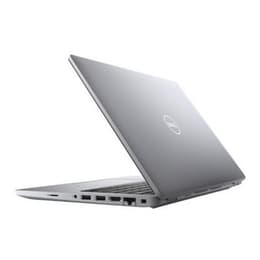
  • Port Selection: The 5410 features USB 3.2 Gen 1 Type-A ports, a USB 3.2 Gen 2 Type-C port with DisplayPort Alt Mode, and optional Thunderbolt 3 support. The 5420 offers a more advanced port selection, including two Thunderbolt 4 ports with Power Delivery and DisplayPort Alt Mode, alongside USB-A ports and an HDMI 2.0 port. Thunderbolt 4 provides higher bandwidth and more versatile connectivity for external displays and peripherals.
  • Physical Attributes and Security: The 5410 starts at approximately 1.47 kg, while the 5420 is slightly lighter, starting around 1.37 kg. Both models incorporate security features such as TPM 2.0, optional fingerprint readers, and IR cameras for Windows Hello facial recognition. The 5420's chassis is noted for its solid and durable build quality, with some configurations featuring carbon fiber and magnesium reinforcement.

Weight

3000 g

3000 g

Screen size

14

14

User feedback for the Dell Latitude 5410 often highlights its dependable performance for everyday tasks, its lightweight design, and in some configurations, its long-lasting battery. Some users have noted that the display quality is adequate but not exceptional in terms of color vibrancy. For the Latitude 5420, common praise points include its excellent keyboard, comprehensive and modern connectivity options like Thunderbolt 4, and a robust, durable build. However, some users have observed that base display options can be dim, and despite its internal reinforcements, the overall feel can still be perceived as plastic.

Users prioritizing a cost-effective and reliable workhorse for general office tasks and moderate multitasking may find the Latitude 5410 well-suited to their needs. Its solid performance and established design make it a practical choice. Conversely, users who require more advanced connectivity, superior multitasking capabilities, and a slightly more refined user experience, particularly with a better keyboard and enhanced integrated graphics, will likely lean towards the Latitude 5420. The 5420's newer processor and Thunderbolt 4 ports offer a degree of future-proofing for those with demanding workflows or extensive peripheral setups. Both models represent solid choices within the business laptop segment, and opting for a quality-assured refurbished option can provide an eco-friendly alternative for either device.

See all articles

Our recent comparisons