
Dell Latitude 5420 14" Vs Dell Latitude 5490 14"

Dell Latitude 5420 14"
Starting at

Refurbished price:£204.00

Versus £546.18 new

See options
Dell Latitude 5490 14"
Starting at

Refurbished price:£184.00

Versus £793.00 new

See options

Ratings

The Dell Latitude 5420 and Dell Latitude 5490 are 14-inch business-oriented laptops designed for productivity and reliability. Released in 2021, the Latitude 5420 features more modern internal components and connectivity options, while the Latitude 5490, launched in 2018, offers a robust and dependable platform. Both models typically run on the Windows operating system, providing a familiar environment for professional users.

Scores

Durability

When considering the longevity of these devices, several factors come into play, primarily their release timelines and ongoing support.

  • Release Timeline: The Latitude 5420, released in 2021, benefits from a more recent manufacturing date compared to the Latitude 5490, which debuted in 2018. This difference in age directly impacts the expected duration of software support and hardware relevance.
  • OS Support: Both laptops are designed to run Windows, and their ability to receive future operating system updates will depend on Microsoft's and Dell's support policies. The newer Latitude 5420 is likely to receive official Windows updates for a longer period, potentially extending its usable life by several years over the 5490.
  • Repairability: Dell Latitude laptops are generally known for their serviceability. User reports indicate that components like RAM and storage are often accessible for upgrades or replacement in both models, contributing to their practical lifespan. The Latitude 5490, in particular, is noted by some users for its robust and repairable design.

Year of Release

2020

2017

OS

Windows 11

Windows 11

Performance

The performance capabilities of these two Latitude models show a notable difference, primarily due to their respective processor generations and storage technologies.

  • Processor Capabilities: The Latitude 5420 is equipped with an 11th-generation Intel Core processor, offering improved processing power and efficiency for everyday tasks, demanding applications, and multitasking. In contrast, the Latitude 5490 features an 8th-generation Intel Core processor, which provides solid performance for general business use but may show limitations with more intensive workloads or when running many applications simultaneously.
  • Storage Options: The Latitude 5420 primarily utilizes faster M.2 PCIe NVMe Solid State Drives (SSDs), contributing to quicker boot times, faster application loading, and more responsive overall system performance. The Latitude 5490, while also offering SSD options, was commonly configured with traditional Hard Disk Drives (HDDs) or SATA SSDs, which are generally slower in data access speeds.
  • Multitasking Support: Both models support DDR4 RAM, with the Latitude 5420 often featuring faster 3200 MHz memory compared to the 5490's 2400 MHz. This, combined with the newer processor architecture, allows the 5420 to handle more demanding multitasking scenarios with greater fluidity.

Memory (GB)

8 GB

8 GB

Processor

Core i5-1145G7

Core i5 - Gen 8 (U)

Graphic card

Intel Iris Xe Graphics

Integrated Graphics

Screen quality

The visual experience on these laptops, while both offering 14-inch displays, presents some distinctions in terms of technology and brightness.

  • Display Technology and Resolution: Both the Latitude 5420 and 5490 offer 14-inch displays with Full HD (1920x1080) resolution options, providing clear visuals for productivity tasks. The 5420 commonly features IPS panels across its configurations, ensuring good viewing angles. The 5490 also offers IPS or WVA (Wide Viewing Angle) panels for its Full HD options, though some base configurations might include TN panels with more limited viewing angles.
  • Brightness Levels: The Latitude 5420 provides a range of brightness options, with some Full HD panels reaching up to 400 nits, which enhances visibility in brighter environments. The Latitude 5490's Full HD displays typically offer brightness levels around 200-220 nits, which is suitable for indoor office use but may be less ideal for outdoor or brightly lit conditions.
  • Refresh Rate: Both models generally feature a standard 60 Hz refresh rate, which is adequate for general business applications and media consumption.

Resolution

1920 x 1080

1920 x 1080

Screen type

LCD

IPS

Audiovisual

For communication and media consumption, both laptops include essential audio-visual components, with the newer model offering some enhancements.

  • Camera System: Both the Latitude 5420 and 5490 are equipped with 720p webcams, suitable for video conferencing and online meetings. The Latitude 5420, however, often includes options for a Full HD IR webcam with a privacy shutter and support for facial recognition via Windows Hello, providing enhanced security and image clarity.
  • Microphone and Speakers: Both laptops feature integrated microphones for voice communication and stereo speakers for audio output. The Latitude 5420 includes a dual-mic array, which can offer better noise cancellation and clearer voice pickup during calls. User reviews for the Latitude 5490 suggest that while its speakers are functional, they may not offer a rich audio experience for media consumption.
  • Video Recording Quality: The video recording quality on both devices is generally tied to their webcam resolution, making them suitable for standard video calls rather than high-definition content creation.

Miscellaneous

Beyond core performance, several practical elements differentiate these two business laptops, impacting daily usability and connectivity.

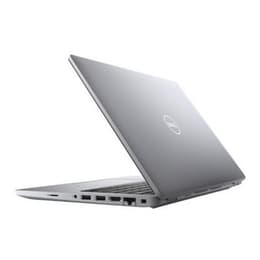
  • Connectivity Options: The Latitude 5420 offers more advanced connectivity, including two Thunderbolt 4 ports, which provide versatile high-speed data transfer, video output, and power delivery capabilities. It also supports Wi-Fi 6 for faster and more stable wireless connections. The Latitude 5490 includes USB 3.1 Gen 1 ports and typically Wi-Fi 5 (802.11ac), which are still functional but offer slower speeds compared to the newer standards. Both models retain an RJ-45 Ethernet port for wired network connections.
  • Port Types: While both have HDMI and USB-A ports, the 5420's HDMI 2.0 offers greater bandwidth than the 5490's HDMI 1.4. The 5490 also includes a VGA port in some configurations, catering to older display connections.
  • Weight and Dimensions: The Latitude 5420 is generally lighter, starting from approximately 1.37 kg (3.03 lbs), making it slightly more portable. The Latitude 5490 typically weighs around 1.6 kg (3.52 lbs) to 1.694 kg (3.73 lbs).
  • Security Features: Both laptops offer robust security features. The 5420 often includes a fingerprint reader integrated into the power button and an IR camera for Windows Hello facial recognition. The 5490 also offers optional fingerprint readers and smart card readers.

Weight

3000 g

1600 g

Screen size

14

14

The Dell Latitude 5420 and 5490 both serve as reliable business laptops, but they cater to slightly different user needs based on their generational differences. User feedback for the Latitude 5490 often praises its durability and robust build, with some describing it as a 'TANK' that can handle daily wear and tear. Its battery life is also frequently highlighted as a strong point, often lasting a full workday. However, some users note that the 5490 can struggle with heavy multitasking loads due to its older processor.

The Latitude 5420, being a newer model, generally receives positive remarks for its enhanced performance, faster storage, and modern connectivity options like Thunderbolt 4 and Wi-Fi 6. Its brighter display options and improved webcam features are also appreciated for a better user experience. Some users have noted that while the 5420 offers good battery life, it might not always match the exceptional longevity seen in some 5490 configurations under specific conditions.

Users prioritizing a more current computing experience with faster performance, advanced connectivity, and potentially better display quality will find the Latitude 5420 well-suited to their needs. This includes professionals who frequently use demanding applications, engage in extensive multitasking, or require high-speed data transfer. Conversely, users who value extreme durability, proven reliability, and a more budget-conscious approach for general office tasks and extended battery life may lean toward the Latitude 5490. Both models represent solid choices within the business laptop segment, and opting for a quality-assured refurbished option for either can be an eco-friendly alternative for consumers.

See all articles

Our recent comparisons