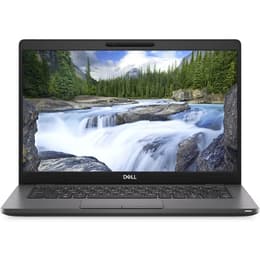
Dell Latitude 5300 13" Vs Dell Latitude 5490 14"

Dell Latitude 5300 13"
Starting at

Refurbished price:£153.00

Versus £1,489.00 new

See options
Dell Latitude 5490 14"
Starting at

Refurbished price:£184.00

Versus £793.00 new

See options

Ratings

The Dell Latitude 5300 13 and the Dell Latitude 5490 14 are business-oriented laptops designed for productivity and reliability. The Latitude 5300, released in 2019, offers a more compact 13.3-inch form factor, while the Latitude 5490, introduced in 2017/2018, features a slightly larger 14-inch display. Both models run on the Windows operating system and share a focus on robust security features and user-friendly maintenance.

Scores

Durability

When considering the practical lifespan of these business laptops, several factors come into play, including their release timelines, operating system support, and ease of repair.

  • Release Timeline: The Dell Latitude 5300 13 was released in 2019, making it a slightly newer model compared to the Dell Latitude 5490 14, which debuted in 2017 or 2018. This difference in release year can influence the duration of official software and driver support from the manufacturer.
  • OS Support Duration: Both devices, running on Windows, benefit from Microsoft's extended support cycles. However, the newer Latitude 5300 may receive compatible driver and firmware updates for a slightly longer period, potentially extending its optimal performance with future Windows versions.
  • Repairability and Upgradability: Both the Latitude 5300 and 5490 are designed with business users in mind, offering straightforward access to internal components. Users can easily remove the bottom plate to access and upgrade components such as RAM, storage drives, and batteries, contributing to a longer practical lifespan by allowing for component replacement and performance enhancements.

Year of Release

2019

2017

Last Os Compatibility

Yes

Yes

OS

Windows 11

Windows 11

Performance

Both the Dell Latitude 5300 13 and 5490 14 are equipped to handle typical business and productivity tasks, though their underlying components offer subtle differences in performance and efficiency.

  • Processor Capabilities: Both laptops feature 8th generation Intel Core processors, providing solid performance for everyday computing, multitasking, and running demanding applications. The specific processor configurations available for each model allow for smooth operation across various workloads.
  • Memory and Storage: Both models support up to 32GB of DDR4 RAM across two user-accessible slots, enabling efficient multitasking and responsiveness. They also offer various storage options, including fast PCIe NVMe Solid State Drives (SSDs) up to 1TB, which contribute to quick boot times and rapid application loading.
  • Battery Behavior: The Latitude 5300 typically comes with 42 Whr or 60 Whr battery options, with some configurations reporting up to 15 hours of web browsing. The Latitude 5490 offers 42 Whr, 51 Whr, or 68 Whr battery options, also demonstrating strong endurance with reports of over 15 hours in certain usage scenarios. Actual battery life will vary based on usage patterns and display settings.

Memory (GB)

8 GB

8 GB

Processor

Core i5 - Gen 8 (U)

Core i5 - Gen 8 (U)

Graphic card

Integrated Graphics

Integrated Graphics

Screen quality

The visual experience on these laptops is influenced by their display technology, resolution, and overall screen characteristics.

  • Display Technology and Resolution: The Latitude 5300 13 features a 13.3-inch Full HD (1920x1080) IPS anti-glare display, often with optional touch capabilities. The Latitude 5490 14 offers a 14-inch display with options for either HD (1366x768) or Full HD (1920x1080) IPS or TN panels, also with anti-glare and optional touch. The Full HD options on both provide clear and detailed visuals suitable for text and media consumption.
  • Brightness and Clarity: The Latitude 5300's Full HD IPS panels typically offer a brightness of around 300 nits, which is suitable for indoor and some outdoor use. The Latitude 5490's Full HD panels are generally rated at 220 nits, which may appear less bright in well-lit environments. Both feature anti-glare coatings to reduce reflections.
  • Screen Size and Viewing Experience: The 13.3-inch screen of the Latitude 5300 provides a compact viewing area, contributing to its portability. The 14-inch screen of the Latitude 5490 offers a slightly larger workspace, which can be beneficial for multitasking or viewing detailed content. Both offer wide viewing angles with their IPS panel options.

Resolution

1920 x 1080

1920 x 1080

Screen type

IPS

IPS

Camera

Audiovisual

For communication and media consumption, both laptops include standard features for audio and visual interactions.

  • Camera System: Both the Dell Latitude 5300 13 and 5490 14 are equipped with HD webcams, typically offering 720p resolution. These cameras are suitable for video conferencing and online meetings, providing clear enough visuals for professional and personal communication.
  • Microphone Quality: Integrated microphones on both models are designed to capture clear audio for calls and voice commands. While not studio-grade, they are adequate for typical communication needs in a business environment.
  • Speaker Output: The speakers on both laptops are generally positioned for media consumption and conference calls. User feedback suggests they provide average sound quality, suitable for listening to presentations, online content, or background music, though external speakers might be preferred for a richer audio experience.

Miscellaneous

Beyond core performance and display, practical features like connectivity, physical design, and security options differentiate these laptops.

  • Connectivity Options: The Latitude 5300 supports Wi-Fi 5 (802.11ac) with optional upgrades to Wi-Fi 6 (802.11ax) and Bluetooth 5.0, along with optional 4G LTE for mobile broadband. The Latitude 5490 typically features Wi-Fi 5 (802.11ac) and Bluetooth 4.2. Both include Gigabit Ethernet for wired network connections.
  • Port Types: The Latitude 5300 offers USB-C (with optional Thunderbolt 3), USB-A, HDMI, Ethernet, and a microSD card reader. The Latitude 5490 provides a comprehensive selection including USB-C (with DisplayPort support), USB-A, HDMI, VGA, Ethernet, and a full-size SD card reader. The inclusion of a VGA port on the 5490 can be useful for connecting to older display equipment.
  • Weight and Dimensions: The Latitude 5300 is more compact and lighter, starting at approximately 1.24 kg (2.73 lbs), making it highly portable. The Latitude 5490, with its 14-inch screen, starts at around 1.60 kg (3.52 lbs), offering a slightly larger footprint and weight.
  • Security Features: Both models emphasize security, offering optional features like fingerprint readers (often integrated into the power button), SmartCard readers, and IR cameras for facial recognition via Windows Hello. The Latitude 5490 also features Dell's ControlVault 2 for enhanced security.

Weight

1370 g

1600 g

Screen size

13

14

The Dell Latitude 5300 13 and Latitude 5490 14 both serve as reliable business laptops, each with distinct advantages that cater to different user priorities. User feedback for both models generally praises their robust build quality and suitability for professional tasks. Common criticisms for the 5490 sometimes point to its slightly heavier design and potentially dimmer screen compared to newer alternatives, while some 5300 users have reported varying battery life experiences.

Users prioritizing portability and a more modern connectivity suite, including optional Wi-Fi 6 and Bluetooth 5.0, may find the Dell Latitude 5300 13 more aligned with their needs. Its lighter weight and slightly newer release date could also appeal to those seeking extended software support. Conversely, individuals who require a wider array of legacy ports, such as VGA, and a slightly larger screen for their daily workflow might lean towards the Dell Latitude 5490 14. Both devices offer strong performance for business applications and are designed for easy maintenance and upgrades.

For those considering these models, exploring quality-assured refurbished options can provide an eco-friendly alternative, extending the life cycle of these capable business machines.


See all articles

Our recent comparisons