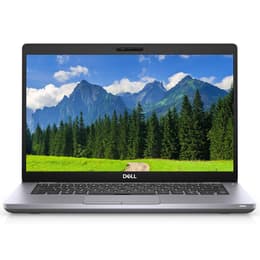
Dell Latitude 5300 13" Vs Dell Latitude 5410 14"

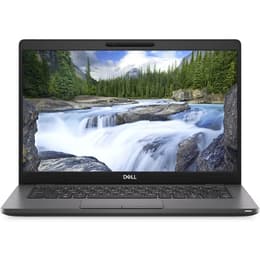
Dell Latitude 5300 13"
Starting at

Refurbished price:£149.00

Versus £1,489.00 new

See options
Dell Latitude 5410 14"
Starting at

Refurbished price:£163.00

Versus £397.19 new

See options

Ratings

The Dell Latitude 5300 13 (released in 2019) and the Dell Latitude 5410 14 (released in 2020) are business-oriented laptops designed for productivity and reliability. While both models offer a robust computing experience, the Latitude 5410 14 introduces a slightly larger display and a newer generation of internal components, offering an incremental update over its predecessor.

Scores

Durability

When considering the long-term usability of these devices, several factors come into play, including their release dates and Dell's typical support cycles.

  • Release Timeline: The Latitude 5300 13 was introduced in 2019, making it a slightly older model compared to the Latitude 5410 14, which launched in 2020. This difference means the 5410 14 will likely receive software and driver updates for a longer period.
  • Software Longevity: Dell generally provides driver and firmware support for its business laptops for approximately 5-7 years from their release date. Consequently, the Latitude 5410 14 can be expected to have an additional year of official support compared to the 5300 13, extending its practical lifespan for users who rely on the latest updates. [26]
  • Repairability: Both Latitude models are designed with business use in mind, often featuring accessible internal components for maintenance and upgrades. User reviews and service manuals indicate that components like RAM and storage are generally user-upgradeable, contributing to their overall practical lifespan. [9, 12, 17, 21, 30, 37]

Year of Release

2019

2019

Last Os Compatibility

Yes

Yes

OS

Windows 11

Windows 11

Performance

The performance of these laptops is primarily influenced by their internal hardware, affecting how smoothly they handle daily tasks and more demanding applications.

  • Processor Capabilities: The Latitude 5300 13 typically features 8th generation processors, while the Latitude 5410 14 comes equipped with 10th generation processors. This generational difference means the 5410 14 generally offers improved efficiency and responsiveness for everyday computing, multitasking, and handling modern software. [2, 8, 10, 15, 26, 30, 36]
  • Storage and RAM: Both models support up to 32GB of DDR4 RAM across two SODIMM slots, allowing for ample memory for multitasking. They also utilize M.2 PCIe NVMe SSDs for storage, providing fast boot times and quick application loading. The 5410 14 may offer slightly faster storage options in some configurations due to its newer platform. [2, 9, 10, 15, 21, 26, 30, 32, 39]
  • Battery Behavior: The Latitude 5300 13 is available with 42Wh or 60Wh battery options, with the 60Wh variant offering up to 14-15 hours of web browsing. [9, 13, 14, 15, 21] The Latitude 5410 14 can be configured with 42Wh, 51Wh, or 68Wh batteries, with the larger 68Wh option capable of delivering up to 19.5 hours of web browsing or 17 hours of video playback, making it a strong contender for extended use away from a power source. [1, 10, 30, 36]

Memory (GB)

8 GB

8 GB

Processor

Core i5 - Gen 8 (U)

Core i5 - Gen 10 (U)

Graphic card

Integrated Graphics

Integrated Graphics

Screen quality

The visual experience on these laptops is shaped by their display technology, resolution, and overall brightness.

  • Display Technology and Size: The Latitude 5300 13 features a 13.3-inch Full HD (1920x1080) IPS display, often with a matte finish and optional touch capabilities. [2, 8, 9, 15, 21, 32] The Latitude 5410 14 offers a slightly larger 14-inch Full HD (1920x1080) IPS display, also with matte and optional touch configurations. [1, 3, 5, 10, 25, 30]
  • Brightness and Color: The 5300 13's display typically offers around 300-313 nits of brightness and good sRGB color coverage (95-98%), with some panels noted for not using PWM for brightness control. [2, 8, 9, 14, 21, 32] In contrast, the 5410 14's display brightness can range from 220 nits to 300 nits for a 'super low power' option. Some standard panels on the 5410 14 have been noted to cover only about 52% of the sRGB gamut and may use aggressive PWM, which could impact visual comfort for some users. [1, 5, 10, 30]
  • Viewing Experience: Both laptops provide clear visuals suitable for productivity tasks. However, users prioritizing color accuracy and consistent brightness without PWM might find the 5300 13's display more appealing, while the 5410 14's larger screen offers a slightly more expansive viewing area.

Audiovisual

For communication and media consumption, the audio and visual components play a significant role in the user experience.

  • Webcam Quality: Both the Latitude 5300 13 and 5410 14 are equipped with 0.9 MP (720p) webcams. User feedback suggests that the webcam quality on the 5300 13 can be subpar, even in well-lit conditions. [9] The 5410 14's webcam includes a privacy shutter, a practical feature for security-conscious users. [10, 30]
  • Microphone and Speakers: Both laptops feature integrated microphones suitable for video calls. The speaker output on business laptops like these is generally functional for conference calls and casual media consumption, but typically lacks strong bass or high fidelity. The 5410 14's speakers are located on the bottom and can reach decent loudness, though sound quality is described as average. [30]
  • Security Features: The 5300 13 offers an IR camera for face recognition in some configurations. [9] The 5410 14 also provides optional IR face recognition, alongside a fingerprint reader, enhancing secure login options. [27, 30]

Miscellaneous

Beyond core performance and display, practical features like connectivity, physical design, and security options differentiate these business laptops.

  • Connectivity and Ports: Both models offer a comprehensive selection of ports essential for business users. This includes multiple USB Type-A ports (some with PowerShare), an HDMI 1.4b port, an RJ45 Ethernet port, a microSD card reader, and a 3.5mm audio jack. Both also feature a USB Type-C port, with optional Thunderbolt 3 support for expanded connectivity and power delivery. [2, 7, 9, 13, 15, 20, 24, 26, 30, 35, 38] A key difference is that the 5410 14 typically supports Wi-Fi 6, offering faster and more reliable wireless connections, while the 5300 13 usually comes with Wi-Fi 5 (with optional Wi-Fi 6). [10, 26]
  • Dimensions and Portability: The Latitude 5300 13 is designed to be more compact and lighter, with a starting weight of approximately 1.24 kg (2.73 lbs) and a thickness of 16.9-19.3 mm. [8, 15, 18, 22, 26, 29, 34] The Latitude 5410 14 is slightly heavier, starting around 1.47 kg (3.24 lbs) to 1.595 kg (3.52 lbs), and is a bit thicker at 20.3-21.2 mm. [3, 10, 11, 19, 25, 30] The 5300 13 is better suited for users prioritizing maximum portability.
  • Build Materials and Security: Both laptops feature durable builds suitable for daily business use. The 5300 13 uses carbon fiber reinforced plastic, providing a sturdy feel. [8, 13] The 5410 14 incorporates about 18% recycled carbon fiber in its construction, contributing to a strong body, though its lid might exhibit more flex. [3] Both include a Noble Lock slot for physical security. [20, 35, 38]

Weight

1370 g

3000 g

Screen size

13

14

The Dell Latitude 5300 13 and Latitude 5410 14 both serve as reliable business laptops, each with distinct advantages that cater to different user needs. User feedback for the Latitude 5300 13 often praises its compact size, robust build, and generally good display quality, particularly its color accuracy and lack of PWM on many panels. [2, 8, 9, 13, 14, 21] Common criticisms sometimes point to its webcam quality and the thermal management under heavy loads, which can lead to performance throttling. [2, 9, 21]

For the Latitude 5410 14, users frequently highlight its extended battery life, especially with the larger capacity options, and the improved performance from its newer generation processor. [1, 4, 10, 27, 30, 36] The inclusion of Wi-Fi 6 and a webcam privacy shutter are also often appreciated. However, some users have noted that the base display options can be of lower quality, with less vibrant colors and the presence of aggressive PWM. [1, 5, 10]

Users prioritizing a highly portable and compact device with a potentially better screen for visual tasks may find the Dell Latitude 5300 13 well-suited to their needs. Its slightly smaller footprint and lighter weight make it an excellent companion for frequent travel. Conversely, those who require longer battery life, a slightly larger screen for productivity, and the benefits of a newer processor generation and Wi-Fi 6 connectivity will likely lean towards the Dell Latitude 5410 14. Both models offer solid performance for everyday business applications, and choosing between them often comes down to balancing portability against screen size and the latest connectivity standards. For those seeking a dependable and sustainable choice, considering a quality-assured refurbished option for either model can provide excellent value.


See all articles

Our recent comparisons