iPhone 13 Vs iPhone 14

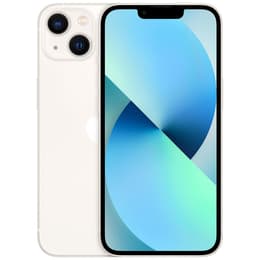
iPhone 13
iPhone 13
Starting at

Refurbished price:£188.00

Versus £599.00 new

See options
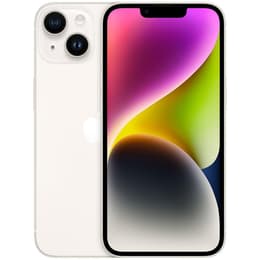
iPhone 14
iPhone 14
Starting at

Refurbished price:£225.00

Versus £599.00 new

See options

Ratings

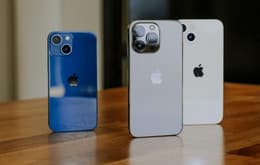
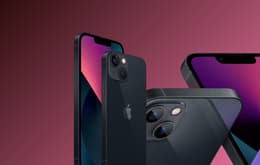
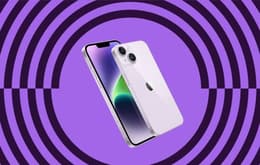
The iPhone 13, released in September 2021, and the iPhone 14, launched in September 2022, are both Apple smartphones that share a familiar design and operate on the iOS ecosystem. While they appear similar externally, the iPhone 14 introduces subtle internal enhancements, particularly in its camera system and internal design, alongside new safety features. Both devices offer a consistent user experience within Apple's operating system.

Scores

Durability

When considering the practical lifespan of these devices, several factors come into play, including software support, physical resilience, and ease of maintenance. Both models are built with robust materials and are designed for extended use.

  • Software Longevity: The iPhone 13 and iPhone 14 are expected to receive major iOS updates for a comparable number of years. While the iPhone 14, being a year newer, might theoretically receive one additional year of updates, some discussions suggest that due to their shared core processor, their software support timelines could be very similar.
  • Physical Durability: Both devices feature a Ceramic Shield front cover, which offers enhanced protection against drops and scratches. They also share an IP68 rating for water and dust resistance, allowing submersion up to 6 meters for 30 minutes.
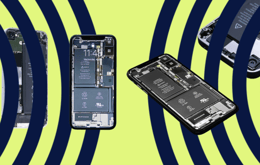
  • Repairability: The iPhone 14 features an internal redesign that initially made it more accessible for repairs, particularly for the back glass. However, subsequent reports indicate that software locks on replacement parts can complicate third-party repairs, potentially making the iPhone 13, with its more traditional internal layout, easier to service without official Apple intervention.

Year of Release

2021

2022

Compatible with latest Update

Yes

Yes

OS

iOS

iOS

Foldable

No

No

Performance

The performance of a smartphone is crucial for daily tasks, from navigating apps to handling demanding processes. Both the iPhone 13 and iPhone 14 deliver smooth and responsive experiences, though there are distinctions in their underlying hardware.

  • Processing Power: The iPhone 13 is equipped with a capable processor featuring a 6-core CPU and a 4-core graphics processing unit. The iPhone 14 utilizes a slightly enhanced version of the same processor, incorporating a 6-core CPU and a 5-core graphics processing unit, which was previously found in the iPhone 13 Pro models. This provides a marginal boost in graphics performance for the iPhone 14.
  • Multitasking and Responsiveness: The iPhone 13 comes with 4GB of RAM, while the iPhone 14 includes 6GB of RAM. This increased RAM in the iPhone 14 can contribute to smoother multitasking and better retention of background applications, potentially offering a more fluid experience for users who frequently switch between many apps.
  • Battery Behavior: The iPhone 14 has a slightly larger battery capacity (3279 mAh) compared to the iPhone 13 (3240 mAh). Apple's official figures suggest the iPhone 14 offers slightly longer video and audio playback times. However, some independent tests have shown the iPhone 13 performing marginally better in specific continuous usage scenarios.

Memory

4 GB

6 GB

Screen quality

The display is a primary interface for any smartphone, and both the iPhone 13 and iPhone 14 offer high-quality visual experiences with similar specifications.

  • Display Technology and Resolution: Both models feature a 6.1-inch Super Retina XDR OLED display. They share an identical resolution of 2532 by 1170 pixels at 460 pixels per inch, providing sharp and clear visuals.
  • Brightness and Color: Both displays offer a typical maximum brightness of 800 nits and a peak HDR brightness of 1200 nits, ensuring good visibility in various lighting conditions and vibrant HDR content playback. They also support wide color (P3) and True Tone technology for accurate color representation.
  • Refresh Rate: Both the iPhone 13 and iPhone 14 maintain a standard 60Hz refresh rate. This provides a consistent and smooth scrolling experience for everyday use, though it does not offer the higher refresh rates found in some other devices.

Resolution

1170 x 2532

1170 x 2532

Screen type

Super Retina XDR OLED

Super Retina XDR OLED

Audiovisual

The camera systems on both the iPhone 13 and iPhone 14 are designed to capture high-quality photos and videos, with the newer model introducing some notable enhancements.

  • Rear Camera System: Both phones feature a dual 12MP camera system with a wide and an ultra-wide lens. The iPhone 14's main wide camera has a larger sensor and a faster f/1.5 aperture compared to the iPhone 13's f/1.6 aperture. This allows the iPhone 14 to capture more light, leading to improved performance in low-light conditions and better detail.
  • Computational Photography and Video: The iPhone 14 benefits from the Photonic Engine, a computational photography pipeline that enhances mid-to-low light performance across all cameras. It also introduces Action Mode for smoother video stabilization during movement and supports Cinematic Mode at 4K resolution at 30 frames per second, an upgrade from the iPhone 13's 1080p Cinematic Mode.
  • Front Camera: The iPhone 14 features an upgraded 12MP front camera with a faster f/1.9 aperture and autofocus, improving low-light selfies and video calls compared to the iPhone 13's f/2.2 fixed-focus front camera.

Main camera

12 megapixels

12 megapixels

Front camera

12 megapixels

12 megapixels

Miscellaneous

Beyond core performance and display, several other features contribute to the overall user experience and practical utility of these smartphones.

  • Connectivity and Ports: Both the iPhone 13 and iPhone 14 support 5G connectivity for fast mobile data. They both utilize the Lightning port for charging and data transfer, and neither includes a traditional 3.5mm headphone jack.
  • Sensors and Biometrics: Both models feature Face ID for secure facial recognition. The iPhone 14 introduces new safety features such as Crash Detection and Emergency SOS via Satellite (available in select regions), which are not present on the iPhone 13.
  • Design and Handling: The physical dimensions and weight of the iPhone 13 (146.7 x 71.5 x 7.65 mm, 174g) and iPhone 14 (146.7 x 71.5 x 7.8 mm, 172g) are very similar, offering a comparable in-hand feel. Both have an aerospace-grade aluminum frame and a glass back.

Weight

173 g

172 g

Screen size (in)

6.1

6.1

Network

5G

5G

SIM card

Physical SIM + eSIM

Physical SIM + eSIM

Carrier compatibility

Unlocked

Unlocked

Connector

Lightning

Lightning

The iPhone 13 and iPhone 14 are closely related devices, sharing many core specifications and a consistent user experience. User feedback often highlights the iPhone 13 as a highly capable device that continues to perform well for everyday tasks, with its camera system and display receiving consistent praise. Some users note that the differences between the standard iPhone 13 and iPhone 14 are incremental, leading to discussions about the practical benefits of upgrading.

The iPhone 14, while building on its predecessor, offers specific enhancements that cater to certain user priorities. Its improved main camera with a larger sensor and faster aperture, along with the Photonic Engine, makes it a stronger contender for those who prioritize low-light photography and advanced video features like Action Mode and 4K Cinematic Mode. The increased RAM also provides a slight edge for heavy multitaskers. Additionally, the new safety features, Crash Detection and Emergency SOS via Satellite, could be a significant factor for users prioritizing personal safety and emergency communication capabilities.

Users who prioritize a device with robust performance for general use, a high-quality display, and a capable camera system will find the iPhone 13 to be a strong option. Those who place a higher value on enhanced low-light photography, advanced video stabilization, improved front camera capabilities, and the added safety features may find the iPhone 14 better suited to their needs. Both models represent reliable choices within the Apple ecosystem, and considering a quality-assured refurbished option for either device can be a sustainable choice for consumers.

See all articles

Our recent comparisons