iPhone 11 Vs iPhone 8

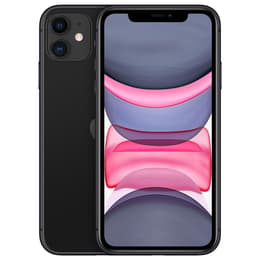
iPhone 11
iPhone 11
Starting at

Refurbished price:£113.00

Versus £489.00 new

See options
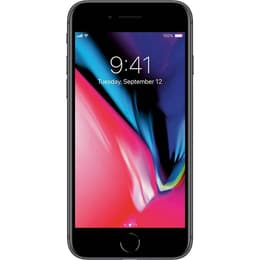
iPhone 8
iPhone 8
Starting at

Refurbished price:£66.00

Versus £249.00 new

See options

Ratings

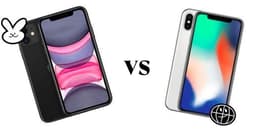
The iPhone 11, released in September 2019, and the iPhone 8, launched in September 2017, represent different generations of Apple's smartphone lineup. While both devices operate on Apple's iOS ecosystem, the iPhone 11 introduced a larger display, an advanced dual-camera system, and a more capable internal processor. These distinctions cater to varying user needs, from everyday communication to more demanding multimedia tasks.

Scores

Durability

When considering the practical lifespan of these devices, several factors come into play, including their release timelines, software support, and physical design.

  • Release Timeline: The iPhone 8 was released in September 2017, making it two years older than the iPhone 11, which debuted in September 2019. This age difference directly impacts the duration of software support each device can expect.
  • Software Longevity: The iPhone 8 originally shipped with iOS 11 and currently supports up to iOS 16.7.15. The iPhone 11, starting with iOS 13, is compatible with iOS 26. This indicates that the iPhone 11 will receive software updates for a longer period, offering extended access to new features, security patches, and app compatibility.
  • Repairability: Both the iPhone 8 and iPhone 11 received a repairability score of 6 out of 10 from iFixit. While common repairs like screen and battery replacements are generally manageable, the glass back on both models can be challenging to replace if damaged.

Year of Release

2019

2017

Compatible with latest Update

Yes

No

OS

iOS

iOS

Foldable

No

No

Performance

The performance capabilities of the iPhone 11 and iPhone 8 differ due to their respective internal components, influencing how smoothly they handle applications and multitasking.

  • Processor Capabilities: The iPhone 11 features a newer generation processor, which provides a noticeable improvement in speed and efficiency compared to the iPhone 8's processor. This translates to faster app loading times, smoother navigation, and more responsive performance in demanding applications and games on the iPhone 11.
  • Multitasking and Responsiveness: The iPhone 11 is equipped with 4GB of RAM, while the iPhone 8 has 2GB of RAM. This difference allows the iPhone 11 to manage more applications simultaneously in the background without needing to reload them, contributing to a more fluid multitasking experience.
  • Storage Options: Both models offer similar storage configurations, typically ranging from 64GB to 256GB. Users can choose the storage capacity that best suits their needs for apps, photos, and videos.

Memory

4 GB

2 GB

Screen quality

The visual experience on the iPhone 11 and iPhone 8 presents notable differences, primarily in display technology, size, and overall viewing immersion.

  • Display Technology and Size: The iPhone 11 features a larger 6.1-inch Liquid Retina HD display, which is an IPS LCD panel. In contrast, the iPhone 8 has a smaller 4.7-inch Retina HD display, also an IPS LCD. While both offer good color accuracy and viewing angles for LCD technology, the iPhone 11's larger screen provides a more expansive viewing area.
  • Brightness and Clarity: Both displays offer a maximum brightness of 625 nits, ensuring adequate visibility in various lighting conditions. They also feature True Tone technology, which adjusts the display's white balance to match ambient light, and Wide Color (P3) for more vibrant hues.
  • User Interaction: The iPhone 8 includes 3D Touch, which provides pressure-sensitive shortcuts, whereas the iPhone 11 utilizes Haptic Touch, a long-press gesture with haptic feedback. The iPhone 11's design also features a notch at the top for its camera system, while the iPhone 8 retains the traditional top and bottom bezels with a physical home button.

Resolution

828 x 1792

750 x 1334

Screen type

Liquid Retina IPS LCD

Retina IPS LCD

Audiovisual

The camera systems on the iPhone 11 and iPhone 8 offer distinct capabilities, particularly in terms of lens configuration and advanced photographic features.

  • Rear Camera System: The iPhone 11 boasts a dual-camera setup, including a 12MP wide lens (f/1.8) and a 12MP ultra-wide lens (f/2.4) with a 120-degree field of view. This allows for capturing broader scenes and offers 2x optical zoom out. The iPhone 8 features a single 12MP wide lens (f/1.8). Both have optical image stabilization for the main lens and support 4K video recording at up to 60 frames per second.
  • Low-Light and Advanced Features: The iPhone 11 introduced Night mode, which significantly improves photo quality in low-light environments, and Deep Fusion for enhanced detail and texture in medium-light conditions. It also offers Portrait mode with advanced bokeh and Depth Control for both people and objects. The iPhone 8's camera performs well in good lighting but lacks these advanced low-light and computational photography features. Portrait mode on the iPhone 8 was primarily available on the larger Plus model.
  • Front Camera: The iPhone 11 features a 12MP TrueDepth front camera capable of 4K video recording and slo-mo selfies. The iPhone 8 has a 7MP FaceTime HD front camera, supporting 1080p HD video.

Main camera

12 megapixels

12 megapixels

Front camera

12 megapixels

7 megapixels

Miscellaneous

Beyond core performance and display, several practical elements differentiate the iPhone 11 and iPhone 8, impacting daily usability and connectivity.

  • Connectivity Standards: The iPhone 11 supports Wi-Fi 6 (802.11ax) and Gigabit-class LTE, offering faster wireless data speeds compared to the iPhone 8's Wi-Fi 5 (802.11ac) and standard LTE. Both devices include Bluetooth 5.0 for accessories. The iPhone 11 also incorporates Apple's U1 Ultra Wideband chip for enhanced spatial awareness.
  • Biometric Security: The iPhone 11 relies on Face ID for secure authentication and unlocking, utilizing its TrueDepth camera system. The iPhone 8 uses Touch ID, an integrated fingerprint sensor within its physical home button.
  • Physical Design and Durability: The iPhone 11 has an IP68 rating, allowing it to withstand submersion in up to 2 meters of water for 30 minutes. The iPhone 8 has an IP67 rating, protecting against submersion in up to 1 meter of water for the same duration. Both feature glass backs, enabling wireless charging, but this also makes them susceptible to damage from drops.

Weight

194 g

148 g

Width

7,57 cm

6,73 cm

Height

15,09 cm

13,84 cm

Depth

0,83 cm

0,73 cm

Screen size (in)

6.1

4.7

Network

4G

4G

SIM card

Physical SIM + eSIM

Physical SIM

Carrier compatibility

Unlocked

Unlocked

Connector

Lightning

Lightning

The iPhone 11 and iPhone 8 cater to different user expectations, reflecting their respective release years and technological advancements. Users often praise the iPhone 11 for its significantly improved camera system, particularly the addition of an ultra-wide lens and Night mode, which enhances versatility in photography. Its extended software support and more powerful processor are also frequently highlighted as key advantages for long-term usability and performance. Some users, however, note that its LCD display, while vibrant, does not offer the deep blacks and contrast of OLED screens found in newer models.

The iPhone 8 is often appreciated for its compact form factor and the continued presence of Touch ID, which some users prefer over Face ID. Its performance, while not as robust as the iPhone 11, is generally considered sufficient for everyday tasks. Common criticisms often revolve around its smaller screen size, single rear camera, and shorter expected software support window compared to more recent iPhones. Its battery life, especially on older units, can also be a point of concern for heavy users.

Users prioritizing advanced photography features, a larger display for media consumption, and a longer period of software updates may find the iPhone 11 to be a more suitable choice. Its enhanced processing power also benefits those who engage in mobile gaming or use demanding applications. Conversely, individuals who prefer a smaller, more pocketable device, value the physical home button with Touch ID, and primarily use their phone for essential tasks like communication and light browsing, might find the iPhone 8 aligns better with their needs. Both models are available as quality-assured refurbished options, providing an eco-friendly alternative for consumers.
See all articles

Our recent comparisons