Compare models

iPhone 8 Vs iPhone XR

  • 1-year minimum warranty
  • Free delivery on all items
  • Free 30-day returns
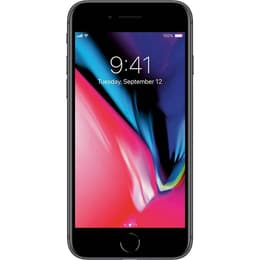
iPhone 8
iPhone 8
Starting at

Refurbished price:£66.00

Versus £249.00 new

See options
iPhone XR
iPhone XR
Starting at

Refurbished price:£94.00

Versus £399.00 new

See options

Differences at a glance

The iPhone 8, released in September 2017, and the iPhone XR, launched in October 2018, represent different approaches within Apple's smartphone lineup. While the iPhone 8 maintains a classic design with a home button, the iPhone XR introduced a larger, all-screen display and Face ID. Both devices operate on Apple's iOS ecosystem, offering a consistent user experience, but they differ in their core hardware and design philosophy, leading to distinct practical differences for users.

Scores

Durability

When considering the longevity of these devices, their release timelines and subsequent software support are key factors.

  • Release Timeline & OS Support: The iPhone 8, being released in 2017, has received iOS updates up to iOS 16.7.15 as of March 2026, with users noting that some newer applications may no longer function optimally due to the lack of the latest operating system support. The iPhone XR, released a year later in 2018, is compatible with iOS versions up to iOS 18, and is expected to receive support until around 2026-2027.
  • Practical Lifespan: The iPhone XR generally offers a longer practical lifespan due to its newer release date and extended software update eligibility. Users of the iPhone 8 may find app compatibility and performance increasingly limited as time progresses.
  • Repairability: Both models feature glass backs, which can be prone to damage, but their internal components are generally accessible for repair. The iPhone 8's design with a physical home button might offer a slightly different repair experience compared to the iPhone XR's all-screen front.

Year of Release

2017

2018

Compatible with latest Update

No

Yes

OS

iOS

iOS

Foldable

No

No

Performance

The performance of a smartphone is crucial for daily tasks, and both the iPhone 8 and iPhone XR offer capable experiences, though with notable distinctions.

  • System Responsiveness: The iPhone XR features a newer generation processor, which translates to smoother operation, faster app loading times, and more efficient handling of demanding applications and multitasking compared to the iPhone 8. The iPhone 8, while still performing adequately for many tasks, may show signs of slower responsiveness with more intensive use or newer software.
  • Multitasking & Storage: The iPhone XR comes with 3GB of RAM, providing a slight advantage in managing multiple applications simultaneously without needing to reload them as frequently. The iPhone 8 has 2GB of RAM. Both devices offer various internal storage options, typically ranging from 64GB to 256GB, accommodating different user needs for apps, photos, and media.
  • Battery Behavior: The iPhone XR is recognized for its significantly longer battery life, often lasting a full day of heavy use, a notable improvement over the iPhone 8. The iPhone 8's smaller battery capacity means more frequent charging for heavy users, and battery performance can degrade with age.

Memory (GB)

2 GB

3 GB

Screen quality

The display is a primary interaction point, and the iPhone 8 and iPhone XR present different visual experiences.

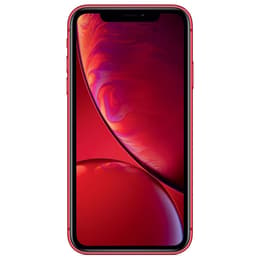
  • Display Technology & Size: The iPhone XR boasts a larger 6.1-inch Liquid Retina HD LCD display, offering an expansive viewing area that nearly covers the entire front of the device. In contrast, the iPhone 8 features a more compact 4.7-inch Retina HD LCD display with traditional bezels and a home button. Both use IPS LCD technology, providing consistent color reproduction and viewing angles.
  • Resolution & Clarity: Both displays have a pixel density of 326 pixels per inch (ppi), meaning they offer similar sharpness for text and images. The iPhone XR's resolution is 1792x828 pixels, while the iPhone 8 has a 1334x750 pixel resolution.
  • Brightness & Features: Both models achieve a maximum typical brightness of 625 nits, ensuring good visibility in various lighting conditions. They also include True Tone technology, which automatically adjusts the display's white balance to match ambient light for a more natural viewing experience. The iPhone 8 includes 3D Touch for pressure-sensitive interactions, while the iPhone XR uses Haptic Touch, relying on long presses with haptic feedback.

Resolution

750 x 1334

828 x 1792

Screen type

Retina IPS LCD

Liquid Retina IPS LCD

Audiovisual

Both smartphones offer capable camera systems for everyday photography, but the iPhone XR introduces some enhancements.

  • Rear Camera System: Both the iPhone 8 and iPhone XR feature a single 12-megapixel wide-angle rear camera with an f/1.8 aperture and optical image stabilization (OIS), capable of capturing detailed photos in good lighting. The iPhone XR's camera benefits from a newer processor, which enhances image processing, particularly for features like Smart HDR.
  • Photography Features: The iPhone XR introduced Portrait mode with advanced depth control, allowing users to capture photos with a blurred background, though it is primarily optimized for detecting human subjects. The iPhone 8 does not offer Portrait mode on its single rear camera. Both devices can record 4K video at up to 60 frames per second.
  • Front Camera & Audio: Both phones are equipped with a 7-megapixel front-facing camera. The iPhone XR's front camera is part of the TrueDepth system, enabling Face ID and more advanced selfie features. Both devices offer stereo speakers for media consumption.

Main camera

12 megapixels

12 megapixels

Front camera

7 megapixels

7 megapixels

Miscellaneous

Beyond core features, several practical elements differentiate the iPhone 8 and iPhone XR.

  • Design & Build Materials: The iPhone 8 retains the classic iPhone design with a physical home button and thicker bezels, featuring a glass back and aluminum frame. The iPhone XR adopts an all-screen design with a notch, eliminating the home button and utilizing Face ID for authentication. It also features a glass front and back with an aluminum frame. Both are rated IP67 for water and dust resistance.
  • Connectivity & Ports: Both devices support 4G LTE, Wi-Fi (802.11ac), and Bluetooth 5.0. They both use the Lightning connector for charging and data transfer, and neither includes a traditional 3.5mm headphone jack.
  • Authentication & Dimensions: The iPhone 8 relies on Touch ID (fingerprint sensor) integrated into its home button. The iPhone XR uses Face ID (facial recognition) for secure unlocking and payments. The iPhone 8 is more compact and lighter at 138.4 x 67.3 x 7.3 mm and 148g. The iPhone XR is larger and heavier at 150.9 x 75.7 x 8.3 mm and 194g.

Weight

148 g

194 g

Screen size (in)

4.7

6.1

Mobile network

4G

4G

SIM card

Physical SIM

Physical SIM + eSIM

Carrier compatibility

Unlocked

Unlocked

Connector

Lightning

Lightning

What the community thinks

User sentiment for the iPhone 8 often highlights its enduring performance for basic tasks, with many appreciating its compact size and the familiarity of the home button and Touch ID. However, common criticisms revolve around its battery life, which tends to be shorter, especially with an aging battery, and the increasing limitations in software compatibility as newer iOS versions are released. Some users also report issues with Wi-Fi and Bluetooth connectivity.

The iPhone XR is frequently praised for its significantly improved battery life, larger display, and capable camera system, which includes Portrait mode. Users generally find its performance robust for everyday use and multitasking. Criticisms sometimes point to the LCD display not being as vibrant as OLED panels found in other models, and the single rear camera's limitations compared to dual-lens systems, particularly for non-human portrait subjects.

Users prioritizing a compact form factor, a physical home button, and Touch ID may find the iPhone 8 well-suited to their needs, especially if their usage is lighter and they are comfortable with potentially older software support. Those who value a larger, more immersive screen, extended battery life, Face ID, and more advanced camera features, including Portrait mode, will likely lean toward the iPhone XR. For individuals seeking a more modern experience with longer software support, the iPhone XR presents a compelling option. Both devices are available as quality-assured refurbished options, providing an eco-friendly alternative for consumers.