
iPhone 16 Plus Vs OnePlus 10 Pro

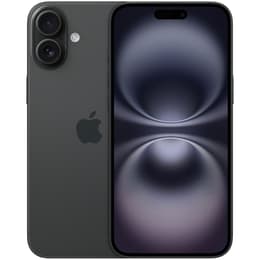
iPhone 16 Plus
iPhone 16 Plus
Starting at

Refurbished price:£503.46

Versus £799.00 new

See options
OnePlus 10 Pro
OnePlus 10 Pro
Starting at

Refurbished price:£391.00

Versus £769.39 new

See options

Ratings

The iPhone 16 Plus, released in 2024, and the OnePlus 10 Pro, launched in early 2022, are both large-screen smartphones designed to offer a comprehensive mobile experience. While the iPhone 16 Plus operates on Apple's iOS ecosystem, the OnePlus 10 Pro runs on Android, providing distinct user interfaces and app environments. Key differences lie in their processing power, camera capabilities, and long-term software support.

Scores

Durability

The expected lifespan of a smartphone is significantly influenced by its release date and the manufacturer's commitment to software updates and repairability.

  • Release Timeline: The iPhone 16 Plus, having been released in September 2024, is a newer device compared to the OnePlus 10 Pro, which launched in January 2022. This age difference means the iPhone 16 Plus naturally has a longer remaining period of official support.
  • Software Longevity: Apple typically provides major iOS updates for 5-7 years, with security patches extending even further, potentially up to 7-8 years from release. The iPhone 16 Plus, launching with iOS 18, is expected to receive updates well into the 2030s. The OnePlus 10 Pro, which started on Android 12, received an unexpected update to Android 16 (OxygenOS 16) in early 2026, extending its major OS support beyond initial expectations. However, it is not anticipated to receive Android 17 (OxygenOS 17), indicating its major software update cycle is nearing its end.
  • Repairability: Both devices feature robust builds, but the availability of parts and repair services can vary. Apple generally maintains a long supply of parts for its devices, contributing to their practical lifespan. The OnePlus 10 Pro features Gorilla Glass Victus on the front and Gorilla Glass 5 on the back, offering a good level of protection.

Year of Release

2024

2022

Compatible with latest Update

Yes

Yes

Foldable

No

No

Performance

Performance is a critical aspect for users, impacting everything from daily tasks to demanding applications and multitasking.

  • Processing Power: The iPhone 16 Plus is equipped with Apple's A18 chip, which offers a substantial performance increase, including a 30% faster CPU and 40% faster GPU compared to its predecessor's A16 Bionic chip. This translates to exceptionally smooth operation, rapid app loading, and efficient handling of complex tasks and advanced gaming. The OnePlus 10 Pro utilizes the Snapdragon 8 Gen 1 Mobile Platform, which was a high-end processor at its release, capable of handling most applications and games effectively.
  • Multitasking and Responsiveness: The iPhone 16 Plus features 8GB of RAM, an upgrade designed to support its advanced features, including Apple Intelligence, and ensure fluid multitasking. The OnePlus 10 Pro offers configurations with either 8GB or 12GB of RAM, providing ample capacity for running multiple applications simultaneously without significant slowdowns.
  • Storage Options: Both devices offer various internal storage capacities to suit different user needs. The iPhone 16 Plus is available with 128GB, 256GB, or 512GB of storage. The OnePlus 10 Pro also comes in 128GB or 256GB variants, utilizing UFS 3.1 storage for fast data access.

Memory (GB)

8 GB

8 GB

Screen quality

The display is the primary interface for most smartphone interactions, and both devices offer high-quality viewing experiences with distinct characteristics.

  • Display Technology and Resolution: The iPhone 16 Plus features a 6.7-inch Super Retina XDR OLED display with a resolution of 2796x1290 pixels, resulting in a pixel density of 460 ppi. The OnePlus 10 Pro also has a 6.7-inch QHD+ LTPO2 Fluid AMOLED display, offering a higher resolution of 3216 x 1440 pixels and a pixel density of 525 ppi. Both OLED panels deliver deep blacks and vibrant colors.
  • Refresh Rate and Smoothness: A notable difference is the refresh rate. The iPhone 16 Plus is expected to maintain a standard 60Hz refresh rate. In contrast, the OnePlus 10 Pro boasts an adaptive 120Hz refresh rate, which can dynamically adjust from 1Hz to 120Hz based on content, providing smoother scrolling and more fluid animations while optimizing battery consumption.
  • Brightness and Clarity: Both displays offer high brightness levels for good outdoor visibility. The iPhone 16 Plus is expected to feature improved brightness, contrast, and color accuracy. The OnePlus 10 Pro can reach a peak brightness of 1300 nits, ensuring content remains visible even in bright conditions.

Resolution

1290 x 2796

1440 x 3216

Screen type

Super Retina XDR OLED

LTPO2 Fluid AMOLED

Audiovisual

Camera systems are a significant consideration for many users, and both smartphones offer capable setups with different strengths.

  • Rear Camera Systems: The iPhone 16 Plus features an advanced dual-camera system, including a 48MP Fusion Main camera with a wide f/1.6 aperture and sensor-shift optical image stabilization, capable of producing super-high-resolution photos. It also includes a 12MP Ultra Wide camera with a 120° field of view. The OnePlus 10 Pro has a triple camera setup, co-developed with Hasselblad, comprising a 48MP main sensor (Sony IMX789), a 50MP ultrawide camera with a 150° field of view, and an 8MP telephoto lens offering 3.3x optical zoom.
  • Photography Performance: The iPhone 16 Plus is expected to deliver improved low-light performance, enhanced image stabilization, and advanced computational photography capabilities, including Spatial Capture for 3D photos and videos. The OnePlus 10 Pro generally takes good photos in daylight, with the main camera performing well in low light. However, some users have noted inconsistencies in color reproduction between its different lenses and weaker performance from the ultrawide and telephoto in challenging conditions.
  • Video Recording: The iPhone 16 Plus supports 4K Dolby Vision video recording at up to 60 frames per second, along with Cinematic mode and Action mode, and Spatial video recording. The OnePlus 10 Pro can record video at up to 8K resolution at 24 frames per second or 4K at 120 frames per second, with good stabilization.

Main camera

48 megapixels

48 megapixels

Front camera

12 megapixels

32 megapixels

Miscellaneous

Beyond core features, several practical elements contribute to the overall user experience and device utility.

  • Connectivity and Ports: The iPhone 16 Plus supports Wi-Fi 7 and Bluetooth 5.3, along with 5G connectivity (sub-6 GHz and mmWave), and features a USB-C port. The OnePlus 10 Pro supports Wi-Fi 6 and 5G, and also uses a USB-C port (USB 3.1 GEN1).
  • Physical Design and Handling: The iPhone 16 Plus maintains a flat-edge design and introduces a new Action Button and a touch-sensitive Capture Button for camera controls. It weighs 199g and measures 160.9 x 77.8 x 7.8 mm. The OnePlus 10 Pro has a slightly curved design with Gorilla Glass Victus on the front and Gorilla Glass 5 on the back, weighing 200.5g and measuring 163.0 x 73.9 x 8.55 mm.
  • Security and Audio: Both devices offer modern security features. The iPhone 16 Plus relies on Face ID for biometric authentication. The OnePlus 10 Pro features an in-display fingerprint sensor. For audio, the OnePlus 10 Pro includes dual stereo speakers.

Weight

199 g

201 g

Screen size (in)

6.7

6.7

Mobile network

5G

5G

SIM card

Physical SIM + eSIM

Physical SIM

Carrier compatibility

Unlocked

Unlocked

Connector

USB-C (USB 2)

USB-C

The iPhone 16 Plus and the OnePlus 10 Pro cater to different preferences, largely due to their operating systems and release timelines. The iPhone 16 Plus, as a more recent device, benefits from Apple's latest A18 chip, offering superior processing power and longer software support, making it well-suited for users who prioritize cutting-edge performance, extended longevity, and the Apple ecosystem's integrated services, including the new Apple Intelligence features. Its advanced dual-camera system with Spatial Capture also appeals to those interested in innovative photography and video capabilities.

The OnePlus 10 Pro, while an older model, still offers a compelling package for users who appreciate its vibrant 120Hz AMOLED display, very fast wired and wireless charging, and the flexibility of the Android operating system. Its camera system, co-engineered with Hasselblad, provides a versatile shooting experience, though some users note inconsistencies across its lenses. Users who value a high refresh rate display and rapid battery top-ups might find the OnePlus 10 Pro a suitable option.

Ultimately, users prioritizing the latest performance, long-term software updates, and advanced computational photography within the iOS ecosystem may lean towards the iPhone 16 Plus. Conversely, those who prefer the Android experience, a high refresh rate display, and exceptionally fast charging might find the OnePlus 10 Pro more aligned with their needs. For those considering either device, exploring quality-assured refurbished options can provide an eco-friendly alternative to extend the life cycle of these capable smartphones.
See all articles

Our recent comparisons