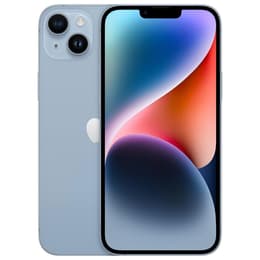
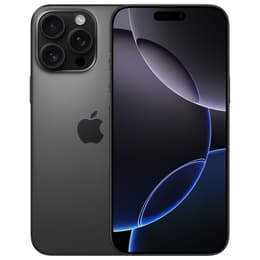
iPhone 14 Plus Vs iPhone 16 Pro Max

iPhone 14 Plus
iPhone 14 Plus
Starting at

Refurbished price:£238.00

Versus £699.00 new

See options
iPhone 16 Pro Max
iPhone 16 Pro Max
Starting at

Refurbished price:£668.00

Versus £1,199.00 new

See options

Ratings

The iPhone 14 Plus, released in October 2022, and the iPhone 16 Pro Max, launched in September 2024, represent different tiers and generations within Apple's smartphone lineup. While both offer large displays and the iOS ecosystem, the iPhone 16 Pro Max introduces significant advancements in processing power, camera capabilities, and display technology, reflecting its newer release and 'Pro Max' designation. Both devices operate on Apple's iOS platform, ensuring a consistent software experience.

Scores

Durability

When considering the practical lifespan of these devices, their release timelines and Apple's software support policies are key factors.

  • Release Timeline: The iPhone 14 Plus was released in October 2022, making it a device that has been on the market for over three years. The iPhone 16 Pro Max, by contrast, was released in September 2024, positioning it as a much newer model.
  • Software Longevity: Apple typically provides major iOS updates for five to seven years after a device's release. The iPhone 14 Plus, originally launched with iOS 16, is expected to receive software support until approximately 2034. The iPhone 16 Pro Max, which debuted with iOS 18, is anticipated to receive updates until around 2036 or 2037, offering a longer period of access to the latest features and security enhancements.
  • Durability Features: Both models feature Ceramic Shield on the front and an IP68 rating for water and dust resistance. The iPhone 16 Pro Max further incorporates a titanium design, which contributes to its overall durability and feel.

Year of Release

2022

2024

Compatible with latest Update

Yes

Yes

Foldable

No

No

Performance

The performance of a smartphone is largely determined by its internal processing unit and memory, impacting how smoothly applications run and how efficiently tasks are handled.

  • Processing Power: The iPhone 14 Plus is powered by the A15 Bionic chip, featuring a 6-core CPU and a 5-core GPU. This processor capably handles everyday applications, multitasking, and many graphically intensive games. The iPhone 16 Pro Max, however, integrates the newer A18 Pro chip, which includes a 6-core CPU and a 6-core GPU. This newer chip, built on a more advanced manufacturing process, delivers significantly faster processing speeds and improved graphics performance, particularly noticeable in demanding applications, advanced gaming, and complex AI-driven tasks.
  • Multitasking and Responsiveness: The iPhone 14 Plus comes with 6GB of RAM, providing a solid foundation for smooth app switching and general usage. The iPhone 16 Pro Max steps up with 8GB of RAM, offering more headroom for intensive multitasking and ensuring a highly responsive experience even with numerous applications open simultaneously.
  • Battery Behavior: The iPhone 14 Plus is known for its excellent battery life, often providing up to two days of use for moderate users. The iPhone 16 Pro Max, with a larger battery capacity and the more efficient A18 Pro chip, is designed to offer even longer endurance, potentially providing the best battery life among iPhone models.

Memory (GB)

6 GB

8 GB

Screen quality

The visual experience on a smartphone is heavily influenced by its display technology, resolution, and adaptive features.

  • Display Technology and Size: Both devices feature Super Retina XDR OLED displays, known for deep blacks and vibrant colors. The iPhone 14 Plus has a 6.7-inch display with a resolution of 2778x1284 pixels, resulting in a pixel density of 458 pixels per inch (ppi). The iPhone 16 Pro Max offers a slightly larger 6.9-inch display with a higher resolution of 2868x1320 pixels and a pixel density of 460 ppi.
  • Refresh Rate and Smoothness: A key differentiator is the refresh rate. The iPhone 14 Plus features a standard 60Hz refresh rate, providing a smooth experience for most content. The iPhone 16 Pro Max, however, includes ProMotion technology, offering an adaptive refresh rate that can scale from 1Hz up to 120Hz. This results in noticeably smoother scrolling, more fluid animations, and a more responsive feel, especially in supported games and applications.
  • Brightness and Visibility: Both models offer excellent brightness for various lighting conditions. The iPhone 14 Plus reaches 800 nits typical brightness and 1200 nits peak brightness for HDR content. The iPhone 16 Pro Max elevates this further, with a typical brightness of 1000 nits and a peak HDR brightness of 2000 nits, enhancing outdoor visibility and HDR content consumption.

Resolution

1284 x 2778

1320 x 2868

Screen type

Super Retina XDR OLED

LTPO Super Retina XDR OLED

Audiovisual

The camera systems on both iPhones are designed to capture high-quality images and videos, though the Pro Max model offers more advanced capabilities.

  • Rear Camera System: The iPhone 14 Plus features a dual-camera system with a 12MP main camera (f/1.5 aperture, sensor-shift optical image stabilization) and a 12MP ultra-wide camera (f/2.4 aperture, 120° field of view). The iPhone 16 Pro Max boasts a more versatile triple-camera system, including a 48MP main camera (f/1.78 aperture, second-generation sensor-shift OIS), a 48MP ultra-wide camera (f/2.2 aperture, 120° field of view), and a 12MP 5x telephoto camera with a tetraprism design for enhanced optical zoom. The 16 Pro Max's larger sensors and higher megapixel count on the main and ultra-wide lenses contribute to improved detail and low-light performance.
  • Photography Features: Both devices include features like Photonic Engine, Deep Fusion, and Smart HDR for computational photography. The iPhone 16 Pro Max further benefits from advanced AI image processing, leading to sharper and more detailed photos. It also offers more advanced photographic styles and the ability to capture 24MP and 48MP super-high-resolution photos.
  • Video Recording Capabilities: Both iPhones support 4K Dolby Vision video recording. The iPhone 14 Plus records up to 4K at 60 frames per second (fps). The iPhone 16 Pro Max extends this with support for 4K Dolby Vision video recording at up to 120fps (Fusion) and ProRes video recording up to 4K at 120fps with external recording, along with spatial video recording. Both feature Action Mode for stabilized video, with the 14 Plus supporting up to 2.8K at 60fps and the 16 Pro Max also supporting up to 2.8K at 60fps.

Main camera

12 megapixels

48 megapixels

Front camera

12 megapixels

12 megapixels

Miscellaneous

Beyond core features, several practical elements contribute to the overall user experience and device utility.

  • Connectivity Standards: Both devices support 5G cellular connectivity. The iPhone 14 Plus uses Wi-Fi 6 and Bluetooth 5.3. The iPhone 16 Pro Max features newer connectivity standards, including Wi-Fi 7 and potentially Bluetooth 5.4 or 6.0, offering faster and more reliable wireless connections.
  • Ports and Biometrics: The iPhone 14 Plus utilizes the Lightning port for charging and data transfer. The iPhone 16 Pro Max has transitioned to a USB-C port, aligning with broader industry standards. Both models rely on Face ID for secure authentication.
  • Design and Handling: The iPhone 14 Plus has an aluminum frame and weighs 203 grams. The iPhone 16 Pro Max features a titanium design, which is both strong and lightweight, weighing 227 grams. The 16 Pro Max also introduces a customizable Action Button and a dedicated Camera Control Button, enhancing user interaction.

Weight

203 g

227 g

Screen size (in)

6.7

6.9

Mobile network

5G

5G

SIM card

Physical SIM + eSIM

Physical SIM + eSIM

Carrier compatibility

Unlocked

Unlocked

Connector

Lightning

USB-C (USB 3)

User feedback for the iPhone 14 Plus often highlights its exceptional battery life and large display as significant advantages for everyday use. Users appreciate its solid performance for general tasks and its capable camera system, especially for those who do not require the advanced features of the Pro models. Common observations include its 60Hz display as a point of comparison with higher refresh rate devices, and the absence of a telephoto lens.

For the iPhone 16 Pro Max, early sentiment and predictions emphasize its cutting-edge performance, significantly upgraded camera system, and advanced display as major draws. The inclusion of features like the ProMotion display, a more versatile camera array with enhanced zoom capabilities, and the powerful A18 Pro chip are frequently praised for elevating the user experience, particularly for power users and photography enthusiasts. The integration of Apple Intelligence is also noted as a key future-proofing aspect.

Users prioritizing a large screen and extended battery life for general daily use, media consumption, and reliable performance will find the iPhone 14 Plus well-suited to their needs. It offers a robust experience for those who value a dependable device without the absolute latest technological advancements. Conversely, users who demand the highest levels of performance, advanced photographic and videographic capabilities, the smoothest display experience, and the longest software support will lean towards the iPhone 16 Pro Max. Its newer processor, superior camera system, and ProMotion display cater to those who engage in demanding tasks, creative work, or simply desire the most advanced features available. Both devices are available as quality-assured refurbished options, providing an eco-friendly alternative for consumers.

See all articles

Our recent comparisons