
Compare models
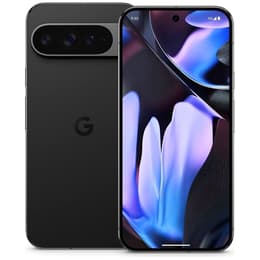
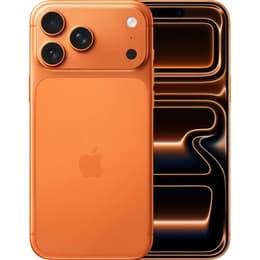
Google Pixel 9 Pro XL Vs iPhone 17 Pro Max
- 1-year minimum warranty
- Free delivery on all items
- Free 30-day returns
Differences at a glance
The Google Pixel 9 Pro XL (2024) and the iPhone 17 Pro Max (2025) represent large-format flagship smartphones from competing major ecosystems. While both devices deliver high-end mobile capabilities, they differ primarily in their operating systems, software integration, and hardware layout. Choosing between them depends largely on user preference for software environments and everyday feature sets.
Available Models
Colour
Storage (GB)
Scores
Durability
Both smartphones provide robust long-term support timelines, though their launch years and update frameworks vary slightly.
- Software Support: Both manufacturers provide extensive multi-year software and security updates, ensuring prolonged feature and security currency.
- Repairability: Both models feature sealed glass and metal structures that require professional tooling for complex hardware repairs.
- Expected Lifespan: Robust build materials and high-capacity internal configurations allow both devices to maintain reliable daily operation across many years of service.
Year of Release
2024
2025
Compatible with latest Update
Yes
Yes
OS
Android
iOS
Foldable
No
No
Performance
System responsiveness and memory capacity vary to accommodate demanding applications and heavy multitasking routines.
- Multitasking Capability: Large random access memory allocations on both devices allow multiple resource-intensive applications to remain active in the background without stuttering.
- Everyday Execution: Applications launch swiftly, and graphic-heavy tasks or gaming sessions run smoothly thanks to advanced internal processing hardware.
- Power Management: Battery capacities support a full day of mixed use, supplemented by fast charging capabilities when replenishing power reserves.
Screen quality
The viewing experiences feature expansive panels designed for high clarity and outdoor visibility.
- Display Technology: Both models utilize vibrant OLED panels with high refresh rates that ensure smooth scrolling and responsive touch interactions.
- Outdoor Legibility: High peak brightness levels allow screens to remain easily readable under direct sunlight or bright ambient lighting.
- Panel Dimensions: Generous screen sizes exceeding 6.8 inches provide ample workspace for media consumption, reading, and document editing.
Resolution
1344 x 2992
2868x1320
Screen type
LTPO OLED
Super Retina XDR
Audiovisual
Imaging hardware suites on both devices cater to detailed photography and stable video recording.
- Lens Configurations: Multi-lens rear camera systems combine primary wide, ultra-wide, and telephoto sensors to capture sharp photos across various focal lengths.
- Low-Light Performance: Dedicated night modes and large sensors capture clear details and balanced colors in dimly lit environments.
- Audio and Video: High-resolution video recording capabilities are paired with sensitive microphone arrays that isolate voice input effectively during calls and video captures.
Main camera
50 megapixels
48 megapixels
Front camera
42 megapixels
18 megapixels
Miscellaneous
Physical dimensions, connectivity standards, and biometric security features define the daily handling experience.
- Connectivity Standards: Both devices support modern 5G cellular networks, Wi-Fi standards, and Bluetooth for reliable accessory pairing.
- Biometric Security: Users can unlock their devices and authorize secure actions using facial recognition or fingerprint scanning sensors.
- Physical Build: Premium glass and durable metal frames provide structural integrity, though their substantial footprints require comfortable two-handed handling.
Weight
221 g
233 g
Screen size (in)
6.8
6.9
Mobile network
5G
5G
SIM card
Physical SIM + eSIM
Physical SIM + eSIM
Carrier compatibility
Unlocked
Unlocked
Connector
USB-C
USB-C
What the community thinks
Users transitioning between mobile ecosystems will find distinct advantages in each device. People who prioritize deep integration with Google services and customizable assistant features often gravitate toward the Google Pixel 9 Pro XL. Conversely, users embedded within the Apple ecosystem who value specific hardware-software synchronisation frequently prefer the iPhone 17 Pro Max.
Reviewers and everyday users frequently praise the Google Pixel 9 Pro XL for its intuitive image-editing tools and clean software interface, though some note that its physical size can feel heavy during prolonged one-handed use. Meanwhile, the iPhone 17 Pro Max receives consistent commendation for its sustained processing power and battery longevity, though critics occasionally mention its premium retail positioning. For those seeking a quality-assured refurbished option, exploring sustainable choices on Back Market allows buyers to acquire these advanced smartphones with reliable operational testing.