
Google Pixel 8 Vs iPhone 16 Pro Max

Google Pixel 8
Google Pixel 8
Starting at

Refurbished price:£185.99

Versus £699.99 new

See options
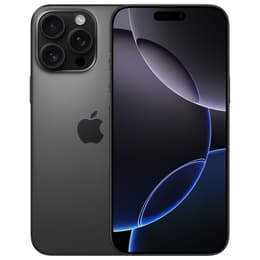
iPhone 16 Pro Max
iPhone 16 Pro Max
Starting at

Refurbished price:£658.00

Versus £1,199.00 new

See options

Ratings

The Google Pixel 8, released in October 2023, and the iPhone 16 Pro Max, launched in September 2024, represent distinct approaches to the premium smartphone experience. While both devices offer advanced features and robust operating systems, they differ significantly in their core hardware philosophies and user-centric design. The Pixel 8 operates on Android, emphasizing artificial intelligence and computational photography, whereas the iPhone 16 Pro Max runs on iOS, focusing on raw performance, a comprehensive ecosystem, and advanced camera capabilities.

Scores

Durability

When considering the long-term usability of these devices, their release timelines and software support policies are key factors.

  • Release Timeline: The Google Pixel 8 was released in October 2023, making it a year older than the iPhone 16 Pro Max, which launched in September 2024. This difference in release date inherently means the iPhone 16 Pro Max will likely receive software updates for a longer period from its initial availability.
  • Software Longevity: Google has committed to providing seven years of OS, security, and Feature Drop updates for the Pixel 8, extending its support until 2030. Apple, for the iPhone 15 series (the predecessor to the 16 Pro Max), confirmed a minimum of five years of security updates, though historically, iPhones often receive updates for longer. This suggests the Pixel 8 offers a longer guaranteed software support period.
  • Repairability: The Google Pixel 8 generally receives moderate repairability scores, with some sources giving it a 7 out of 10, noting that self-repairs are possible for those with experience. Google also provides service manuals and OEM replacement parts. The iPhone 16 Pro Max, building on its predecessor, has seen improvements in repairability, with the iPhone 15 series receiving an updated iFixit score of 7 out of 10 due to software tools that allow parts from other identical iPhones to be installed. However, Apple's approach still involves proprietary parts and software locks, which can complicate independent repairs.

Year of Release

2023

2024

Compatible with latest Update

Yes

Yes

Foldable

No

No

Performance

The performance of both smartphones is driven by their respective processors, influencing how they handle daily tasks and demanding applications.

  • Processing Power: The Google Pixel 8 is powered by the Google Tensor G3 processor, which is designed with a strong emphasis on artificial intelligence and machine learning tasks, enhancing features like call screening and image processing. The iPhone 16 Pro Max features Apple's A18 Pro chip, a 3nm processor expected to deliver substantial improvements in raw processing power and graphics performance, particularly beneficial for intensive gaming and complex applications.
  • Multitasking and Storage: The Pixel 8 comes with 8GB of RAM and offers storage options of 128GB or 256GB. While capable of smooth multitasking for most users, some demanding games might experience limitations. The iPhone 16 Pro Max is expected to feature 8GB or more of RAM and offers larger storage configurations, including 256GB, 512GB, and 1TB, providing ample space and robust multitasking capabilities for power users.
  • System Responsiveness: Users generally report that the Pixel 8 provides a fluid experience for everyday use, with its software optimizations contributing to overall responsiveness. The iPhone 16 Pro Max, with its advanced chip, is designed to offer exceptionally fast app loading, seamless transitions, and a highly responsive user interface, even under heavy workloads, building on the strong performance of previous Pro Max models.

Memory (GB)

8 GB

8 GB

Screen quality

The visual experience on both devices is shaped by their display technologies and specifications.

  • Display Technology and Clarity: The Google Pixel 8 features a 6.2-inch Actua Display, an OLED panel with a resolution of 1080x2400 pixels, providing clear visuals and vibrant colors. The iPhone 16 Pro Max boasts a larger 6.9-inch Super Retina XDR OLED display, which is expected to offer superior clarity and color accuracy, with deep blacks and high contrast.
  • Brightness and Refresh Rate: Both phones offer a 120Hz refresh rate for smooth scrolling and animations. The Pixel 8's display can reach a peak brightness of up to 2000 nits, ensuring good visibility in bright outdoor conditions, though its adaptive refresh rate has a minimum of 60Hz. The iPhone 16 Pro Max also features a 120Hz adaptive refresh rate (ProMotion) and is expected to match or exceed the Pixel 8's peak brightness, providing excellent outdoor readability and a highly fluid visual experience.
  • Viewing Experience: The Pixel 8's smaller screen size makes it more manageable for one-handed use, while still offering an immersive viewing experience for its class. The iPhone 16 Pro Max's larger display and thinner bezels are designed for an expansive viewing experience, making it well-suited for media consumption and productivity tasks.

Resolution

1080 x 2400

1320 x 2868

Screen type

OLED

LTPO Super Retina XDR OLED

Audiovisual

Both smartphones are equipped with advanced camera systems, though they excel in different aspects of photography and videography.

  • Rear Camera System: The Google Pixel 8 features a dual-camera setup with a 50MP main sensor (f/1.68) and a 12MP ultrawide lens (f/2.2) with a 125.8-degree field of view. It relies heavily on computational photography for image enhancement. The iPhone 16 Pro Max is expected to include a 48MP main sensor, a 48MP ultrawide camera (f/2.2), and a dedicated 5x optical telephoto lens, offering greater versatility and zoom capabilities.
  • Photography Performance: The Pixel 8 is praised for its strong everyday photography, particularly in capturing realistic colors and detail, and performs well in low-light conditions due to its computational strengths. The iPhone 16 Pro Max, building on its predecessors, is known for its excellent overall image quality, consistent color science across lenses, and strong performance in various lighting scenarios, with users particularly appreciating its 5x telephoto zoom for portraits and distant subjects.
  • Video Recording and Front Camera: The Pixel 8 records 4K video up to 60fps, though some users note that video quality can sometimes appear grainier compared to competitors. It has a 10.5MP or 11MP front camera. The iPhone 16 Pro Max is expected to offer advanced video recording features, including 4K at 120fps in Dolby Vision, and a 12MP front-facing camera, making it a strong choice for content creation.

Main camera

50 megapixels

48 megapixels

Front camera

10.5 megapixels

12 megapixels

Miscellaneous

Beyond core features, several practical elements contribute to the overall user experience of these devices.

  • Connectivity and Ports: Both devices support 5G connectivity. The Google Pixel 8 includes Wi-Fi 7 and Bluetooth 5.3, with a USB-C 3.2 port for charging and data transfer. The iPhone 16 Pro Max is also expected to feature Wi-Fi 7 and Bluetooth 5.4, along with a USB-C port, likely supporting Thunderbolt for faster data transfer speeds.
  • Biometrics and Security: The Pixel 8 utilizes an under-display fingerprint sensor and face unlock, though some users have noted the face unlock can be less accurate in varying lighting conditions. The iPhone 16 Pro Max relies on Face ID for secure facial recognition.
  • Build Materials and Handling: The Pixel 8 features a glass body with Gorilla Glass Victus 2 on the front and Gorilla Glass Victus on the back, and an IP68 rating for dust and water resistance. It weighs 187g. The iPhone 16 Pro Max incorporates a titanium frame, contributing to a lighter feel compared to previous Pro Max models, and also carries an IP68 rating. It weighs 227g. The Pixel 8 has a glossy back that can attract fingerprints, while the iPhone's titanium finish offers a different tactile experience.

Weight

187 g

227 g

Screen size (in)

6.2

6.9

Mobile network

5G

5G

SIM card

Physical SIM + eSIM

Physical SIM + eSIM

Carrier compatibility

Unlocked

Unlocked

The Google Pixel 8 and iPhone 16 Pro Max cater to different user preferences, each offering a compelling set of features. Users often praise the Pixel 8 for its exceptional computational photography, its long-term software support commitment, and its focus on AI-driven functionalities. Criticisms sometimes point to its performance not matching the absolute top-tier for demanding games and its face unlock accuracy.

The iPhone 16 Pro Max, on the other hand, is frequently lauded for its powerful performance, expansive and vibrant display, and its versatile camera system, particularly its telephoto capabilities and video quality. Some users, however, might find its larger size less convenient for one-handed use. The iPhone's repairability, while improved, still involves proprietary systems.

Users prioritizing a longer guaranteed software update timeline and a strong emphasis on AI features and computational photography may find the Google Pixel 8 well-suited to their needs. Conversely, users who value raw processing power for demanding applications, a larger and more advanced display, and a highly versatile camera system with dedicated optical zoom will likely lean towards the iPhone 16 Pro Max. Both devices represent quality options, and considering a quality-assured refurbished option can be an eco-friendly alternative for either model.


See all articles

Our recent comparisons