

Google Pixel 8 Vs iPhone 15 Plus

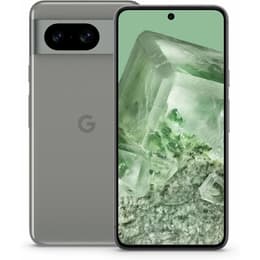
Google Pixel 8
Google Pixel 8
Starting at

Refurbished price:£187.00

Versus £699.99 new

See options
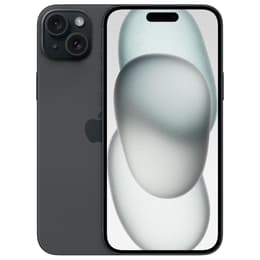
iPhone 15 Plus
iPhone 15 Plus
Starting at

Refurbished price:£345.00

Versus £799.00 new

See options

Ratings

The Google Pixel 8 (released October 2023) and the iPhone 15 Plus (released September 2023) are contemporary smartphones offering distinct experiences within their respective ecosystems. While both devices provide robust performance and advanced camera systems, they differentiate themselves through their operating systems, display technologies, and long-term software commitment. The Pixel 8 runs on Android, emphasizing AI-driven features, while the iPhone 15 Plus operates on iOS, known for its integrated ecosystem and user experience.

Scores

Durability

When considering the practical lifespan of these devices, both the Google Pixel 8 and the iPhone 15 Plus offer substantial longevity, though their approaches to software support differ. The Pixel 8 was released in October 2023, and the iPhone 15 Plus in September 2023, making them both relatively new devices.

  • OS Support: The Google Pixel 8 stands out with an industry-leading commitment of seven years of software support, including OS upgrades, security updates, and feature drops, extending its usability well into the future. The iPhone 15 Plus typically receives iOS updates for approximately five to six years from its release.
  • Repairability: The Google Pixel 8 generally receives favorable repairability scores, with some assessments giving it a 7 out of 10, indicating that self-repairs are possible for those with some experience. The iPhone 15 series, including the 15 Plus, typically scores lower in repairability, often around 4 out of 10, due to factors like proprietary parts and strong adhesives.
  • Practical Lifespan: Users prioritizing the longest possible software support and a more repairable design may find the Pixel 8 a compelling choice, while the iPhone 15 Plus still offers a strong practical lifespan within the Apple ecosystem.

Year of Release

2023

2023

Compatible with latest Update

Yes

Yes

OS

Android

iOS

Foldable

No

No

Performance

Both the Google Pixel 8 and the iPhone 15 Plus deliver smooth and responsive performance for daily tasks, though they achieve this with different underlying architectures. The Pixel 8 is powered by Google's Tensor G3, designed for AI and machine learning tasks, while the iPhone 15 Plus utilizes the A16 Bionic chip, previously seen in the iPhone 14 Pro models.

  • Everyday Responsiveness: Both devices handle demanding applications, multitasking, and graphic-intensive games with fluidity. Users can expect quick app loading times and seamless transitions between various functions.
  • Storage Options: Both models are available with 128GB, 256GB, and 512GB of internal storage, providing ample space for apps, photos, and media.
  • Battery Behavior: The iPhone 15 Plus is noted for its exceptional battery longevity, often lasting more than a full day even with heavy usage, and in some tests, exceeding 13 hours of screen-on time. The Pixel 8 offers reliable all-day battery life for most users, typically providing 8-10 hours of screen-on time with mixed usage, though heavy users might need an afternoon top-up.

Memory (GB)

8 GB

6 GB

Screen quality

The visual experience on the Google Pixel 8 and iPhone 15 Plus is vibrant and clear, though there are differences in their display specifications that cater to varying user preferences.

  • Display Technology and Size: The Google Pixel 8 features a 6.2-inch OLED display, offering deep blacks and rich colors. The iPhone 15 Plus comes with a larger 6.7-inch Super Retina XDR OLED display, providing an expansive viewing area.
  • Resolution and Clarity: The Pixel 8 has a Full HD+ resolution of 2400x1080 pixels at 428 ppi, delivering sharp images and text. The iPhone 15 Plus offers a higher resolution of 2796x1290 pixels at approximately 460 ppi, resulting in slightly greater detail and clarity.
  • Brightness and Refresh Rate: Both phones offer high peak brightness for excellent outdoor visibility, with the Pixel 8 reaching up to 2000 nits and the iPhone 15 Plus also achieving up to 2000 nits peak outdoor brightness. The Pixel 8 features an adaptive refresh rate that can go from 60Hz to 120Hz for smoother scrolling and animations. The iPhone 15 Plus maintains a standard 60Hz refresh rate.

Resolution

1080 x 2400

1290 x 2796

Screen type

OLED

Super Retina XDR OLED

Audiovisual

Both the Google Pixel 8 and iPhone 15 Plus offer advanced camera systems capable of capturing high-quality photos and videos, leveraging computational photography to enhance results.

  • Camera System Capabilities: The Pixel 8 features a dual-camera system with a 50MP main sensor (f/1.68) and a 12MP ultrawide sensor with autofocus, enabling macro photography. The iPhone 15 Plus also has a dual-camera system, including a 48MP main sensor (f/1.6) that produces 24MP default photos and offers a 2x optical-quality telephoto option, alongside a 12MP ultrawide camera.
  • Photography Performance: The Pixel 8 is known for its strong computational photography, delivering excellent low-light performance and accurate colors, with features like Best Take and Magic Editor. The iPhone 15 Plus also shows significant improvements in low-light conditions and dynamic range, producing rich, sharp, and colorful images.
  • Video Recording and Audio: Both devices support 4K video recording at 60 frames per second. The iPhone 15 Plus offers 4K Dolby Vision video recording and excellent video stabilization. The Pixel 8 also provides strong video stabilization and clean sound recording, with features like Audio Magic Eraser.

Main camera

50 megapixels

48 megapixels

Front camera

10.5 megapixels

12 megapixels

Miscellaneous

Beyond core performance and display, several practical elements contribute to the overall user experience of the Google Pixel 8 and iPhone 15 Plus.

  • Connectivity and Ports: The Google Pixel 8 supports Wi-Fi 7 and Bluetooth 5.3, and features a USB-C port with USB 3.2 Gen 2 speeds for faster data transfer. The iPhone 15 Plus also includes a USB-C port, but it operates at USB 2.0 speeds, and supports Wi-Fi 6E and Bluetooth 5.3.
  • Biometric Security: The Pixel 8 offers both an in-display fingerprint scanner and face unlock for secure access. The iPhone 15 Plus relies on Apple's Face ID facial recognition system.
  • Design and Durability: The Pixel 8 features a compact design with Gorilla Glass Victus protection and an aluminum frame, weighing 187g. The iPhone 15 Plus has a larger form factor, featuring a Ceramic Shield front, color-infused glass back, and an aluminum design, weighing 201g. Both devices carry an IP68 rating for dust and water resistance.

Weight

187 g

201 g

Screen size (in)

6.2

6.7

Mobile network

5G

5G

SIM card

Physical SIM + eSIM

Physical SIM + eSIM

Carrier compatibility

Unlocked

Unlocked

The Google Pixel 8 and iPhone 15 Plus each present a compelling package, catering to different user priorities and preferences. User feedback often highlights the Pixel 8's exceptional camera capabilities, particularly its AI-driven features like Magic Editor and Best Take, which simplify photo editing and group shots. Many users also appreciate its more compact size and the significant commitment to seven years of software updates, ensuring long-term relevance and security. Some users, however, note that while the battery life is reliable for a full day of mixed use, it may not match the extended endurance offered by some larger devices.

Conversely, the iPhone 15 Plus receives widespread praise for its outstanding battery life, often cited as one of the best available, making it ideal for users who need their device to last well beyond a single day. Its large, vibrant display and the introduction of the Dynamic Island are also frequently lauded for enhancing the user experience. While its camera system is highly capable, some users coming from older iPhones see it as a substantial upgrade, though it lacks some of the advanced features found in the Pro models. The switch to USB-C is also a welcome change for many, improving connectivity and charging convenience.

Users prioritizing a compact device with cutting-edge computational photography and unparalleled long-term software support may find the Google Pixel 8 to be an excellent fit. Its AI features offer a unique and helpful experience for everyday tasks. On the other hand, individuals who value a larger display, industry-leading battery life, and a deeply integrated ecosystem will likely gravitate towards the iPhone 15 Plus. Both devices represent quality-assured options, and considering a refurbished model can be an eco-friendly alternative for acquiring either of these capable smartphones.

See all articles

Our recent comparisons




