
Smartphones
Compare models
Differences at a glance
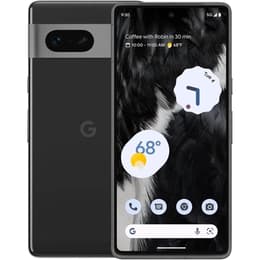
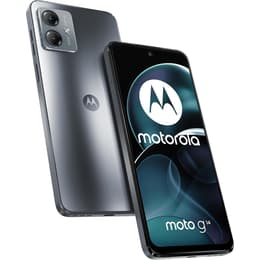
The Google Pixel 7, released in October 2022, and the Motorola Moto G14, launched in August 2023, are both Android smartphones offering distinct user experiences. While the Pixel 7 focuses on advanced computational photography and a premium software experience, the Moto G14 provides a more straightforward approach with a larger display and a focus on essential smartphone functions. Both devices run on the Android operating system, though with different interpretations of the user interface and feature sets.
Colour
Storage
The Google Pixel 7 and Motorola Moto G14 offer different levels of physical and software longevity. The Pixel 7, released in late 2022, typically receives three major Android OS updates and five years of security updates from its launch, extending its software support well into the future. It also features a more robust build with Gorilla Glass Victus on both the front and back, alongside an IP68 rating for significant water and dust resistance. The Moto G14, launched in mid-2023, generally receives one major Android OS update and three years of security updates, providing a shorter software support window. Its physical durability includes Panda Glass for screen protection and an IP52 rating, indicating splash resistance rather than full submersion protection.
Year of Release
Compatible with latest Update
OS
Foldable
When evaluating performance, the Google Pixel 7 and Motorola Moto G14 cater to different user demands. The Pixel 7 is equipped with a processor designed for advanced tasks, offering smooth navigation, rapid app loading, and efficient handling of demanding applications and mobile gaming. Its generous amount of RAM further supports seamless multitasking, allowing users to switch between numerous applications without slowdowns. The Moto G14, on the other hand, features a processor suited for everyday activities such as web browsing, social media, and light productivity tasks. While it handles these functions adequately, users engaging in intensive gaming or heavy multitasking may notice a difference in responsiveness and speed compared to the Pixel 7.
The display experiences offered by the Google Pixel 7 and Motorola Moto G14 present clear distinctions. The Pixel 7 features a 6.3-inch OLED display, known for its deep black levels, vibrant colors, and excellent contrast, making content consumption visually engaging. Its 90Hz refresh rate contributes to smoother scrolling and a more fluid user interface experience. The display also achieves high brightness levels, ensuring good visibility even in bright outdoor conditions. In contrast, the Moto G14 comes with a larger 6.5-inch IPS LCD panel. While it offers good clarity for everyday viewing, its color reproduction and contrast are typical of LCD technology. The 60Hz refresh rate provides a standard viewing experience, and its brightness levels are suitable for indoor use but may be less effective under direct sunlight.
Resolution
Screen type
The camera capabilities of the Google Pixel 7 and Motorola Moto G14 are designed for different photographic priorities. The Pixel 7 features a dual-camera system, including a high-resolution 50 MP main sensor and a 12 MP ultrawide lens. It excels in computational photography, producing detailed images with accurate colors and strong performance in various lighting conditions, including challenging low-light scenarios. Its video recording capabilities extend to 4K resolution at 60 frames per second, offering flexibility for content creation. The Moto G14 also includes a dual-camera setup, with a 50 MP main sensor and a 2 MP macro lens. It performs well for everyday photography in good lighting, capturing clear images suitable for sharing. However, its low-light performance and video recording options are more basic, providing standard quality at 1080p at 30 frames per second for casual use.
Main camera
Front camera
Beyond core features, the Google Pixel 7 and Motorola Moto G14 differ in several practical aspects. The Pixel 7 supports 5G connectivity, offering faster mobile data speeds where available, and includes Wi-Fi 6E for advanced wireless networking. It uses a USB-C 3.2 port for quicker data transfers and charging. For security, it offers both an under-display fingerprint sensor and face unlock. The Moto G14 provides 4G LTE connectivity and Wi-Fi 5. Its USB-C 2.0 port is standard for charging and data. Security is handled by a side-mounted fingerprint sensor. A notable difference is the inclusion of a 3.5mm headphone jack on the Moto G14, which is absent on the Pixel 7. Both devices feature stereo speakers for an enhanced audio experience. The Pixel 7 is slightly heavier at 197g and more compact at 155.6 x 73.2 x 8.7 mm, while the Moto G14 is lighter at 177g and has a larger footprint at 161.5 x 73.8 x 8 mm.
Weight
Screen size (in)
Mobile network
SIM card
Carrier compatibility
User feedback often highlights the Google Pixel 7's exceptional camera performance and its clean, feature-rich Android experience as major strengths. Many users praise its computational photography capabilities, particularly in challenging lighting, and appreciate the timely software updates and exclusive Pixel features. Some common criticisms, however, occasionally point to its battery life being adequate rather than outstanding for heavy users, and some find its design less distinctive than other premium devices. The Motorola Moto G14 is frequently lauded for its large display and the inclusion of a 3.5mm headphone jack, which is a valued feature for many. Users generally find its battery life to be a strong point, often lasting through a full day of moderate use. Criticisms typically revolve around its more modest performance for demanding applications and its less advanced camera system compared to higher-tier smartphones.
Users prioritizing advanced camera capabilities, a premium software experience with long-term updates, and robust performance for demanding applications will find the Google Pixel 7 well-suited to their needs. Its compact size and advanced connectivity options also appeal to those seeking a modern flagship experience. Conversely, users who value a larger screen, extended battery life, and the convenience of a traditional headphone jack for everyday communication and media consumption may lean toward the Motorola Moto G14. It serves as a practical choice for those seeking essential smartphone functions without the need for high-end processing power or advanced photographic features. Both devices, whether new or as quality-assured refurbished options, offer distinct advantages depending on individual user priorities.