
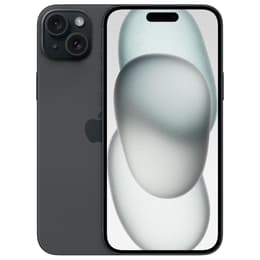

Google Pixel 7 Pro Vs iPhone 15 Plus

Google Pixel 7 Pro
Google Pixel 7 Pro
Starting at

Refurbished price:£169.75

Versus £899.99 new

See options
iPhone 15 Plus
iPhone 15 Plus
Starting at

Refurbished price:£345.00

Versus £799.00 new

See options

Ratings

The Google Pixel 7 Pro, released in October 2022, and the iPhone 15 Plus, launched in September 2023, represent distinct approaches to the premium smartphone experience. While the Pixel 7 Pro operates on Google's Android ecosystem, offering a highly customizable interface and advanced AI features, the iPhone 15 Plus runs on Apple's iOS, known for its intuitive design and seamless integration within the Apple ecosystem. Key differentiators include their camera systems, display technologies, and overall software philosophies.

Scores

Durability

When considering the practical lifespan of these devices, several factors come into play, including their release timelines, software support, and physical durability.

  • Release Timeline and OS Support: The iPhone 15 Plus, being released in September 2023, benefits from a more recent launch date compared to the Google Pixel 7 Pro, which debuted in October 2022. Apple typically provides 5-6 years of major iOS updates, meaning the iPhone 15 Plus is expected to receive software support for a longer duration than the Pixel 7 Pro. The Pixel 7 Pro launched with Android 13 and is generally expected to receive several years of Android version updates and security patches.
  • Durability Features: Both devices are rated IP68 for dust and water resistance, indicating they can withstand submersion in up to 6 meters of water for 30 minutes. The iPhone 15 Plus features a Ceramic Shield front and a color-infused glass back, alongside an aluminum design. The Pixel 7 Pro utilizes Gorilla Glass Victus for screen protection and has an aluminum frame.
  • Expected Practical Lifespan: Users can expect both devices to remain functional and receive critical security updates for several years. The iPhone 15 Plus may offer a slightly longer period of major OS feature updates due to its newer release, which can be a consideration for users prioritizing the latest software experiences.

Year of Release

2022

2023

Compatible with latest Update

Yes

Yes

OS

Android

iOS

Foldable

No

No

Performance

The performance of a smartphone is crucial for daily operations, from launching applications to managing multiple tasks and engaging in demanding activities like gaming.

  • Storage and Memory: The Google Pixel 7 Pro offers storage options of 128GB, 256GB, or 512GB, and comes with 12GB of RAM, which supports extensive multitasking and app handling. The iPhone 15 Plus also provides 128GB, 256GB, and 512GB storage configurations, but features 6GB of RAM.
  • Real-world Usage Impact: The Pixel 7 Pro handles demanding applications and multitasking smoothly, with its processor being tuned for efficient performance across various tasks, including gaming. The iPhone 15 Plus delivers brisk performance, ensuring smooth operation for everyday use and gaming without reported heating issues during intensive sessions. Both devices offer responsive system navigation and quick app loading times.
  • Battery Behavior: The Pixel 7 Pro is equipped with a 5000 mAh battery, generally providing a full day of use for many users, though heavy usage might require daily charging. The iPhone 15 Plus, with its 4383 mAh battery, is noted for its exceptional battery longevity, often lasting more than a full day, with some users reporting up to two or three days with casual use. Both support fast wired charging, with the Pixel 7 Pro supporting up to 30W and the iPhone 15 Plus up to 20W, capable of reaching 50% charge in about 30 minutes.

Memory (GB)

12 GB

6 GB

Screen quality

The display is a primary interface for smartphone interaction, and its quality significantly impacts the user experience for media consumption, browsing, and daily tasks.

  • Display Technology and Resolution: The Google Pixel 7 Pro features a 6.7-inch LTPO OLED display with a QHD+ resolution of 3120 x 1440 pixels, resulting in a pixel density of 512 ppi. The iPhone 15 Plus comes with a 6.7-inch Super Retina XDR OLED display, offering a resolution of 2796 x 1290 pixels at 460 ppi.
  • Brightness and Clarity: Both phones offer vibrant colors and deep blacks characteristic of OLED technology. The Pixel 7 Pro can reach up to 1500 nits of peak brightness. The iPhone 15 Plus boasts a typical brightness of 1000 nits, a peak HDR brightness of 1600 nits, and an impressive peak outdoor brightness of 2000 nits, ensuring excellent visibility even in bright sunlight.
  • Refresh Rate and Smoothness: The Pixel 7 Pro features an adaptive refresh rate that can go up to 120Hz, providing smoother scrolling and more fluid animations. The iPhone 15 Plus maintains a standard 60Hz refresh rate. The iPhone 15 Plus also incorporates the Dynamic Island, a feature that dynamically adapts around the front camera cutout to display alerts and background activities.

Resolution

1440 x 3120

1290 x 2796

Screen type

LTPO AMOLED

Super Retina XDR OLED

Audiovisual

Camera capabilities are a significant consideration for many users, influencing how they capture and share moments.

  • Camera System Configuration: The Google Pixel 7 Pro features a versatile triple-camera system on the rear, including a 50MP main sensor with optical image stabilization (OIS), a 12MP ultrawide camera with autofocus and macro capabilities, and a 48MP telephoto lens offering 5x optical zoom and up to 30x Super Res Zoom. The iPhone 15 Plus has a dual-camera system with a 48MP main camera featuring sensor-shift OIS and a 2x telephoto option achieved through a sensor crop, alongside a 12MP ultrawide camera. Both have a 10.8MP (Pixel 7 Pro) or 12MP (iPhone 15 Plus) front-facing camera.
  • Photography Performance: The Pixel 7 Pro is known for its strong computational photography, delivering excellent detail across various lighting conditions, improved low-light performance, and features like Magic Eraser and Real Tone for accurate skin representation. The iPhone 15 Plus offers improved low-light performance and next-generation portrait capabilities, allowing for focus and depth control after a photo is taken.
  • Video Recording Quality: Both devices support 4K video recording at 60 frames per second. The Pixel 7 Pro offers 10-bit color and HDR video, along with enhanced stabilization and a Cinematic mode for background blur. The iPhone 15 Plus supports 4K Dolby Vision video recording and includes Cinematic mode up to 4K HDR at 30fps, as well as Action mode for stabilized footage.
  • Audio Experience: The Pixel 7 Pro features stereo speakers that produce clear and crisp sound, along with a three-microphone array for noise suppression and spatial audio. The iPhone 15 Plus also provides a stereo speaker setup for media consumption. Neither device includes a 3.5mm headphone jack.

Main camera

50 megapixels

48 megapixels

Front camera

10.8 megapixels

12 megapixels

Miscellaneous

Beyond core performance and camera, several practical elements contribute to the overall user experience and daily convenience.

  • Connectivity Options: Both the Google Pixel 7 Pro and the iPhone 15 Plus support 5G connectivity for fast mobile data. The Pixel 7 Pro supports Wi-Fi 6E and Bluetooth 5.2. The iPhone 15 Plus features Wi-Fi 6 and Bluetooth 5.3, along with a second-generation Ultra Wideband chip for enhanced spatial awareness.
  • Port Types and Sensors: The Pixel 7 Pro includes a USB-C 3.2 port. The iPhone 15 Plus has transitioned to a USB-C port, though it operates at USB 2.0 speeds. For security, the Pixel 7 Pro offers both an under-display optical fingerprint scanner and face unlock. The iPhone 15 Plus relies on Face ID for secure authentication.
  • Physical Characteristics: The Pixel 7 Pro measures 162.9 x 76.6 x 8.9 mm and weighs 212g. The iPhone 15 Plus is slightly more compact and lighter at 160.9 x 77.8 x 7.8 mm and 201g. Both devices feature premium build materials, with the Pixel 7 Pro having an aluminum frame and Gorilla Glass Victus, and the iPhone 15 Plus featuring an aluminum design with a Ceramic Shield front and color-infused glass back.

Weight

212 g

201 g

Screen size (in)

6.7

6.7

Mobile network

5G

5G

SIM card

Physical SIM + eSIM

Physical SIM + eSIM

Carrier compatibility

Unlocked

Unlocked

User feedback for the Google Pixel 7 Pro often highlights its exceptional camera capabilities, particularly its computational photography features, and the clean, customizable Android experience. Users also appreciate its advanced AI functionalities. Common criticisms sometimes point to inconsistent battery performance for some users, especially in areas with weaker cellular signals, and some find the modem efficiency could be improved. The iPhone 15 Plus receives widespread praise for its outstanding battery life, often cited as one of the best among current smartphones, and its large, bright display. The introduction of the Dynamic Island and the switch to USB-C are also frequently mentioned as positive changes. However, some users express disappointment with the 60Hz refresh rate of the display and the USB 2.0 transfer speeds of its new USB-C port.

Users prioritizing a highly versatile camera system with advanced zoom capabilities, a high refresh rate display for smoother visuals, and a pure Android experience with deep AI integration may find the Google Pixel 7 Pro well-suited to their needs. Conversely, users who value industry-leading battery life, a consistently bright display, the seamless Apple ecosystem, and robust privacy features may lean toward the iPhone 15 Plus. Both devices offer compelling features for different user preferences. For those looking to make an informed and sustainable choice, considering a quality-assured refurbished option for either model can provide an eco-friendly alternative.

See all articles

Our recent comparisons