
Google Pixel 6A Vs Google Pixel Fold

Google Pixel 6A
Google Pixel 6A
Starting at

Refurbished price:£107.00

Versus £459.00 new

See options
Google Pixel Fold
Google Pixel Fold
Starting at

Refurbished price:£371.00

Versus £1,499.00 new

See options

Ratings

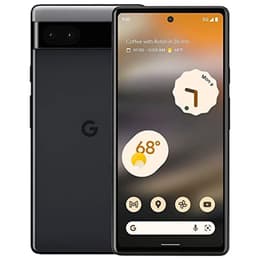
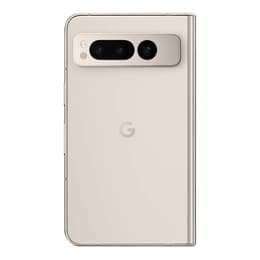
The Google Pixel 6A, released in July 2022, is a traditional smartphone offering a compact design and a focus on core Pixel experiences. In contrast, the Google Pixel Fold, launched in June 2023, represents Google's entry into the foldable smartphone market, featuring a unique dual-screen design that transforms from a standard phone to a larger tablet-like display. Both devices operate on the Android platform, providing a consistent software experience with Google's signature features.

Scores

Durability

When considering the longevity of these devices, several factors come into play, including their release timelines, software support, and physical construction.

  • Software Support: The Pixel 6A, released in July 2022, is expected to receive major Android operating system updates for approximately three years, extending its software support until around July 2025, with security updates continuing for five years until July 2027. The Pixel Fold, launched in June 2023, benefits from a later release, offering OS updates until June 2026 and security updates until June 2028.
  • Physical Durability: The Pixel 6A features a plastic back and an aluminum frame, with Gorilla Glass 3 protecting its display. Users have noted its premium feel despite the plastic construction. The Pixel Fold, being a foldable device, incorporates a more complex design with a glass front (Gorilla Glass Victus) on its cover screen, a plastic front on its inner foldable display, an aluminum frame, and a glass back (Gorilla Glass Victus). Foldable phones generally present different durability considerations due to their moving parts and flexible screens.
  • Repairability: Standard smartphones like the Pixel 6A are typically more straightforward to repair, though screen replacements can still be intricate. Foldable devices like the Pixel Fold are inherently more complex, potentially making repairs, especially involving the hinge or inner display, more challenging.

Year of Release

2022

2023

Compatible with latest Update

Yes

Yes

OS

Android

Android

Foldable

No

Yes

Performance

The performance of a smartphone is crucial for daily tasks, app usage, and multitasking. Both devices offer capable hardware, but their configurations cater to different user demands.

  • Processing Power: The Pixel 6A is equipped with Google's first-generation Tensor chip, which provides smooth performance for everyday applications and can handle mobile gaming effectively. The Pixel Fold utilizes the second-generation Tensor G2 chip, offering enhanced processing capabilities that contribute to a responsive user experience across its dual displays.
  • Multitasking and Storage: The Pixel 6A comes with 6GB of RAM and 128GB of internal storage, suitable for most users' app and data needs. The Pixel Fold offers a more robust 12GB of RAM and storage options of 256GB or 512GB, which is beneficial for intensive multitasking, running multiple applications simultaneously on its larger screen, and storing extensive media libraries.
  • Battery Behavior: The Pixel 6A houses a 4410 mAh battery, which typically provides all-day power for moderate usage, though some users have noted its slower charging speed. The Pixel Fold has a 4821 mAh battery. While it offers a larger capacity, extensive use of its expansive inner display can lead to faster battery depletion.

Memory (GB)

6 GB

12 GB

Screen quality

The display is a primary interface for smartphone interaction, and these two Pixel devices offer distinct visual experiences.

  • Display Technology and Size: The Pixel 6A features a single 6.1-inch OLED display, providing deep blacks and vibrant colors in a compact form factor. The Pixel Fold offers a dual-screen setup: a 5.8-inch OLED cover display for standard phone use and a larger 7.6-inch OLED inner display that unfolds to provide a tablet-like viewing area.
  • Resolution and Clarity: The Pixel 6A's display has a resolution of 1080 x 2400 pixels, resulting in sharp images and text. The Pixel Fold's cover display offers 1080 x 2092 pixels, while its inner display provides 2208 x 1840 pixels, both delivering clear visuals across their respective sizes.
  • Refresh Rate and Smoothness: The Pixel 6A's display operates at a 60Hz refresh rate, which is standard for smooth scrolling and animations for many users. Both the cover and inner displays of the Pixel Fold feature a 120Hz refresh rate, contributing to a more fluid and responsive visual experience, particularly noticeable during scrolling and gaming.

Resolution

1080 x 2400

1840 x 2208

Screen type

OLED

Foldable OLED

Audiovisual

Both Pixel devices are known for their camera capabilities, leveraging Google's computational photography to produce quality images, though their hardware configurations differ.

  • Rear Camera Systems: The Pixel 6A includes a dual-camera setup on the rear, featuring a 12.2 MP wide lens and a 12 MP ultrawide lens. The Pixel Fold offers a more versatile triple-camera system, comprising a 48 MP wide lens, a 10.8 MP ultrawide lens, and a 10.8 MP telephoto lens with 5x optical zoom.
  • Photography Performance: The Pixel 6A is praised for its excellent computational photography, delivering strong results in both well-lit conditions and low-light environments. The Pixel Fold also benefits from Google's advanced image processing, providing a capable and versatile camera experience, including the ability to use the main rear cameras for high-quality selfies when unfolded.
  • Video and Audio: Both devices are capable of recording high-quality video. The Pixel Fold's more advanced camera hardware, particularly the telephoto lens, offers additional flexibility for video capture. For audio, both phones provide stereo speakers for media consumption, and their microphones are designed for clear call quality and recording.

Main camera

12.2 megapixels

48 megapixels

Front camera

8 megapixels

8 megapixels

Miscellaneous

Beyond the core specifications, several practical elements contribute to the overall user experience and differentiate these two Pixel smartphones.

  • Connectivity and Ports: Both the Pixel 6A and Pixel Fold support 5G connectivity, Wi-Fi 6E, and Bluetooth 5.2 for modern wireless communication. The Pixel 6A features a USB-C 3.1 port, while the Pixel Fold includes a slightly newer USB-C 3.2 port.
  • Biometric Security: The Pixel 6A incorporates an in-display fingerprint sensor for secure unlocking, though some users have reported varying experiences with its responsiveness. The Pixel Fold utilizes a side-mounted fingerprint sensor integrated into the power button.
  • Physical Design and Handling: The Pixel 6A is a compact and lightweight device, weighing 178g with dimensions of 152.2 x 71.8 x 8.9 mm, making it comfortable for one-handed use. The Pixel Fold is significantly heavier at 283g and has distinct dimensions when folded (139.7 x 79.5 x 12.1 mm) and unfolded (139.7 x 158.7 x 5.8 mm). Its wider cover screen aims to provide a more usable traditional phone experience when folded.

Weight

250 g

283 g

Screen size (in)

6.1

7.6

Mobile network

5G

5G

SIM card

Physical SIM + eSIM

Physical SIM + eSIM

Carrier compatibility

Unlocked

Unlocked

Connector

USB-C

USB-C

User feedback for the Pixel 6A often highlights its strong camera performance, clean Android software, and comfortable, compact size as key advantages. Common criticisms include its 60Hz display, slower charging speeds, and occasional reports of inconsistent fingerprint sensor performance or modem issues.

For the Pixel Fold, users frequently praise its innovative foldable form factor, the utility of its large inner display for media and productivity, and its capable camera system. However, some concerns have been raised regarding its weight, potential durability of the hinge or inner screen over time, and battery life when the larger screen is used extensively.

Users prioritizing a traditional, compact smartphone experience with a strong camera and reliable performance for everyday tasks may find the Pixel 6A well-suited to their needs. Its established design offers a straightforward approach to mobile computing. Conversely, users who value a versatile device that can transition between a standard phone and a larger screen for enhanced media consumption, multitasking, or productivity will likely lean towards the Pixel Fold. Its unique form factor caters to those seeking a more expansive digital canvas.

Both models offer the core Android experience with Google's software innovations. For those considering either device, exploring quality-assured refurbished options can provide an eco-friendly alternative to new purchases, extending the life cycle of these technologies.

See all articles

Our recent comparisons